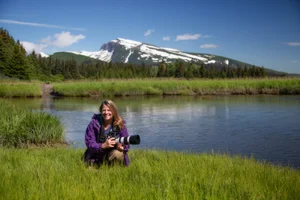
Week 18: Paddles Up — Bear
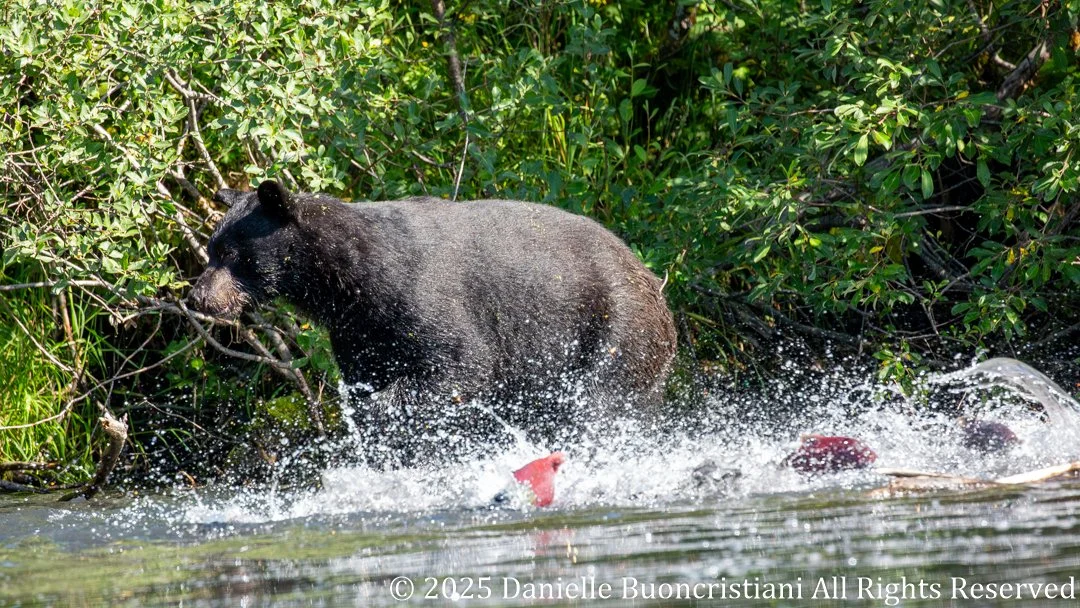
A black bear splashes through Addison Lake while chasing sockeye salmon during the summer spawning run in Kenai Fjords National Park.
Our final half day at Kenai Fjords Glacier Lodge began quietly. Because so many guests had signed up for the Addison Lake excursion, the first group crossed Pedersen Lagoon in the large canoe, which meant we would take the kayaks — something Dave and I were secretly happy about.
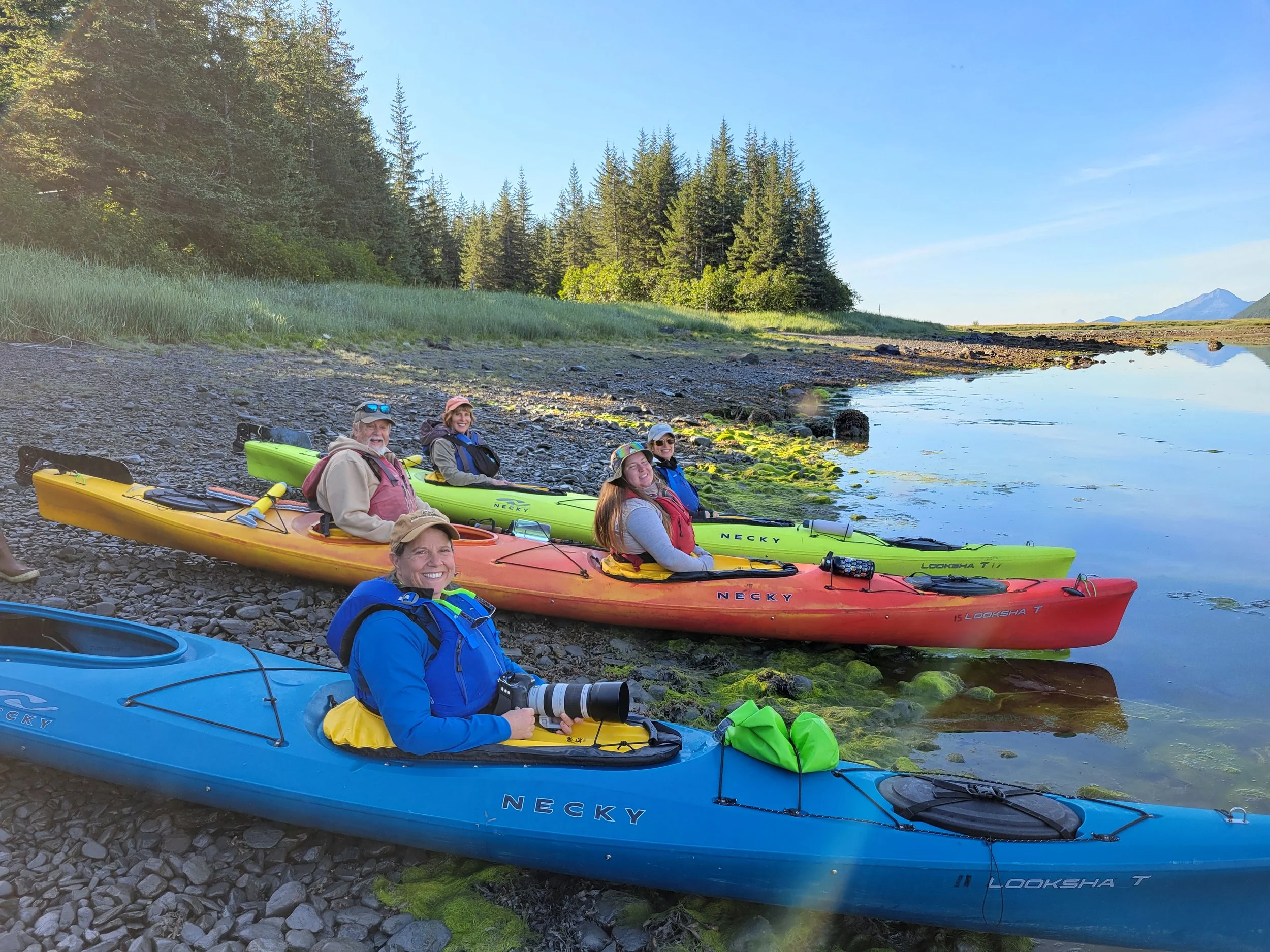
Our small group prepares to launch kayaks across Pedersen Lagoon toward the Addison Lake hike in Kenai Fjords National Park.
With only seven of us on the water, the lagoon felt still and open beneath blue skies. Not long after pushing off, we spotted a single sea otter floating ahead. As we drifted closer, we realized she had a pup resting on her chest. Then another otter surfaced nearby — also with a pup. And then another. Within minutes we were looking at an entire raft, ten or more sea otters gathered together, several with their young balanced comfortably on their bellies. It felt like stumbling upon a wild mothers’ group, all of them relaxed, rolling gently in the brackish water and watching us pass as if we were simply part of the scenery.
I have never seen that many otters in one place. It was incredible — and even more special because they did not seem to mind us at all.
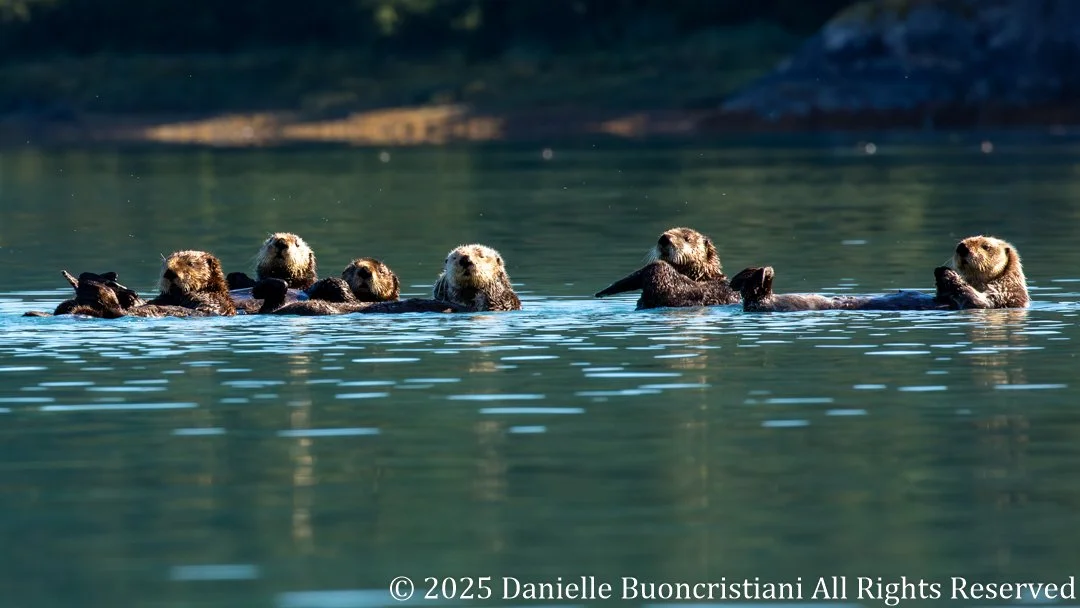
A raft of sea otters floats together in Pedersen Lagoon, several mothers resting with their pups balanced on their chests.
Field Notes — Sea Otters
A group of sea otters is called a raft.
Mothers float on their backs with pups resting on their chests.
Pedersen Lagoon is brackish — fed by ocean tides and freshwater glacial melt.
Sea otters often appear relaxed near kayaks when approached slowly and respectfully.
Further along the shoreline, we noticed a bald eagle perched high in a tree near the beach where we would eventually land. We angled a little closer for photographs but remained careful about distance. When the eagle suddenly released a sharp, piercing call and lifted off, wings wide and powerful, I felt a small pang of guilt. Had we come too close? Even though we were still well below and far from the tree, we adjusted our path immediately, giving the bird more space.
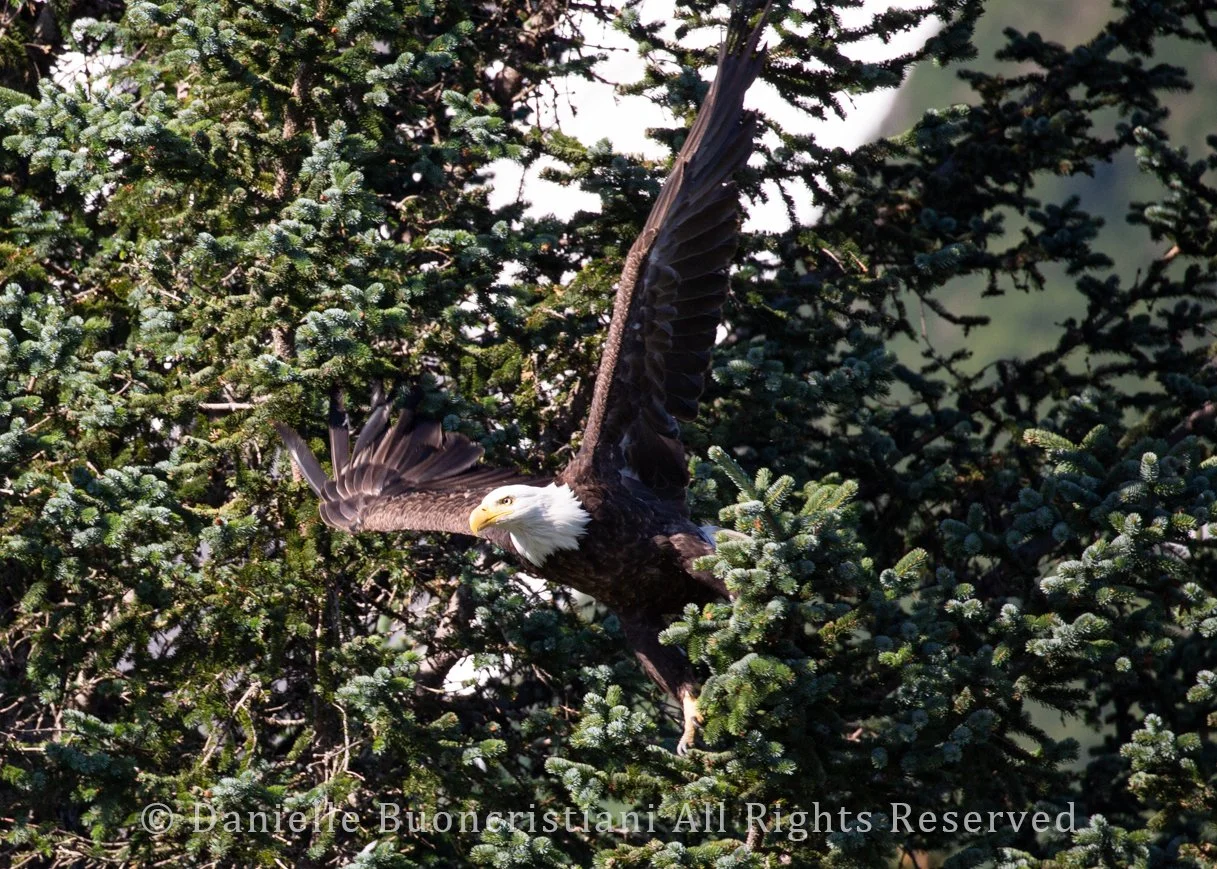
A bald eagle launches from a spruce tree along the shoreline as we paddled quietly through Pedersen Lagoon.
Once ashore, our guide had us rope all the kayaks together and secure them high on the beach. The tide would rise while we were hiking, and without tying them off, the boats could drift away. Alaska is always moving — water, weather, wildlife — and small details matter.
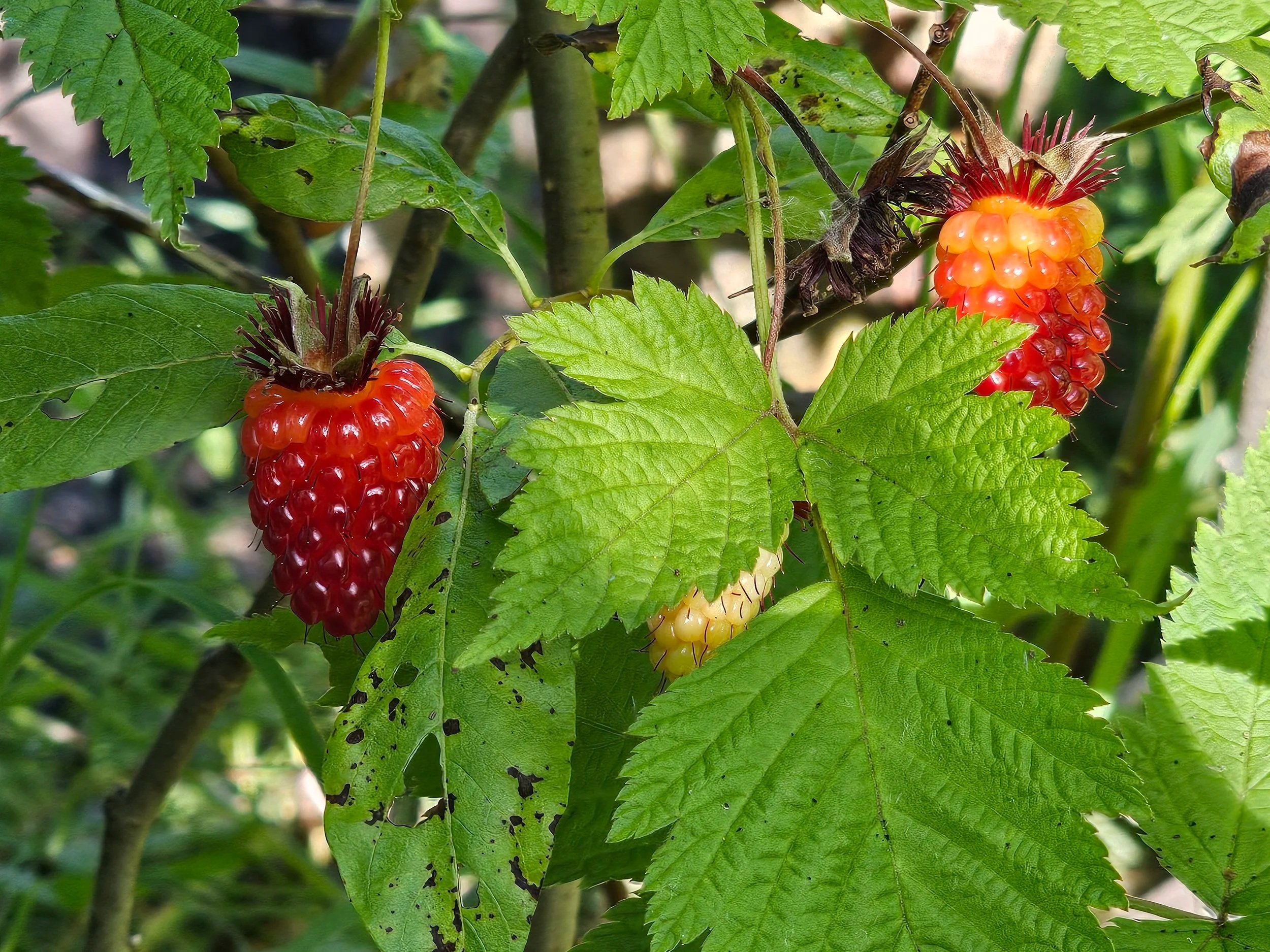
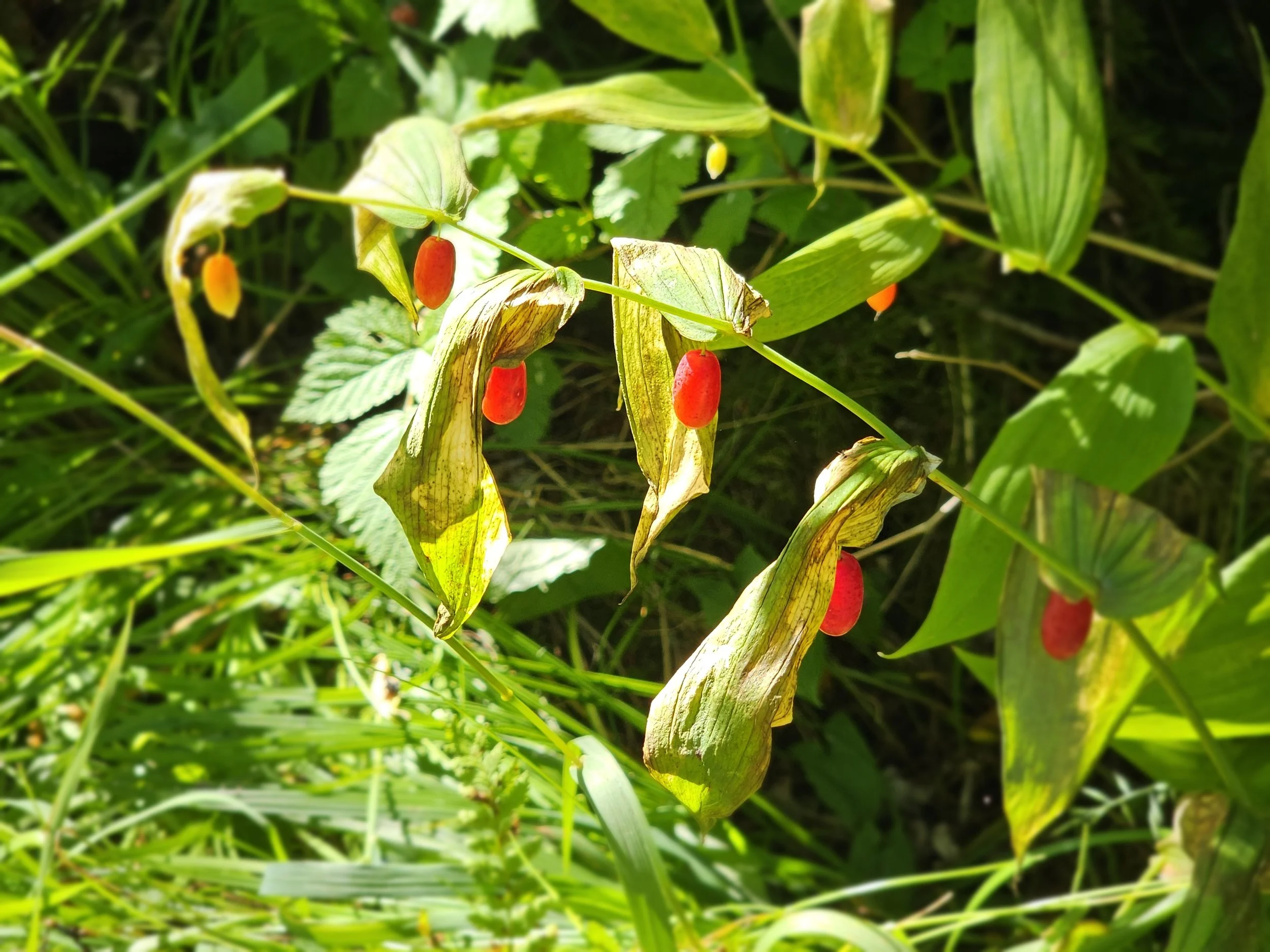
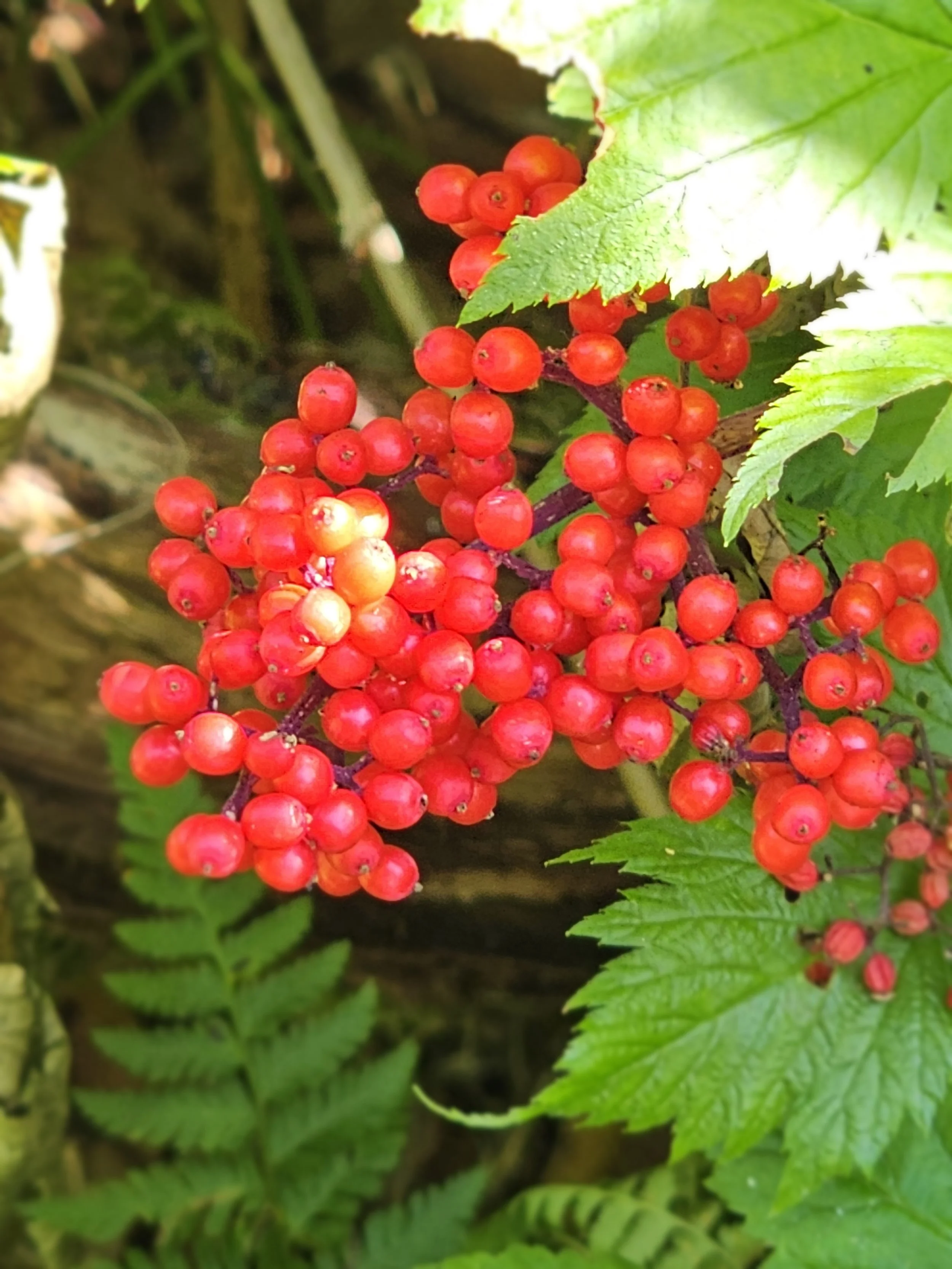
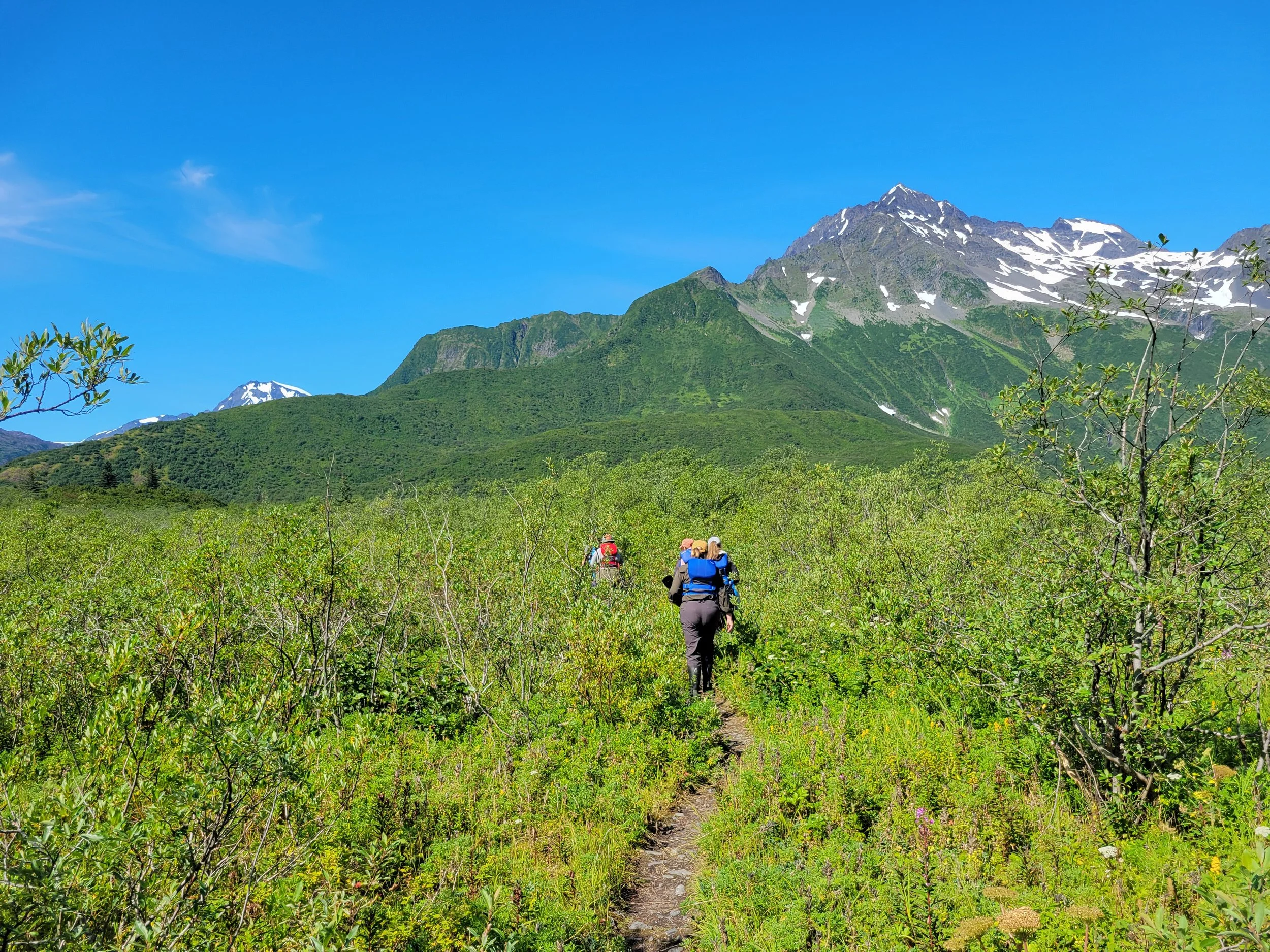
The two-mile hike to Addison Lake was muddy in places but full of discovery. Every few minutes our guide would stop to point out another berry: salmonberries that tasted like raspberries, blueberries, tiny watermelon berries, lagoon berries, and elderberries. We sampled what we could straight from the plants, aware that we were sharing the same food source the bears rely on. As we walked, we called out “bear” periodically on the trail — not from fear, but from respect. We were walking through their pantry.
Field Notes — Late Summer Berries
Salmonberries resemble raspberries and are edible raw.
Blueberries and watermelon berries are safe to eat when ripe.
Elderberries must be cooked before eating; raw berries contain natural compounds that can cause illness.
Black bears rely heavily on both berries and salmon in late summer.
When we reached Addison Lake, the first canoe group was already returning. They mentioned seeing a trumpeter swan and plenty of red salmon, but nothing else. We traded places, settled into the large canoe, and pushed off into the calm freshwater.
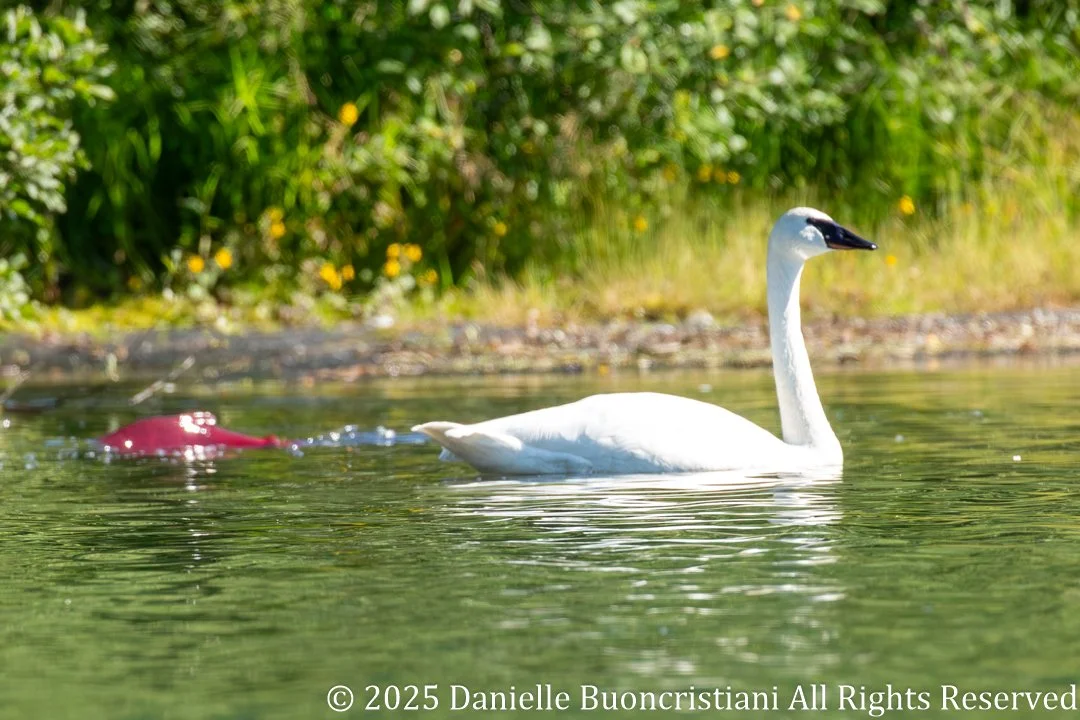
A trumpeter swan glides quietly across Addison Lake while sockeye salmon move beneath the surface.
The salmon were everywhere. Bright red bodies churned the water near the surface, some leaping and splashing as they made their final push upstream. A few already showed white along their fins and scales, visible signs of decomposition as they completed their spawning cycle. The water seemed alive with motion.
Field Notes — Salmon Run
Sockeye (red) salmon migrate from the ocean into freshwater to spawn.
Once in freshwater, they stop eating.
Their bodies turn bright red during spawning season.
After spawning, they die — returning nutrients to the ecosystem.
Then our guide said quietly, “Bear. Paddles up.”
At first, I didn’t see it. I aimed my camera in the direction she pointed — and then he stepped out from the brush. A large, glossy black bear moving with quiet focus along the shoreline.
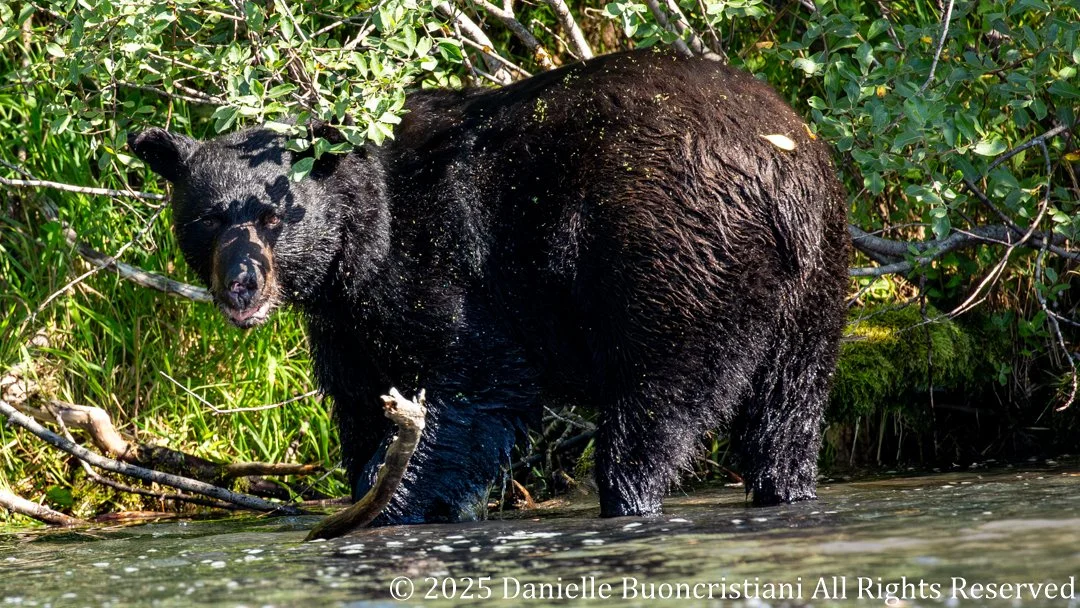
A black bear fishing for salmon along the shoreline of Addison Lake.
I shifted instantly into photographer mode.
We floated silently, our guide explaining in a low voice that the bear likely saw us as one solid object rather than individual threats. The bear pounced into the shallows and began to fish. He lunged and splashed, sending arcs of water into the air as salmon darted around him. At one point, he caught a fish in his paws — something we didn’t fully realize until later, when we watched the video Dave captured. In the footage, you can see the bear briefly hold the salmon before tossing it aside, likely too far along in decomposition to bother eating.
We stopped paddling and just watched.
The entire encounter lasted many minutes. We barely spoke. Our guide later told us it was one of the best wildlife sightings she had experienced all summer.
We felt it too — the rarity of the moment.
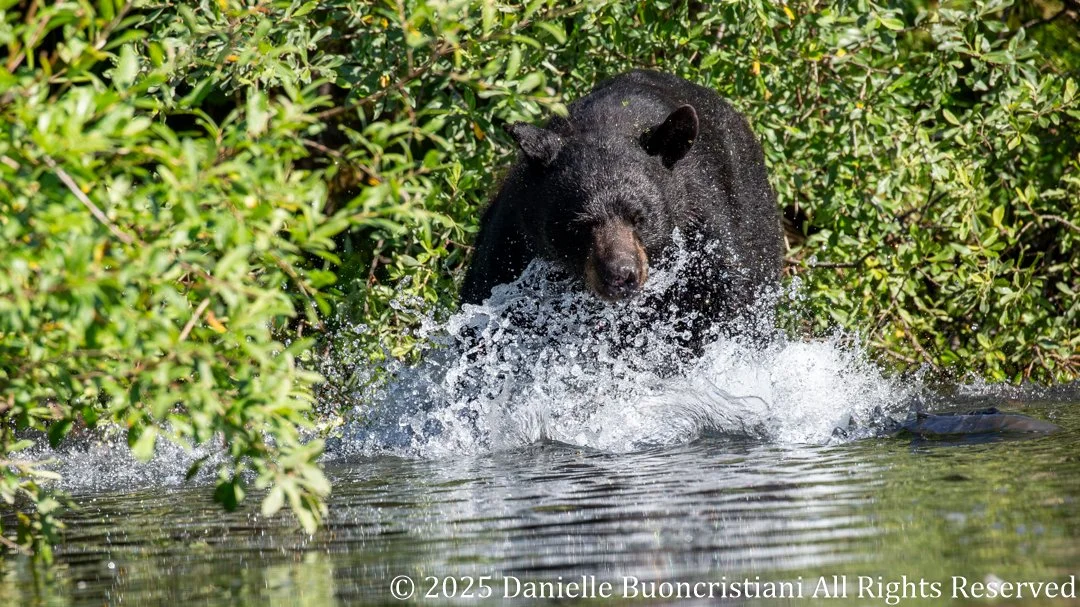
Watching this black bear splash through the shallows chasing salmon was one of the most exhilarating wildlife moments of our Alaska journey.
Field Notes — Black Bears & Salmon
During peak salmon runs, black bears may consume dozens of pounds of fish per day.
Salmon provide critical fat reserves before winter.
Bears often focus on high-calorie parts of the fish when salmon are abundant.
Viewing from water can feel close, but staying calm and quiet is essential for safety and respect.
To watch a wild black bear feeding on salmon that had returned from the sea, in complete freedom and without disturbance, was something none of us took lightly. When he finally disappeared back into the brush, we remained quiet for a moment before continuing around the lake.
The hike back to the lagoon felt lighter somehow. When we returned, the tide had risen just as predicted, the kayaks floating near the shore but safely secured together. Back at the lodge, our luggage — which we had placed outside that morning — was already gone, and lunch was waiting.
The transition happened quickly. After lunch, we hiked to the shore to meet the boat back to Seward. From the boat we watched Puffins skim across the water — birds that come to this region only during breeding season — and we spotted a few more otters along the way. The mountains stood clear against the sky, hanging glaciers visible in the distance.
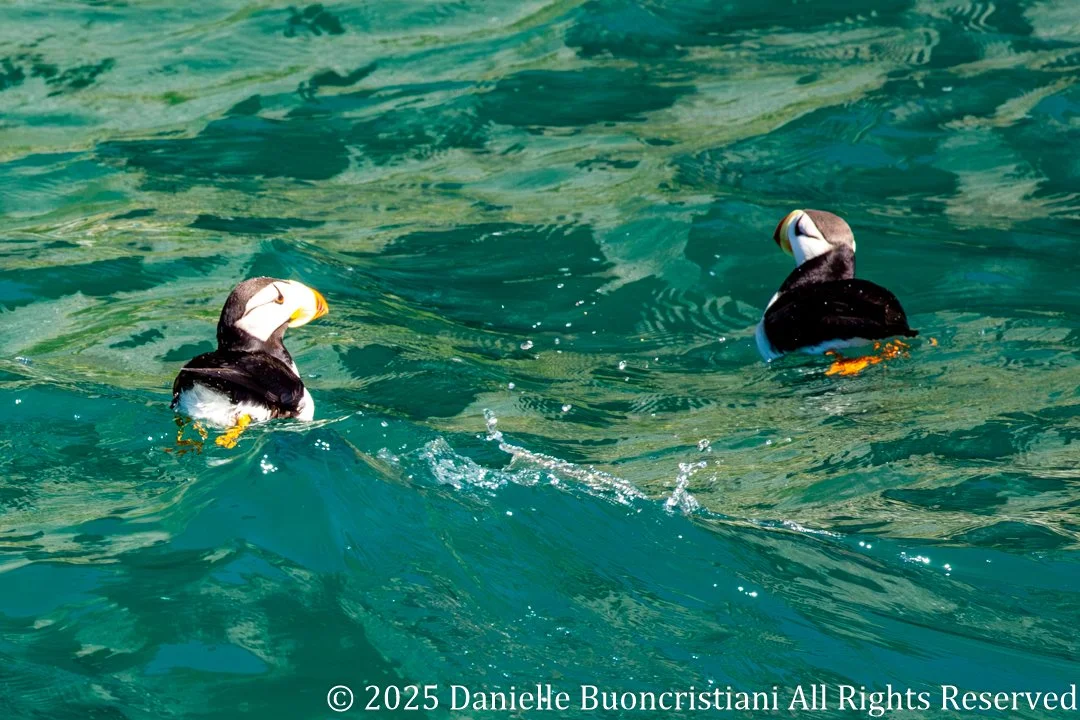
Two tufted puffins floating in the turquoise waters of Kenai Fjords.
And just like that, Glacier Lodge was behind us.
A van waited at the dock to take us to Kenai Fjords River Lodge. It was lovely and well organized, but different. Cars passed the entrance. The river rushed loudly below the deck. We had returned to civilization. That evening, Dave carved wood while I sat nearby reading, both of us replaying the day in our minds.
In just a half day, we had witnessed a raft of sea otters with pups, a bald eagle in flight, bright red spawning salmon, and a black bear fishing in the wild.
It was an incredible way to end our time at Glacier Lodge.
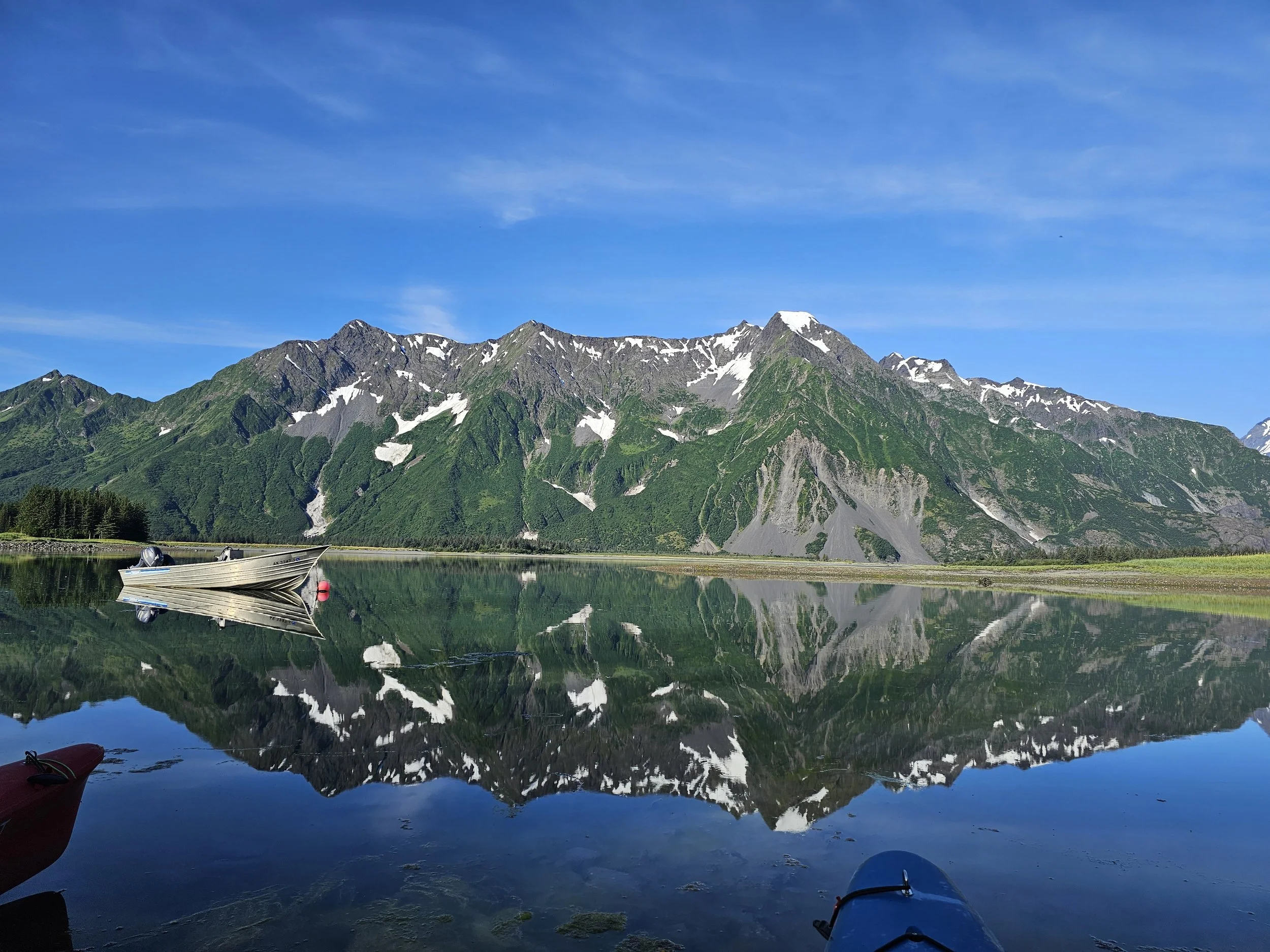
Still waters at Pedersen Lagoon in Kenai Fjords National Park.