Week 17 - Kayaking to Aialik Glacier
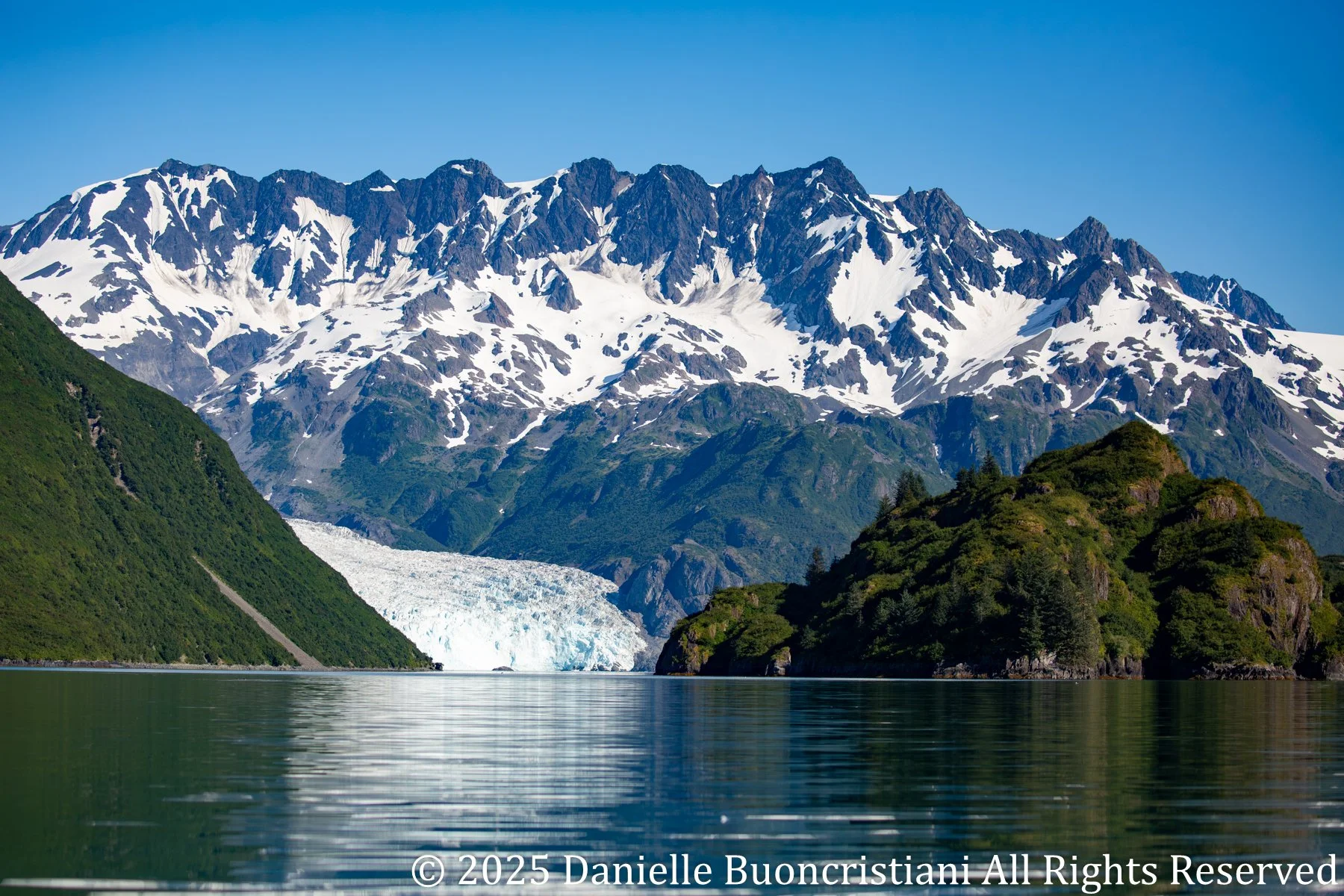
Aialik Glacier in the distance, framed by the Kenai Mountains and calm morning water.
After breakfast and packing our bag lunches, we geared up for our kayaking trip — waterproof spray skirts and all. Alaska’s weather is unpredictable, but that morning we were lucky. Calm weather and blue sky.
Dave and I shared a double kayak for the trip to Aialik Glacier. Dave, seated in the rear of the kayak, volunteered to do all the paddling so I could focus on photography.
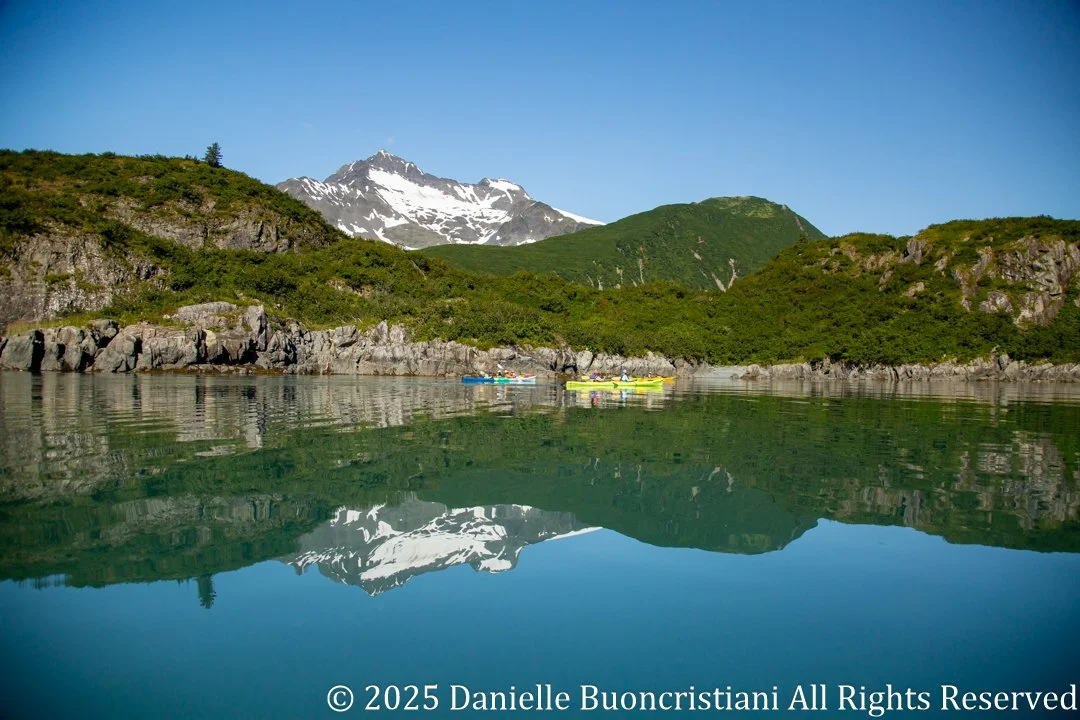
Gliding across still water beneath the Kenai Mountains.
The mountains mirrored in the calm water. We glided peacefully along. Sea otters surfaced and disappeared without disturbing much more than a small circle of ripples. A seal slipped by quietly.
In the distance, whales surfaced — nothing dramatic, just blowholes misting into the air before they disappeared again. Far enough away that we didn’t change course, but close enough to notice.
Wildlife wasn’t the focus.
It was simply part of the morning.
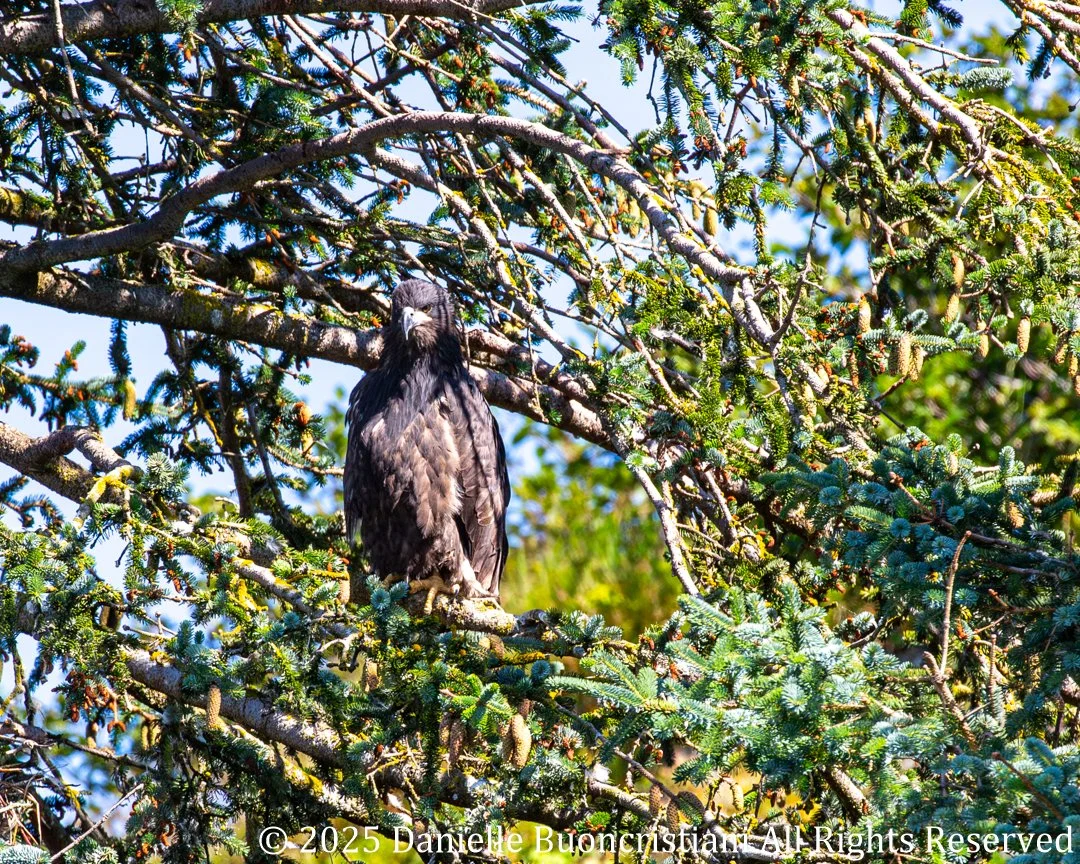
Juvenile bald eagle watching from the spruce.
Field Note — Bald Eagle (Juvenile)
Species: Bald Eagle (Haliaeetus leucocephalus)
Age Identification: Juvenile Bald Eagles are dark brown with mottled feathering and lack the white head and tail of adults. Full adult plumage develops around 4–5 years of age.
Habitat: Common along coastal Alaska, especially near bays, fjords, and rivers where fish are abundant.
Behavior: Often perch in tall spruce or along shorelines while scanning for fish or carrion.
We stopped along a rocky shoreline for a snack and a stretch. Kayaks lined up side by side while we explored the area. It felt unhurried.
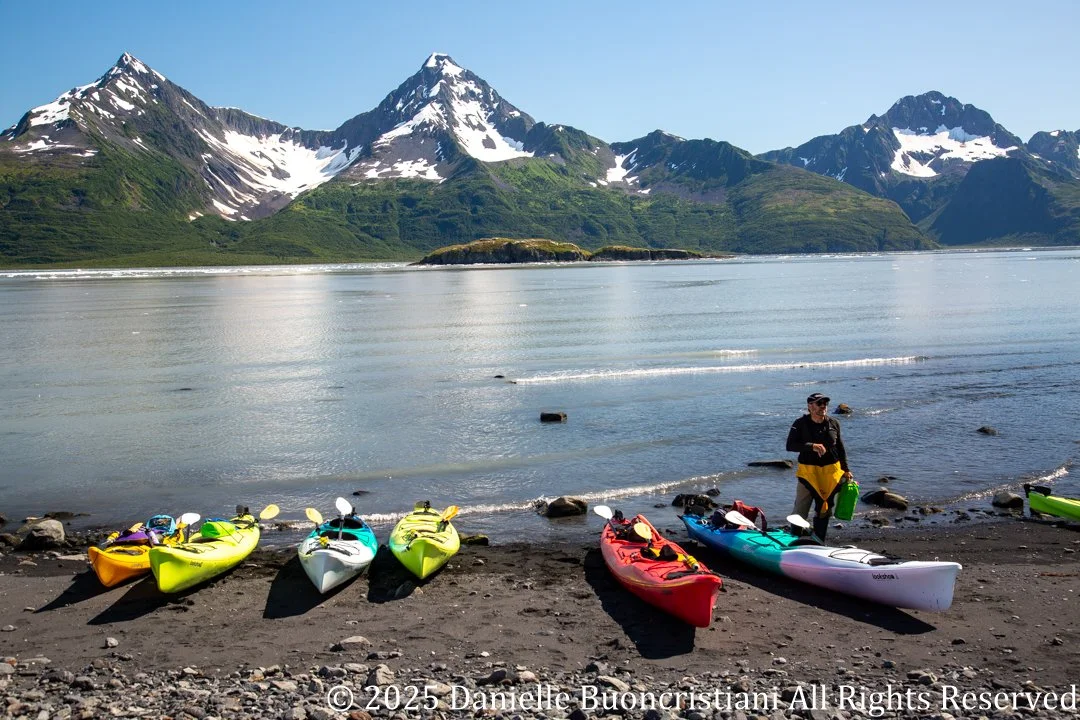
A quiet stretch along the shoreline before continuing toward the glacier.
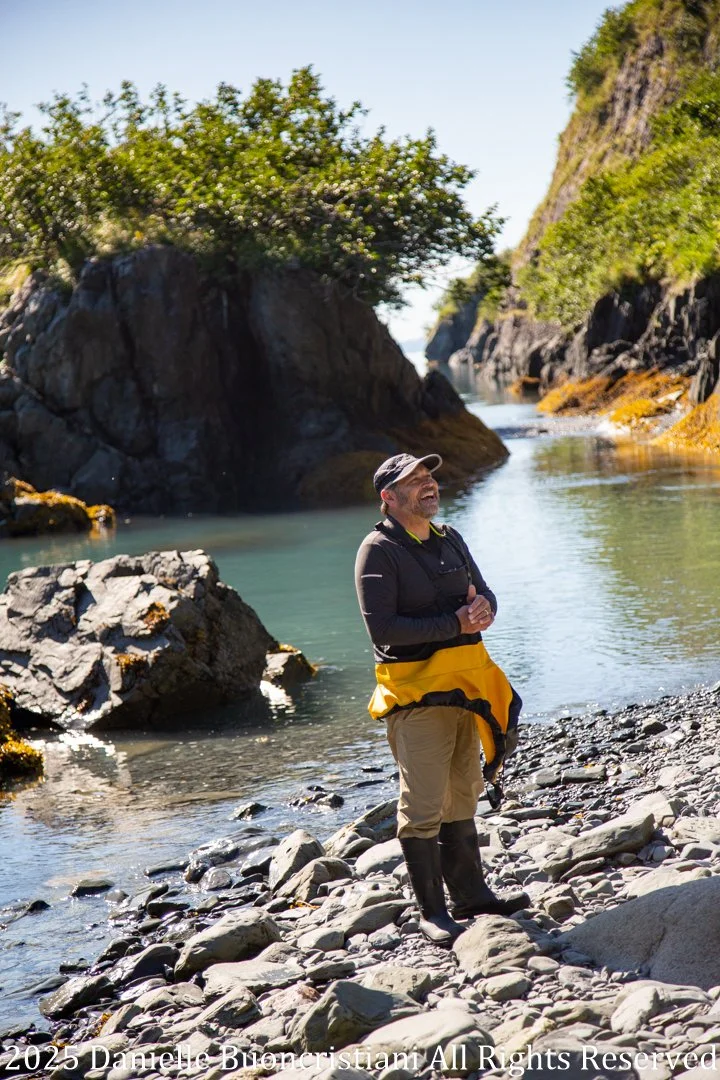
Exploring a quiet inlet before paddling on.
Somewhere along the way, I slipped naturally back into family photographer mode. Two families were part of our small group that morning, and I couldn’t help but photograph them as they moved across the water together — small figures in a vast landscape, sharing something unforgettable.
I captured a few frames to send their way later — quiet reminders of a day that already felt meaningful.
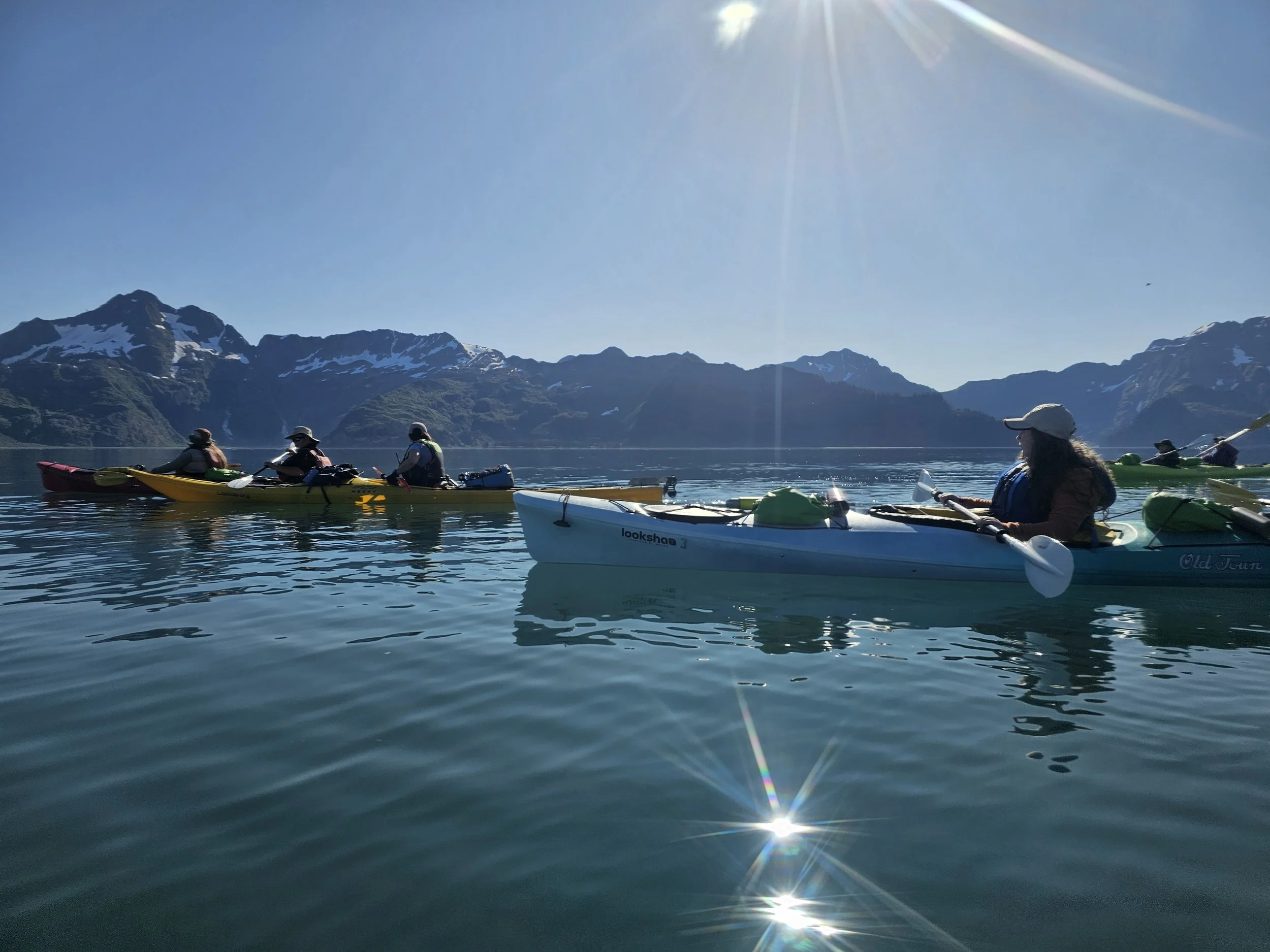
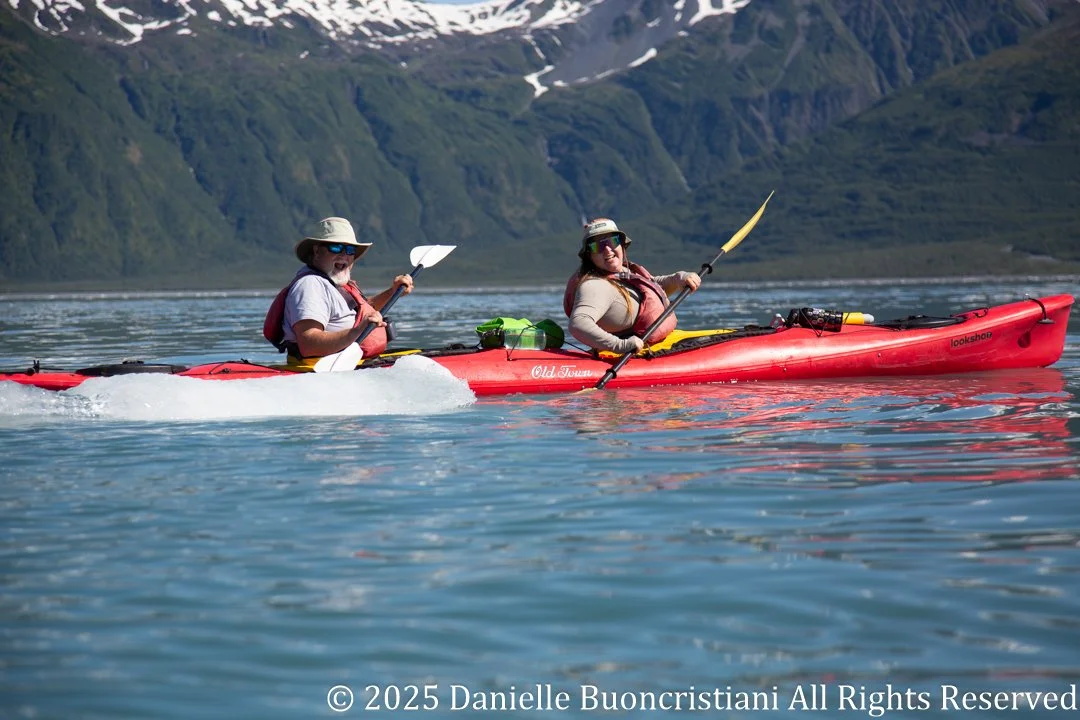
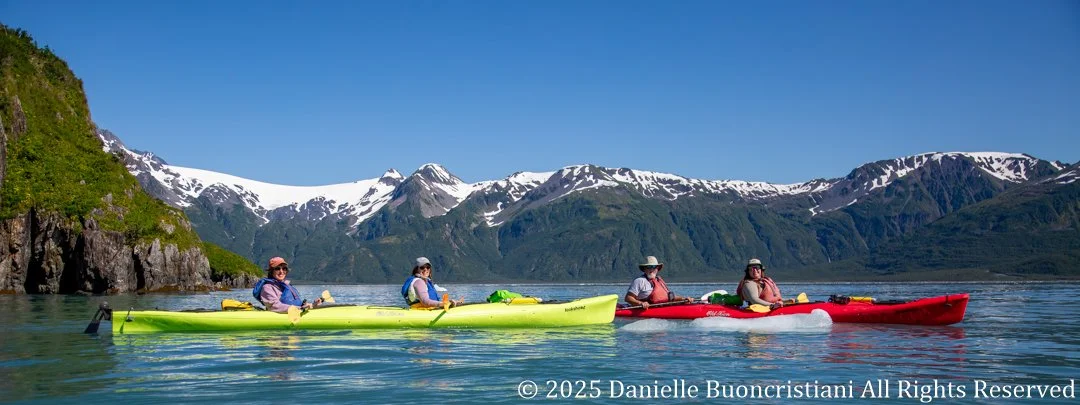
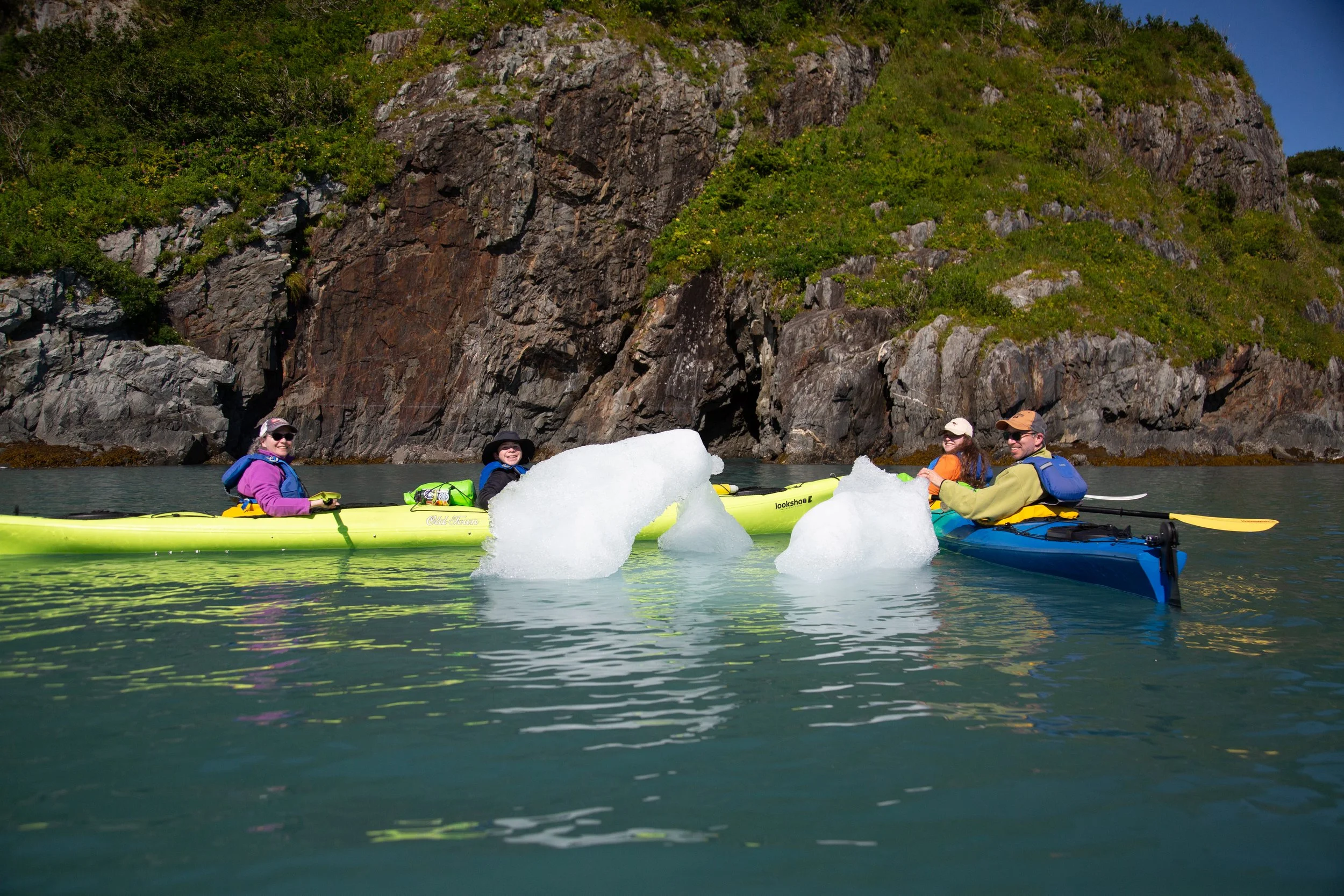
Two families sharing the same stretch of water — strangers the day before, companions by midmorning.
As we moved farther into the bay, the glacier began to dominate the view. The air cooled. The blue in the ice deepened. Details sharpened — cracks, ridges, towering walls of compressed snow and time.
And then we heard it.
Even from roughly two miles away, the sound carried like thunder. We saw multiple calving events that morning. Every time it happened, the sound rolled toward us and the entire group reacted — cheering, laughing.
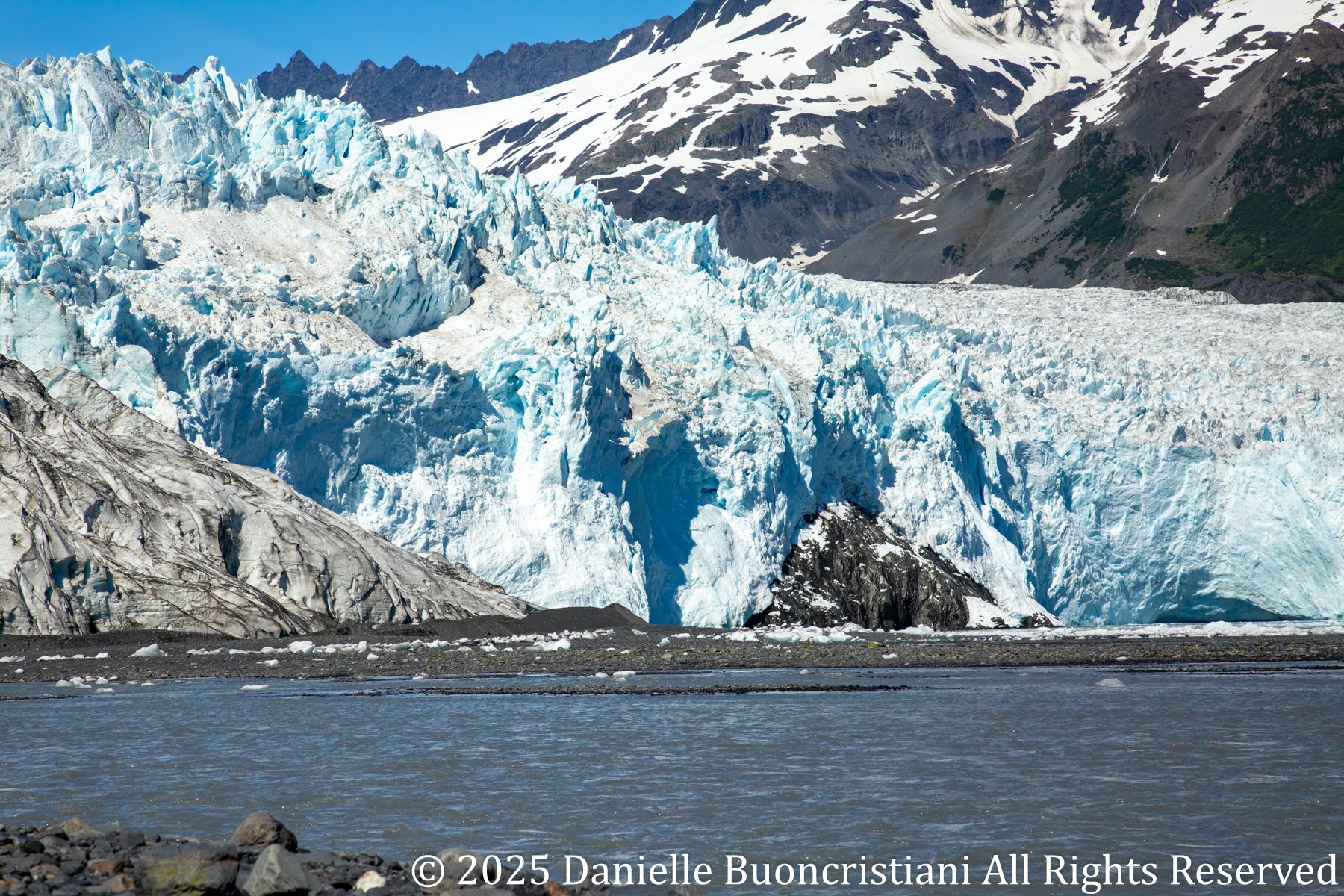
The face of Aialik Glacier in Kenai Fjords National Park, Alaska.
Calving at Aialik Glacier — the sound carried like thunder.
From a distance, the calving pieces looked small against the face of the glacier. But as we watched and our perspective shifted, it was easier to understand the scale — many chunks were the size of cars, and some looked even larger. We kept our distance for safety and watched from where we were.
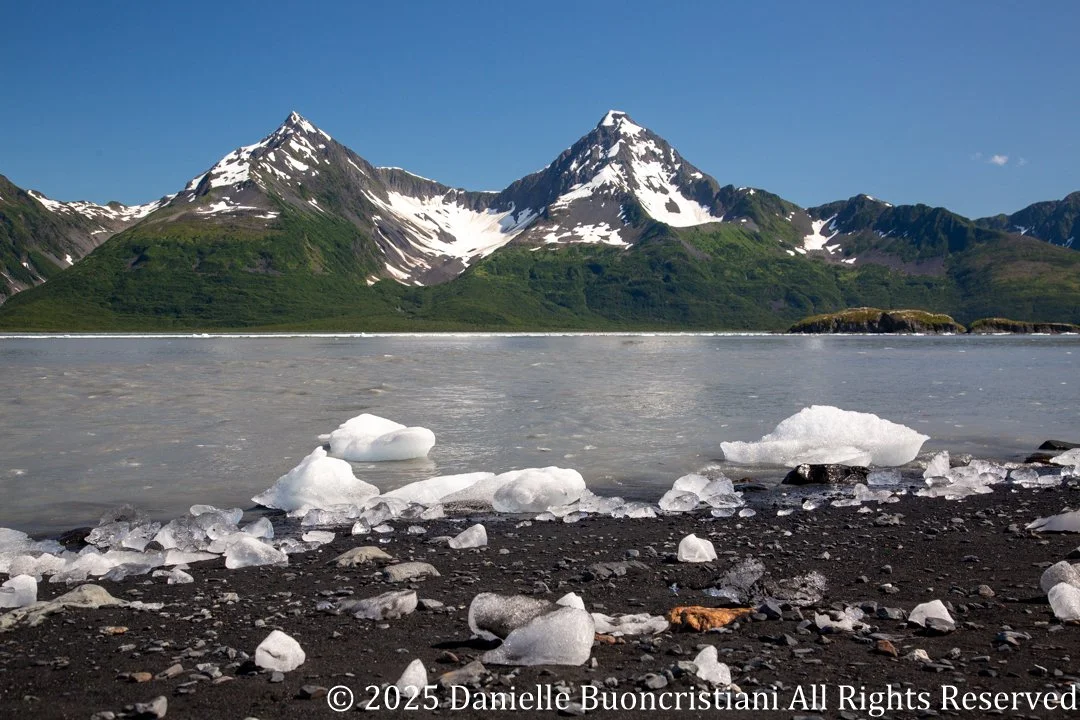
Fragments of ancient ice along the shore.
We stopped below the glacier for lunch. A braided river ran down from the mountains beside us, carrying glacial silt and ice into the bay. You could feel the chill coming off the glacier even in the sunlight.
Standing there, I felt small.
And grateful.
Aialik has been there for thousands of years. It doesn’t depend on people. It doesn’t respond to the schedules we keep or the objects we surround ourselves with at home. It moves forward slowly, steadily, whether we are there to watch or not.
We stood there for a photo — boots in the gravel, glacier behind us — trying to take in the scale of it all before paddling back.
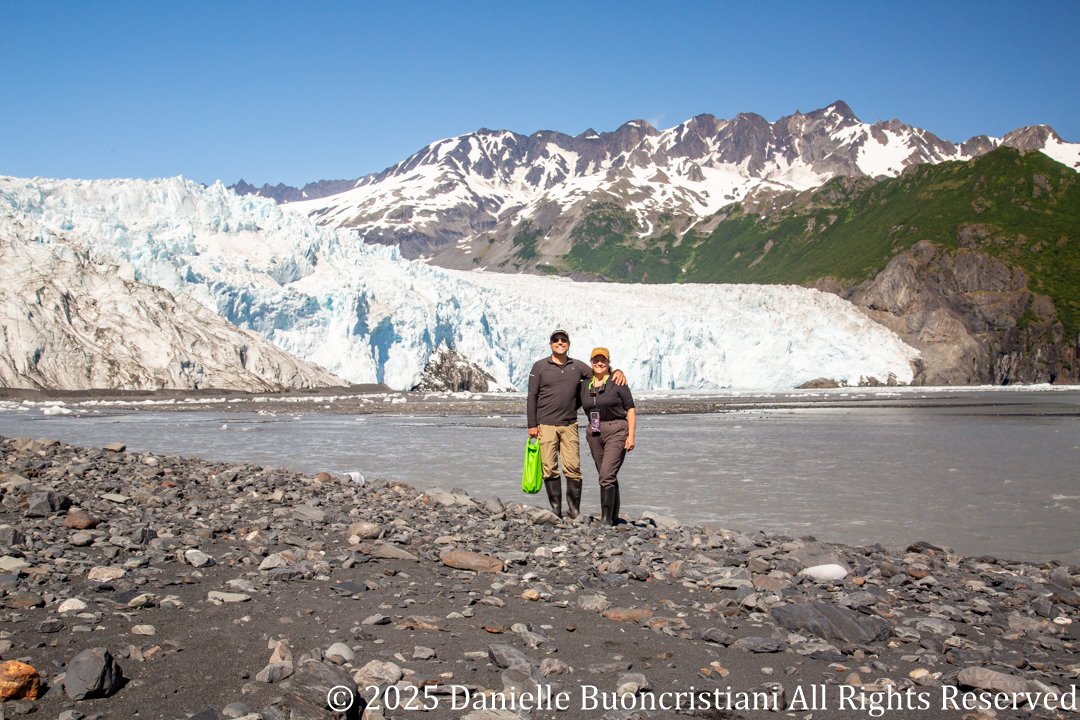
Boots in the gravel, glacier behind us.
The return across the bay felt quieter.
By the time we paddled back toward shore, my arms were not tired.
Dave’s were.
He had carried us across calm water, through boat wake, and closer to a glacier than either of us had ever been before — all while I switched lenses, aimed, and tried not to drop expensive equipment into very cold water.
That afternoon, the connection we had built on the water continued. One of our new friends, a skilled wood carver, guided Dave and a young man from our group in the tradition of carving. Shavings curled away from the blade as they worked side by side.
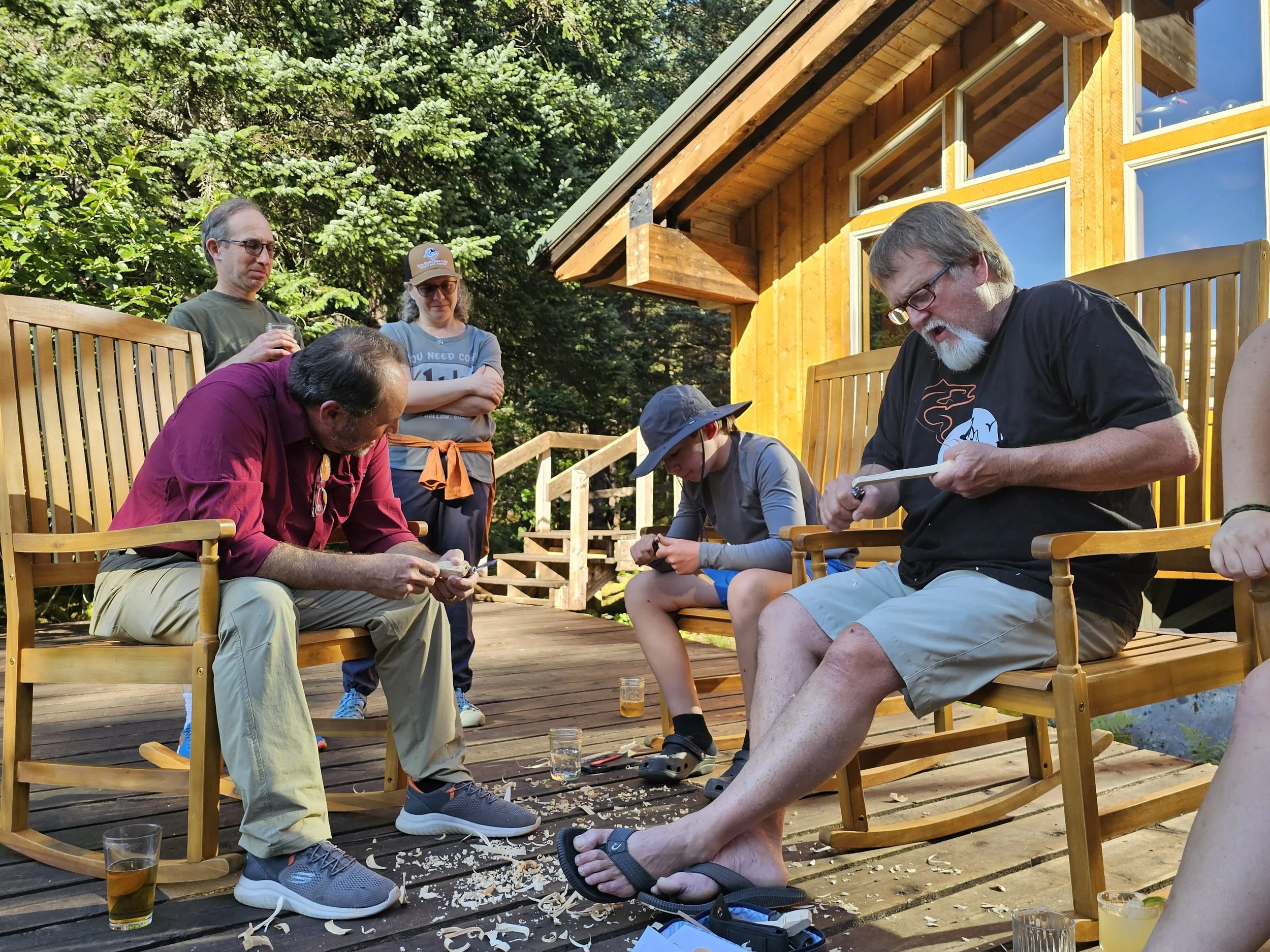
Shavings curled away as the lesson began.
When it was time for dinner, it felt natural to sit down together.
Not as strangers who had signed up for the same excursion.
But as fellow adventurers who had shared something immense.
We had glided across still water.
We had watched ancient ice calve into the sea.
We had heard its thunder.
And we felt truly present.
Field Notes — Aialik Glacier
Location: Aialik Glacier sits at the north end of Aialik Bay in Kenai Fjords National Park, southcentral Alaska. Aialik Bay connects to the Gulf of Alaska, making this ocean water extending inland through a glacial fjord.
Glacier Type: Tidewater glacier — a glacier that flows directly into the sea and calves ice into saltwater.
Source: Fed by the Harding Icefield, which covers roughly 700 square miles and feeds dozens of glaciers in the Kenai Mountains.
Height: The visible ice face typically rises approximately 300–400 feet above the waterline, with some sections estimated to approach 500–600 feet. A significant portion of the glacier extends below the ocean’s surface.
Calving: A natural process where large sections of ice break from the glacier’s face and fall into the sea. The sound can travel long distances across water and often resembles thunder.