Week 16: Kenai Fjords
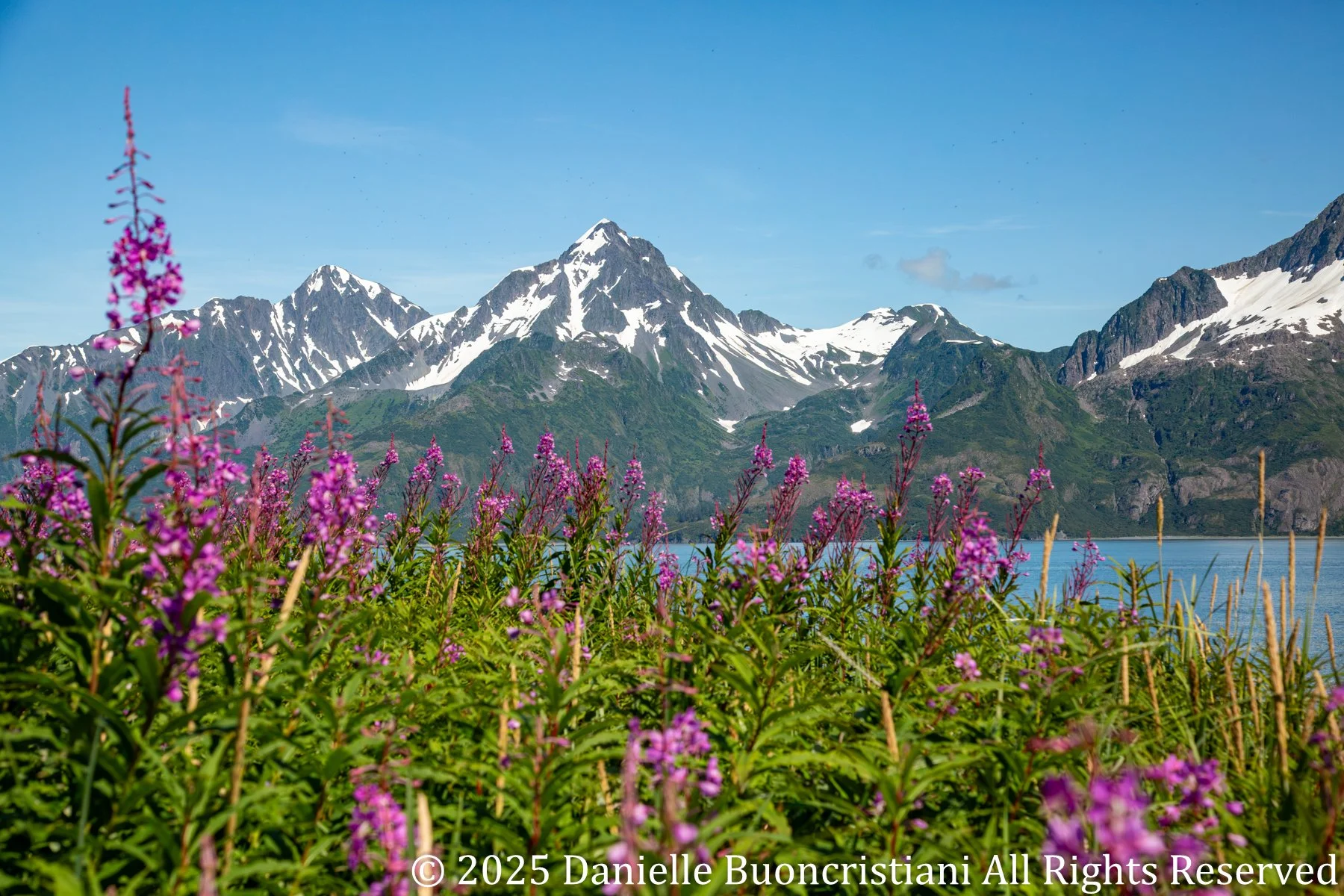
Fireweed in bloom along the shores of Kenai Fjords, with snowcapped peaks rising beyond the bay — our first glimpse of the landscape surrounding Glacier Lodge.
Seward looked completely different in the sun.
The day before had been gray and wet — low clouds hiding the mountains, drizzle soaking the harbor. But this morning, Resurrection Bay was clear and bright. The peaks stood sharp against a blue sky, and the water shifted from green to deep blue depending on the light.
It was warm standing on the dock — warm enough that our jackets stayed folded inside our backpacks. We knew better than to trust it. Once the boat carried us into open water, the temperature would drop fast.
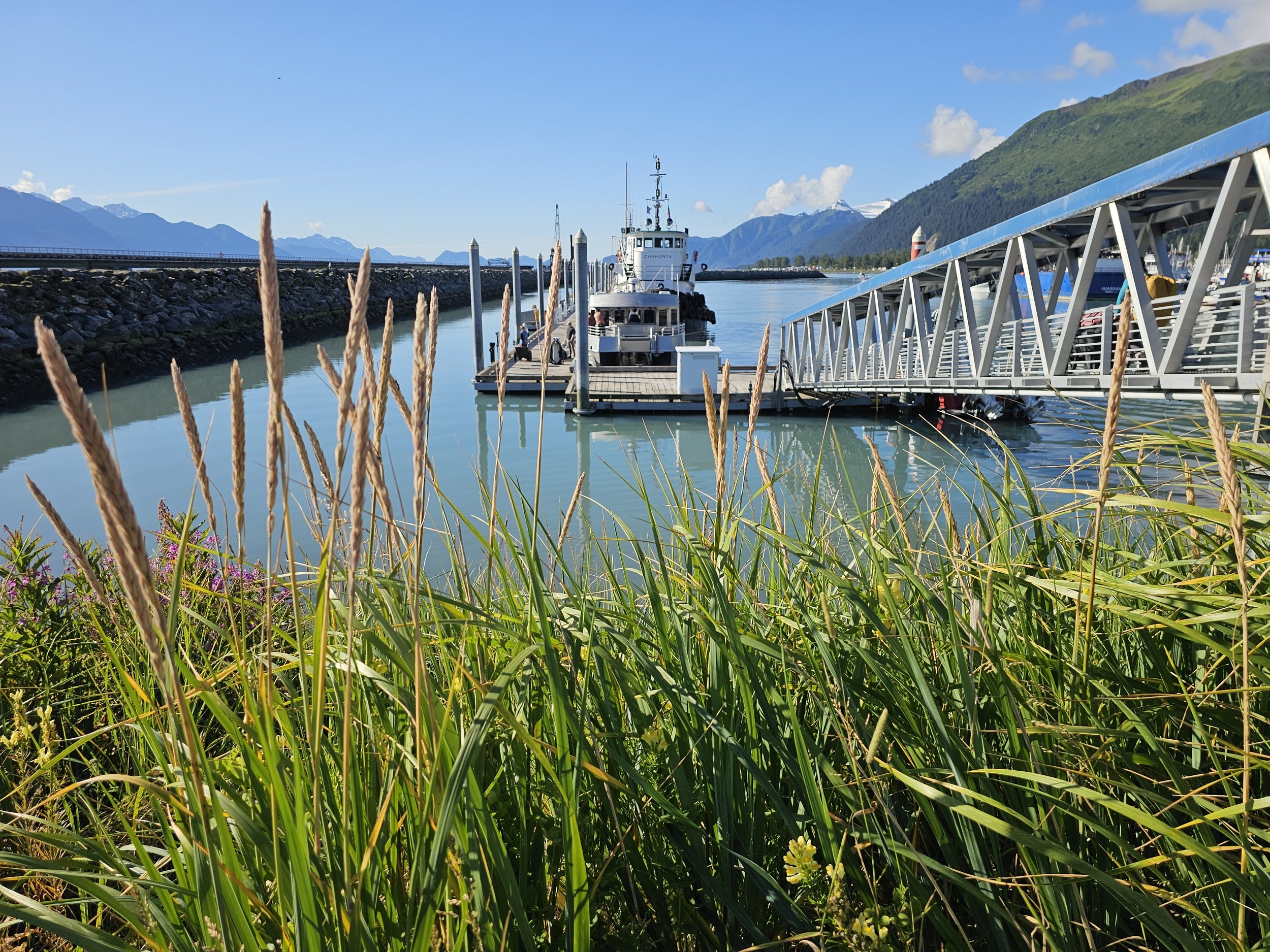
Boarding in Seward under clear skies — a very different harbor than the gray, rain-soaked afternoon before.
Having completed the photography tour, we were now in the care of Alaskan Wildland Adventures, bound for their Kenai Fjords Glacier Lodge in remote Aialik Bay-just a small group of us heading out together.
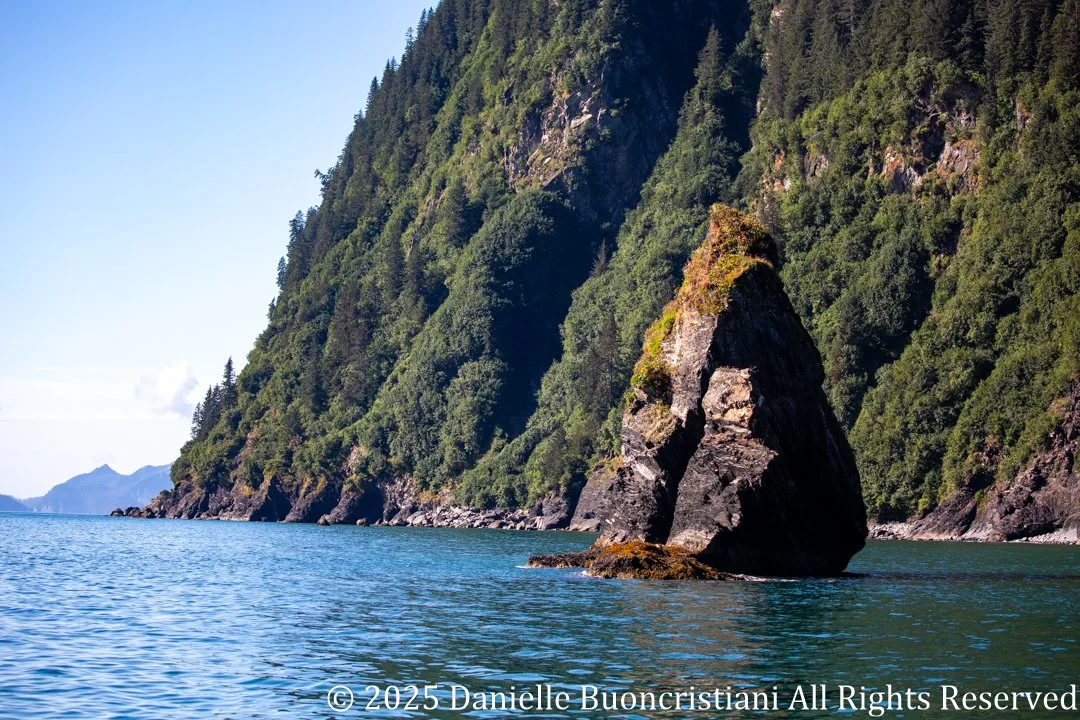
A solitary rock rising from the water as the coastline grew steeper and more rugged.
Leaving the Harbor
The boat moved out through calm water, the harbor widening slowly behind us. The cliffs along Resurrection Bay rose steep and green, and within minutes Seward felt far away.
An eagle crossed overhead, low enough that we could see the flash of white against the trees.
Not long after, the captain eased back on the throttle.
A sea otter floated on its back just off the bow.
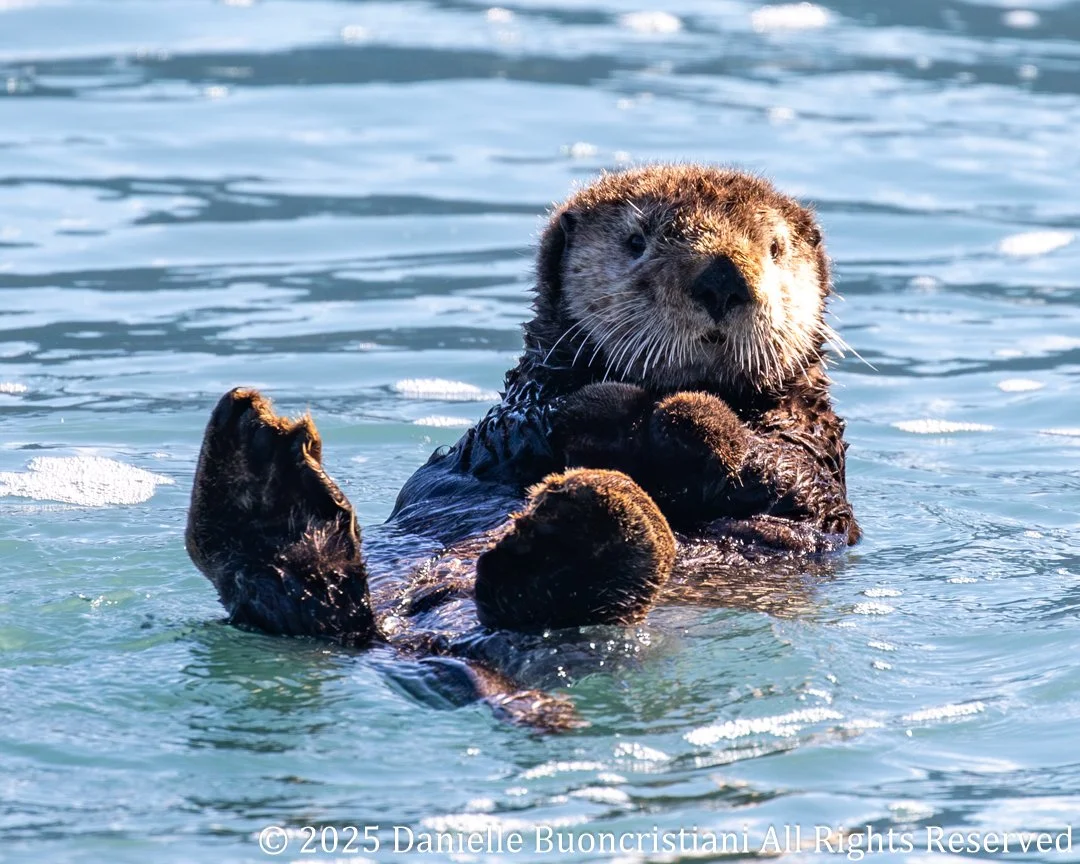
A sea otter floating on its back in calm water as our boat drifted nearby.
At first it looked small against the scale of the bay — just a dark shape in the water. But as we drifted closer, it lifted its head and looked directly toward the boat. It rolled slightly, paws tucked toward its chest, then settled again.
We stayed there for several minutes. No rush. Just watching.
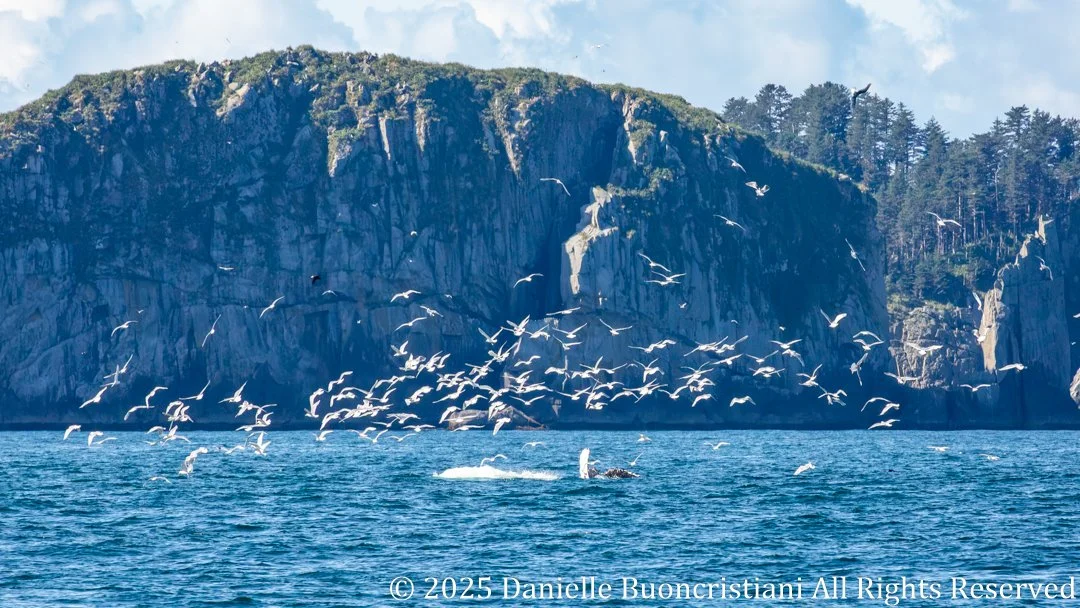
Seagulls gathered tightly over the water — our first sign that something was happening below the surface.
Signs in the Open Water
The first clue was the birds.
Seagulls began gathering ahead of us — circling tightly and diving again and again. It didn’t look random. The captain adjusted course and slowed, and everyone on deck leaned the same direction.
At first, we didn’t understand what we were seeing.
A group of humpback whales bunched close together, then rose again — multiple backs lifting and slipping beneath the same patch of water. It felt concentrated and coordinated, though we didn’t yet have the language for it. We just knew something was happening.
That’s when we learned we were watching bubble-net feeding.
Once we understood, the whole scene sharpened — the birds gathering for an easy meal as the whales forced fish upward, the repeated rises, the tight circle of activity.
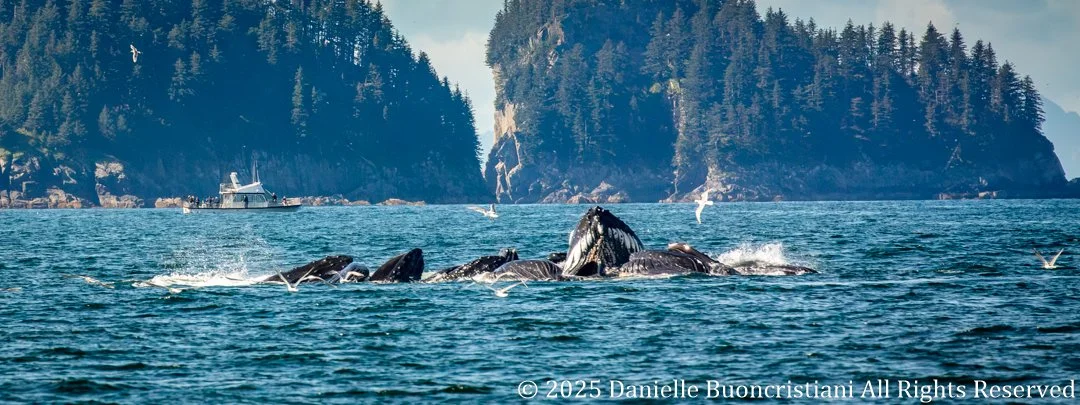
Several humpbacks rising in the same patch of water — our first close look at coordinated feeding.
Field Notes: Bubble-Net Feeding (Humpback Whales)
Humpback whales sometimes feed cooperatively using a technique called bubble-net feeding
One or more whales dive below a school of fish and blow rings or spirals of bubbles
The bubbles concentrate the fish into a tighter school
The whales rise together to feed
Seagulls often gather above these events, taking advantage of fish pushed toward the surface
And then a whale breached.
And then another.
And then more.
We never quite knew where to look. I would aim my camera one way, and another whale would rise somewhere else.
Large bodies surfaced and fell back, spray fanning across the water. Fins flashed. A plume of breath lifted into the air and disappeared.
The boat buzzed with energy — people pointing, turning, trying to anticipate the next movement.
I kept my eye in the viewfinder, adjusting and tracking, hoping to catch the next lift out of the water. A few people nearby leaned in, curious about what I had just seen in my lens.
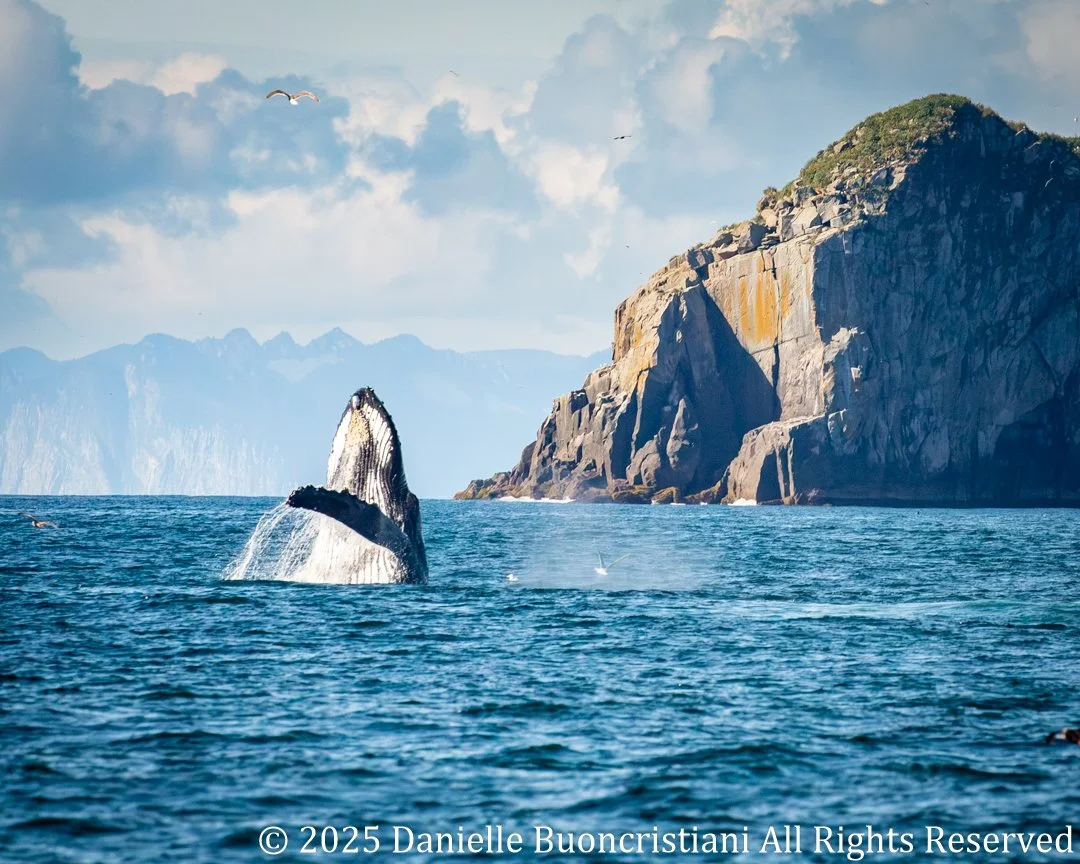
One of several humpbacks that breached unexpectedly during our time on the water.
Whales, Birds, Sea Otters and Sea Lions — All in One Stretch
As we continued along the rocky coastline, the cliffs rose higher and steeper.
Sea birds filled the air — kittiwakes and murres nesting in the ledges. Puffins darted in quick arcs, colorful bills flashing as they swooped toward the water.
On the rocks below, sea lions sprawled in heavy clusters.
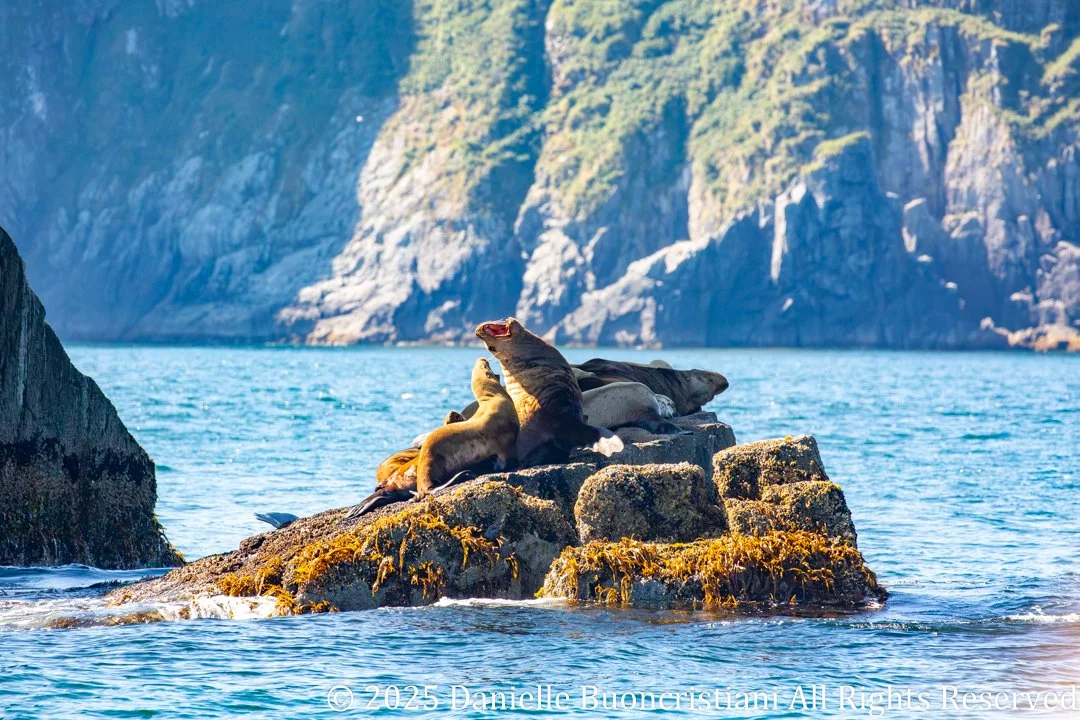
Along the rocky shoreline, sea lions lay piled together, sunning themselves above the cold Pacific water
Field Notes: Sea Lions
• Steller sea lions can weigh over 1,000 pounds
• Males are significantly larger than females
• They haul out on rocks to rest, regulate temperature, and socialize
• Their bark carries long distances over water
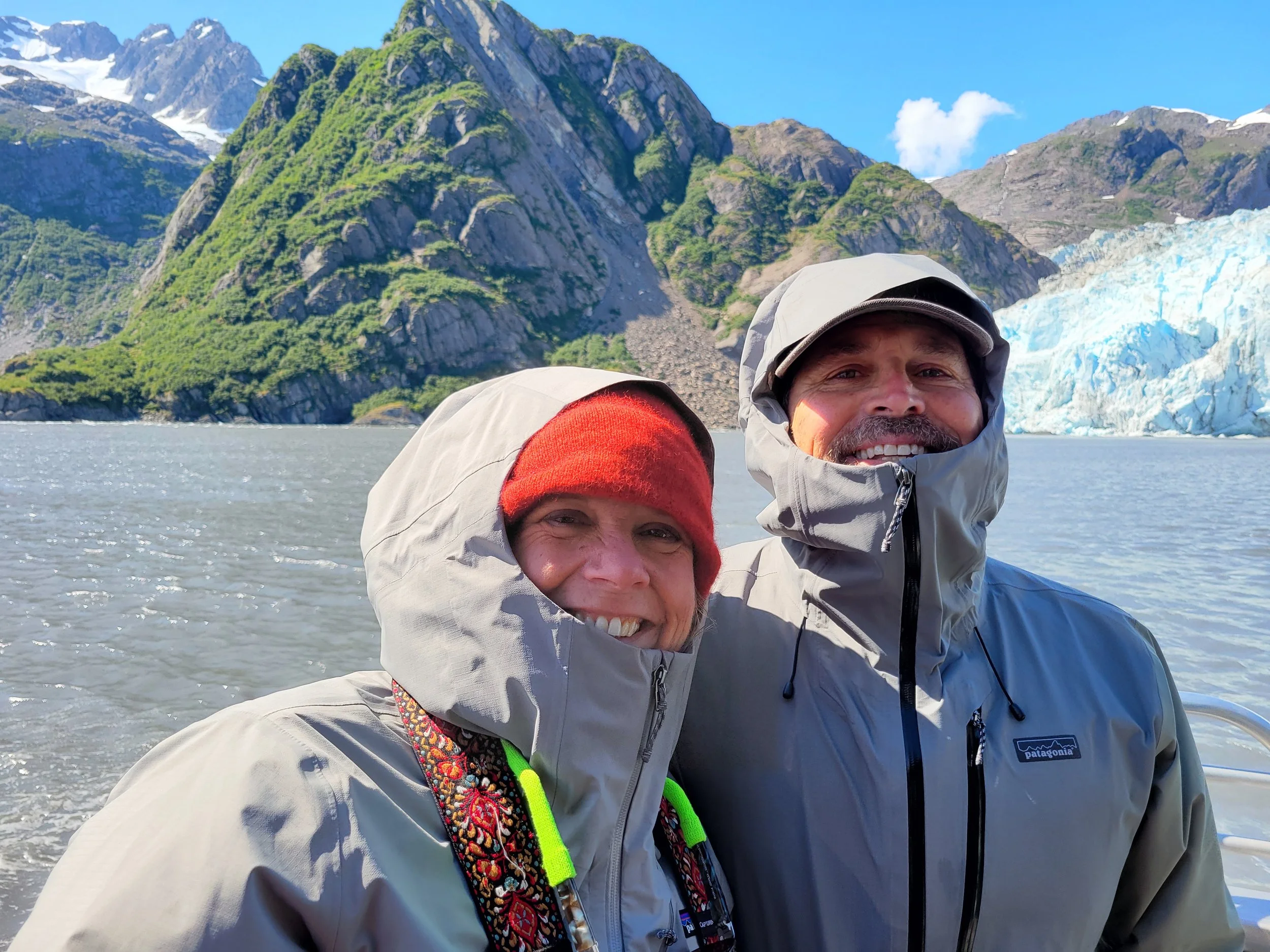
Out on the water, bundled against the wind, with glacier ice rising behind us.
The scale of everything felt bigger here — cliffs, animals, distance.
Glaciers appeared along the route — some tucked deep into valleys, others hanging high above the waterline. The captain pointed them out as we passed, naming each one as if introducing us to landmarks in a new neighborhood.
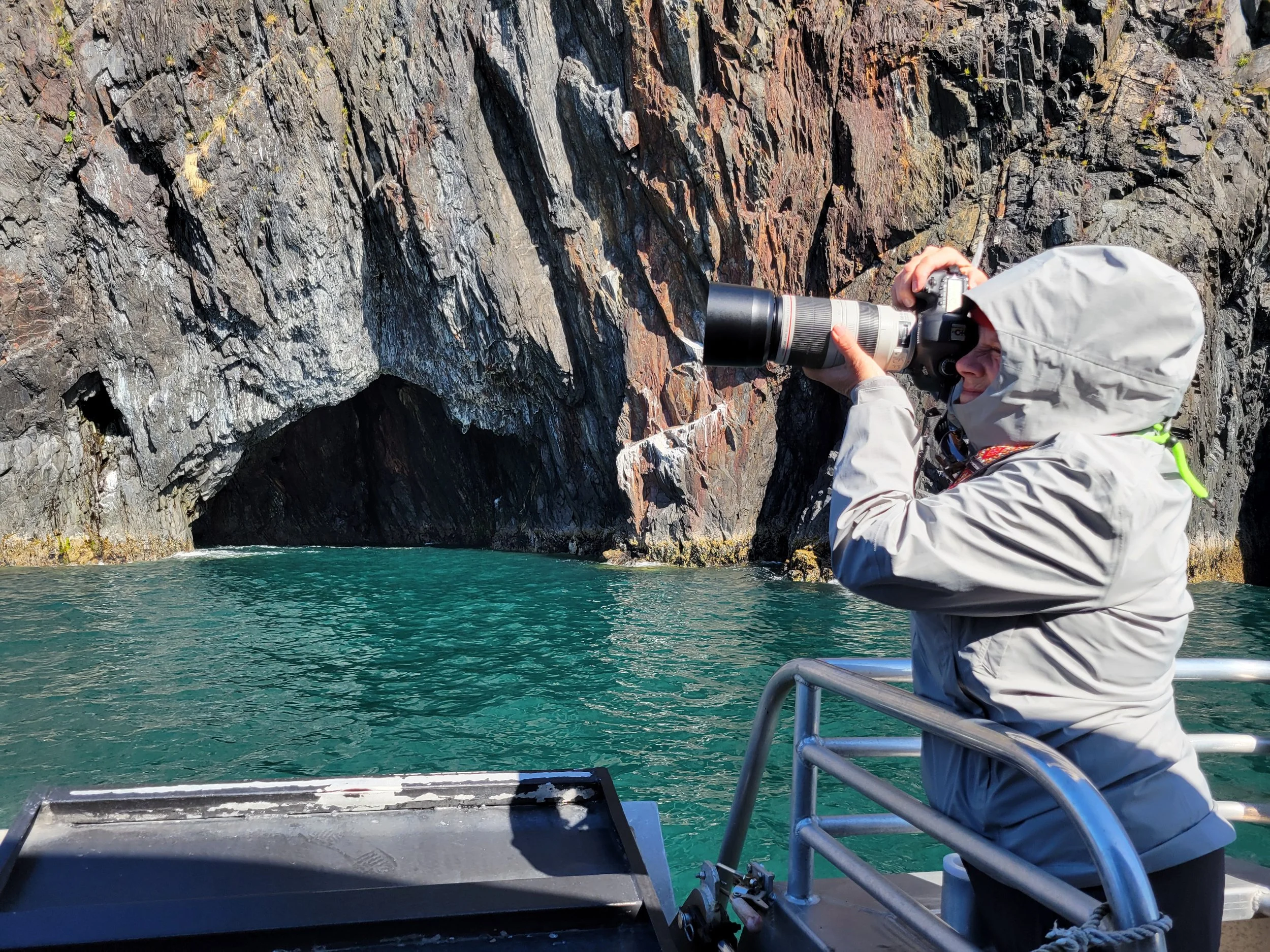
Leaning into the wind, photographing the cliffs as we moved along the coastline.
No Dock. No Buildings.
When the boat slowed again, there were no buildings in sight.
No dock waiting for us. No sign of a lodge.
Instead, the captain eased the boat directly onto a stretch of gravel shoreline. Meadow behind it. Trees rising just beyond. Quiet in a way that felt immediate.
This was our stop.
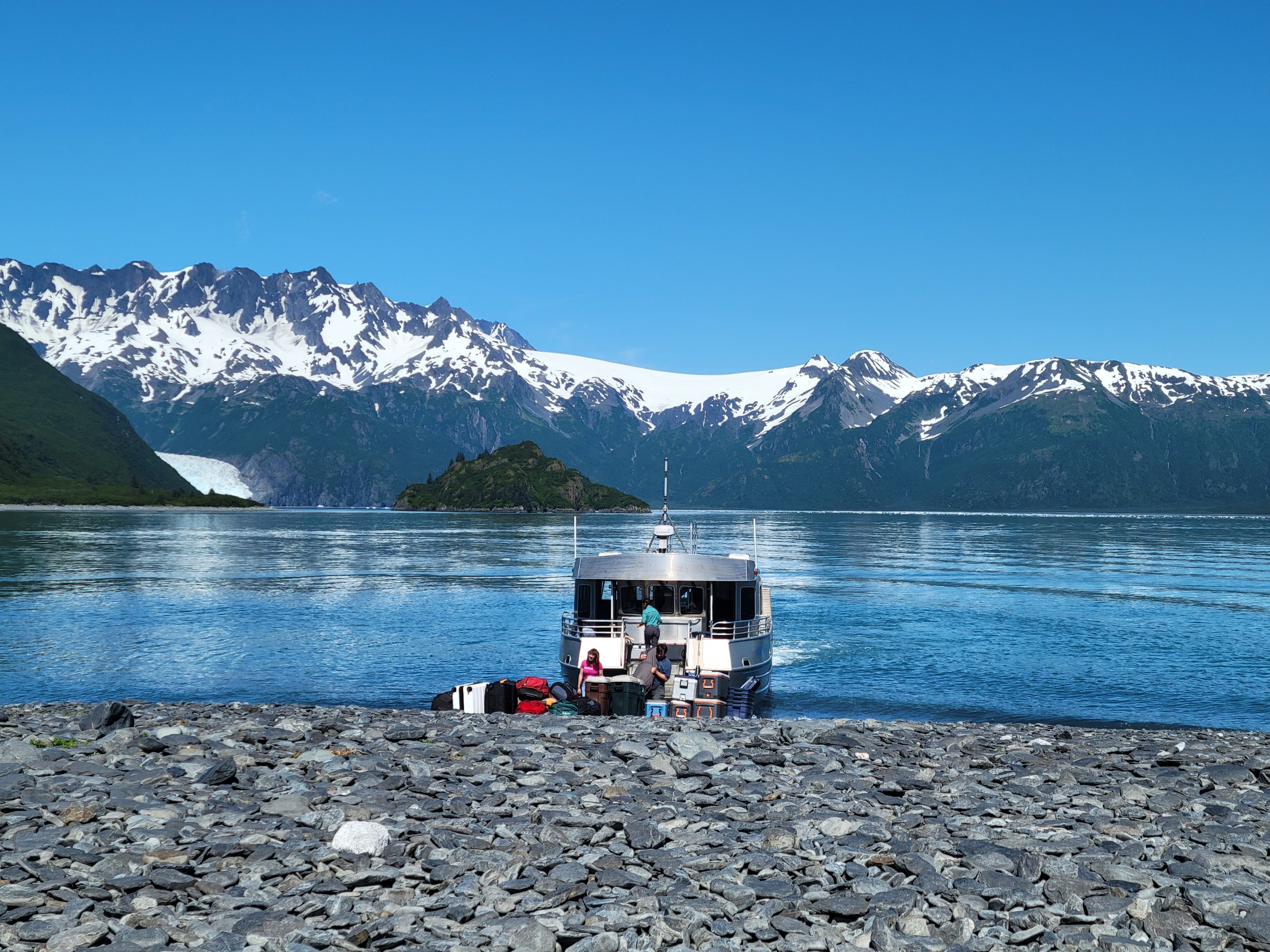
The boat eased onto a gravel shoreline — no dock, no buildings, just open water and mountains behind us.
We stepped off the boat onto the gravel, looking around, trying to imagine where a lodge could possibly be. From the water, there was nothing — just open land and forest.
And that was entirely the point.
The Walk In
We began crossing the meadow toward where we were told the lodge stood.
Still nothing visible.
No roofline breaking the horizon. No sign of buildings above the trees.
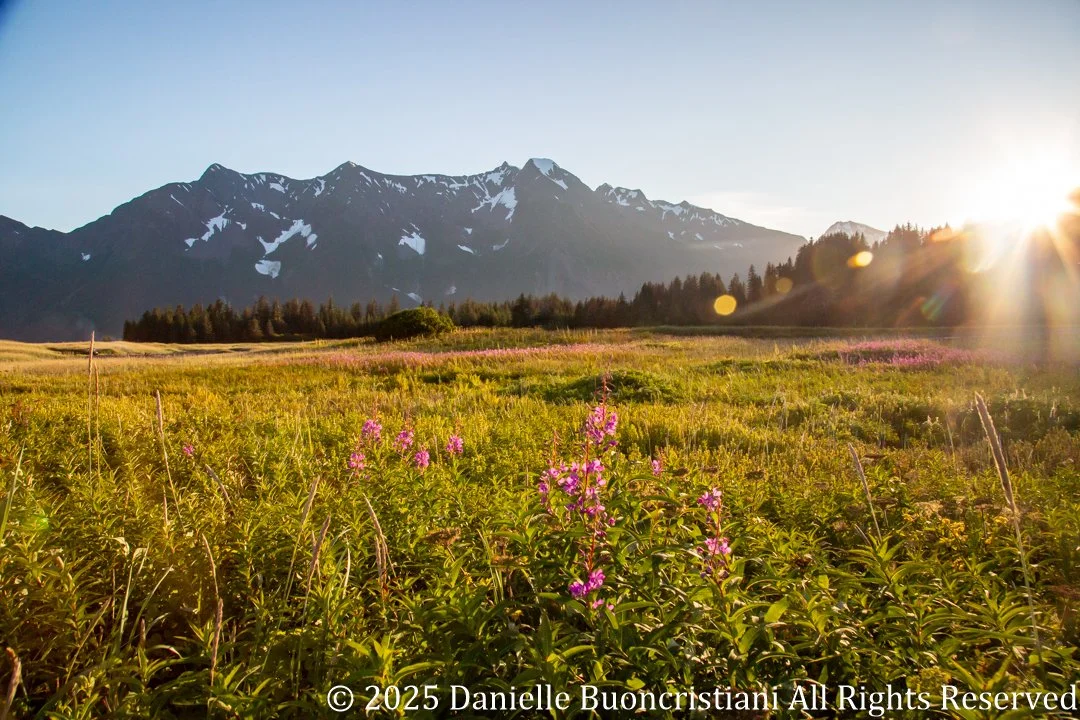
The meadow beyond the gravel shore, photographed later in the evening light.
Then we entered the trees.
Bear scat along the trail. A quiet reminder that we were not alone here.
A few steps farther in, the buildings began to appear. Not rising above the forest, but tucked carefully within it. Wood siding. Low profiles. Structures that blended instead of announced themselves.
It wasn’t an entrance.
It was a reveal.
Field Notes: Glacier Lodge Design
• Buildings are intentionally set back from the shoreline
• Constructed to minimize visual impact from the water
• Elevated boardwalks protect fragile meadow and wetland ecosystems
• The lodge is designed to feel hidden rather than dominant
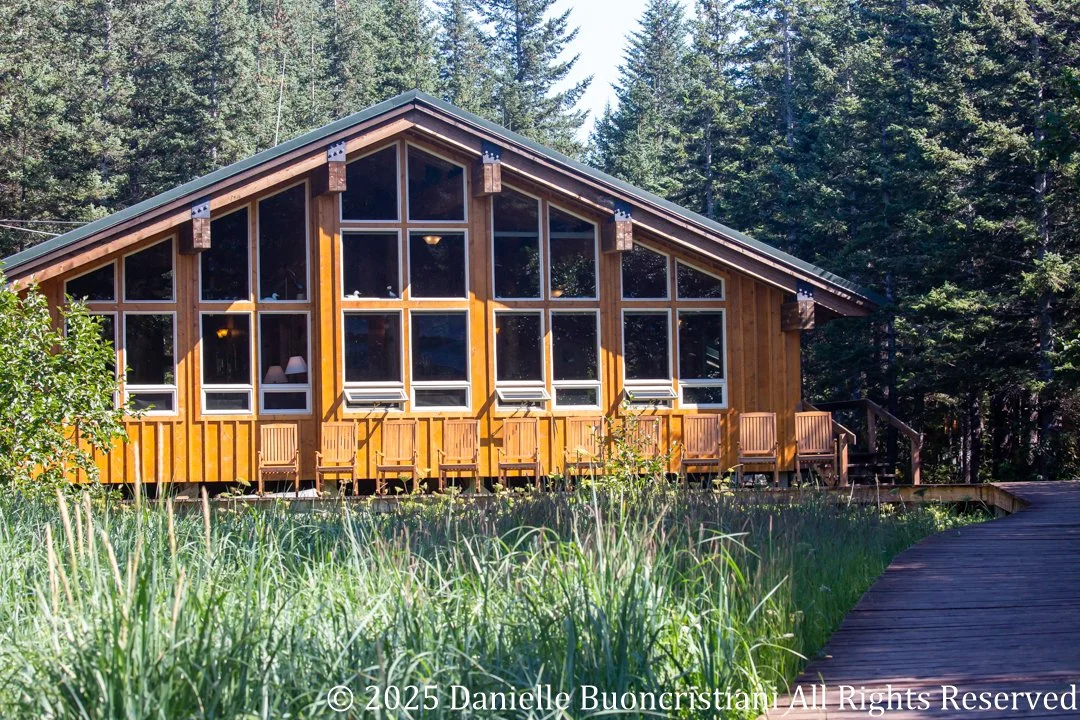
The lodge, nestled into the trees rather than rising above them.
Orientation, First Paddle — and Glacieritas on the Deck
When we returned from the shoreline, our luggage was already inside our small cabin — simple, warm, tucked into the trees.
We gathered for a short orientation and heard about the next day’s options. Dave and I already knew what we wanted. We had come to see the glaciers up close, so we signed up for the full-day kayak trip to Aialik Glacier. If there was calving, we wanted to be there for it.
Before dinner, we were invited to explore Pedersen Lagoon by canoe.
The water inside the lagoon was protected and calm. We paddled quietly. A sea otter rolled near the surface. A seal appeared briefly, then disappeared again. Eagles crossed above the trees.
Then our guide asked us to turn around.
From the water, the lodge was invisible.
Completely hidden.
You could float in that lagoon and never know it was there.
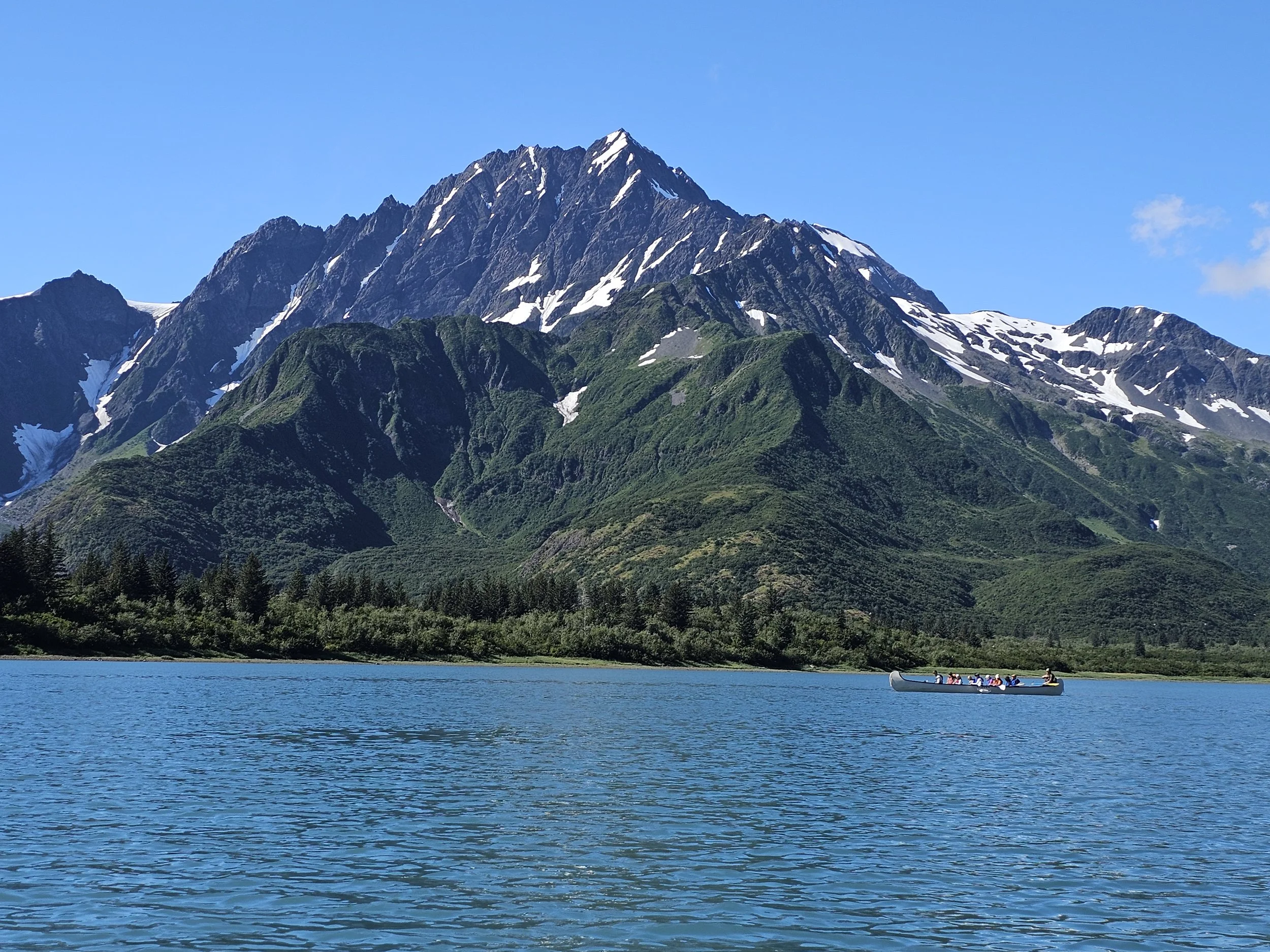
Canoeing across Pedersen Lagoon beneath snow-streaked peaks.
Back on shore, there was an ease to everything. Meals prepared. Guides organized. Gear ready for the morning. We didn’t have to think about logistics — just the miles we would paddle toward the glacier.
Later that evening, we ordered our first Glacieritas — margaritas poured over glacier ice, a small tradition at the lodge — and stepped out onto the deck.
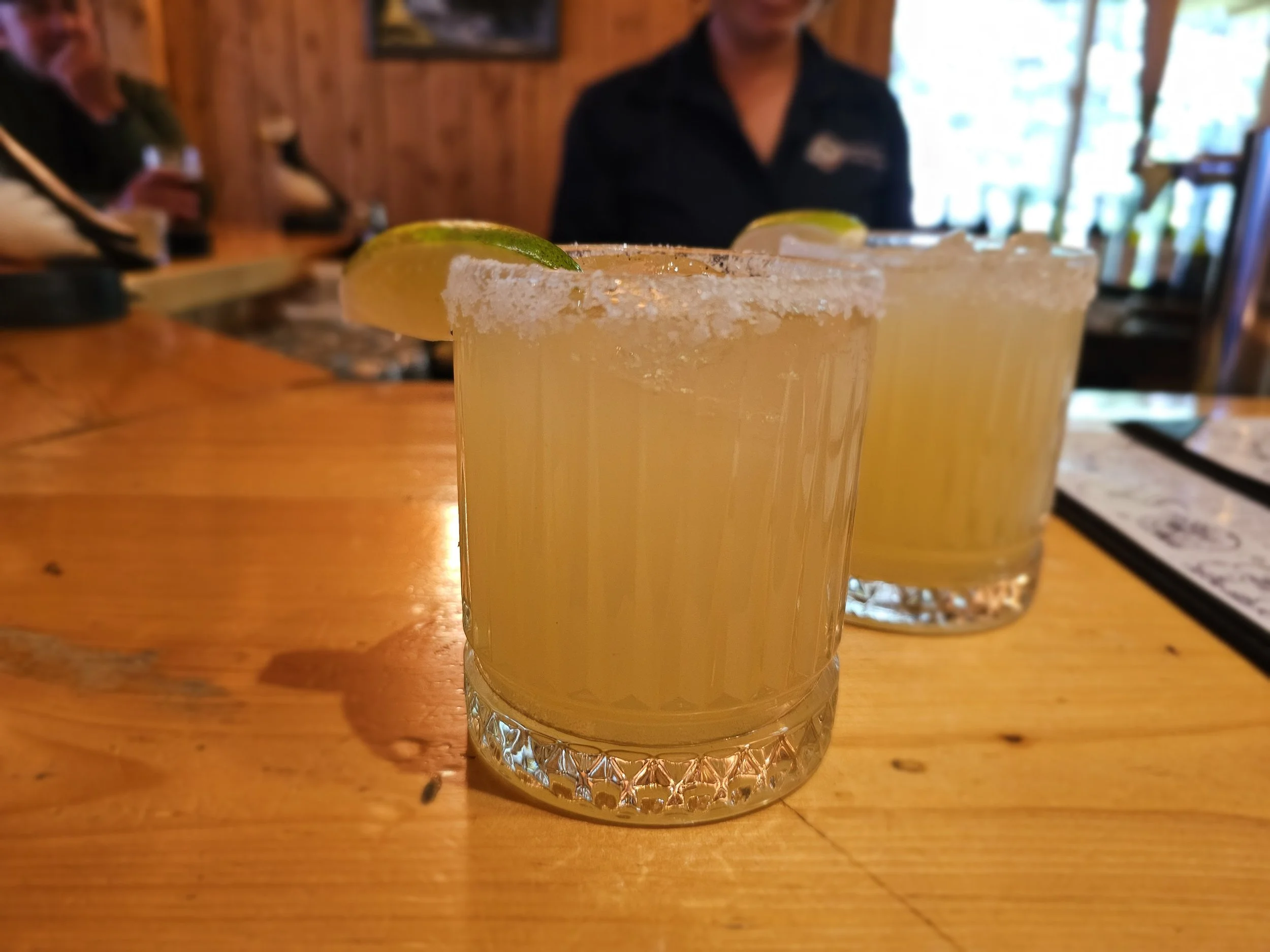
Cold glasses, warm wood, and the start of a quiet evening.
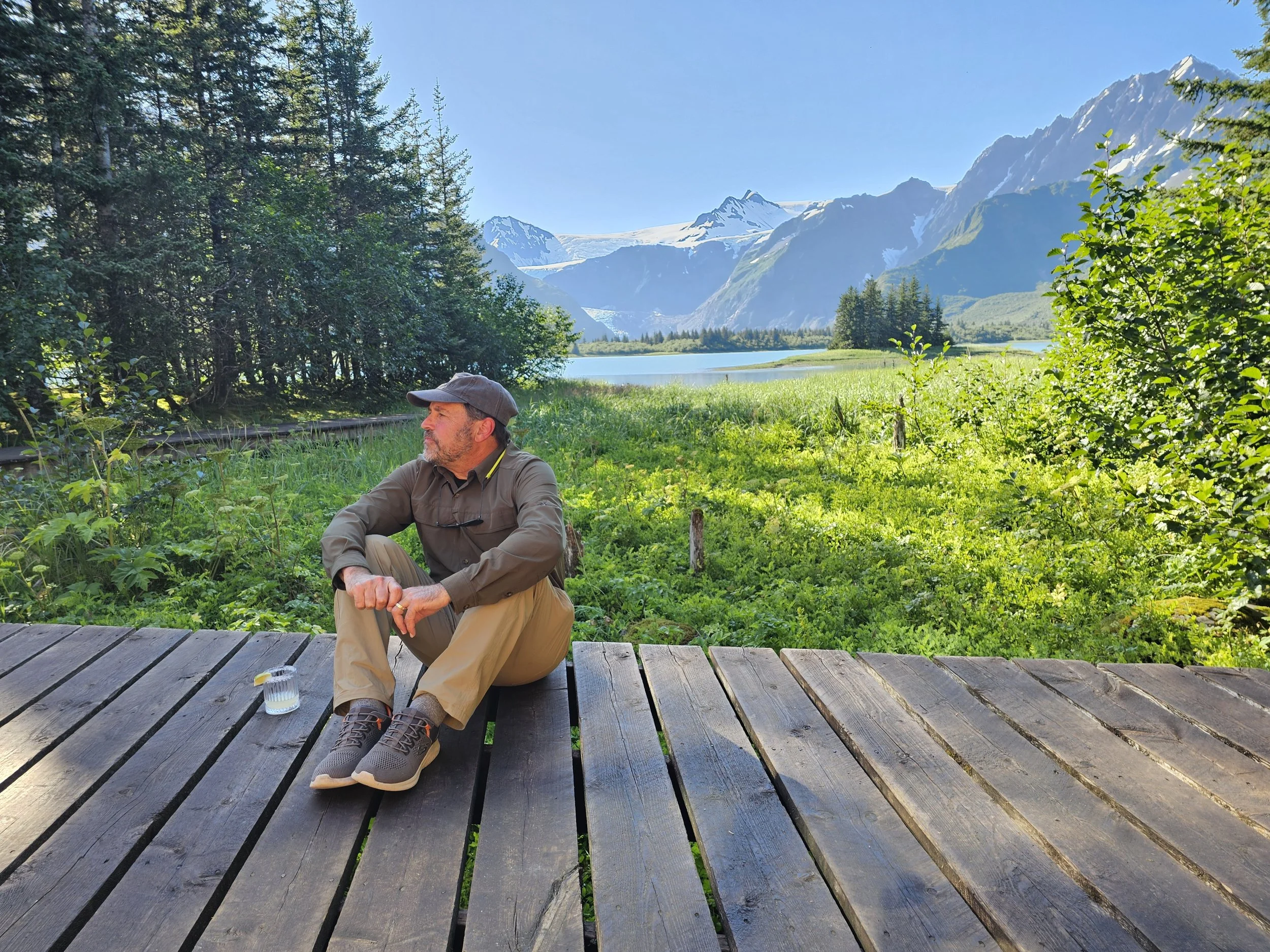
Dave sitting quietly on the deck, Pedersen Lagoon and snow-streaked mountains beyond.
The deck sits just a few feet above the ground, level with the grasses, facing toward Pedersen Lagoon and the mountains beyond. We weren’t overlooking anything. We were part of it.
Out in the lagoon, the canoes were tied together, resting in the fading light.
Dave sat quietly, taking it in.
No harbor noise.
No engines.
No schedule.
Just space. And stillness.
I remember feeling completely at peace — deeply connected to the outdoors and, at the same time, incredibly well cared for.
Wild, but comfortable.
Remote, but welcoming.
As the light shifted again, I picked up my camera.
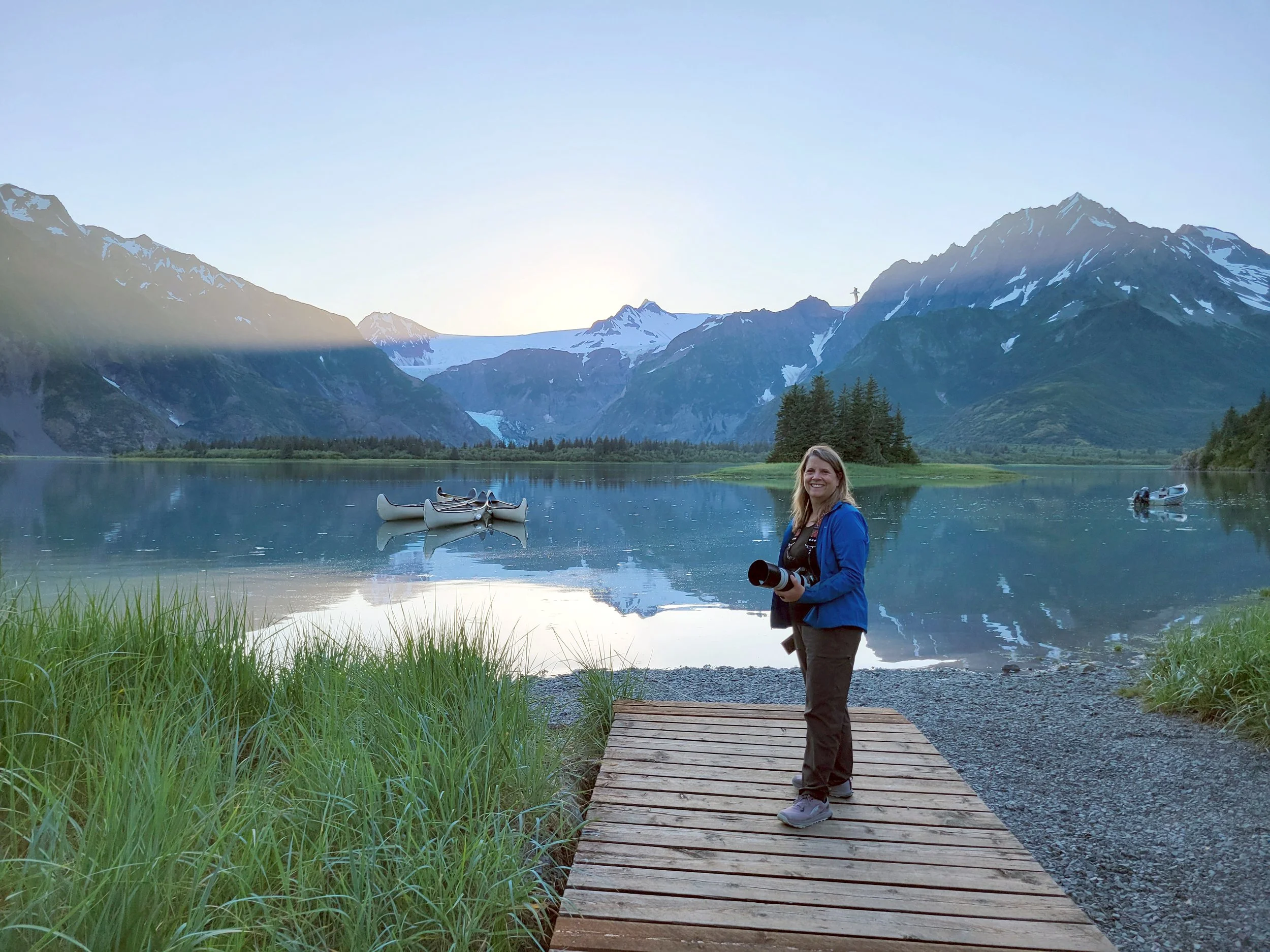
Evening at Pedersen Lagoon — camera in hand, light shifting once again.