Week 12 - At Denali’s Edge
Before Darkness Ever Comes
Evening in Alaska during the summer doesn’t signal the end of the day. It’s often when the most unexpected moments begin.
We continued driving near Denali’s edge as a group, with Wayde at the wheel, scanning the landscape as the light softened. Earlier, during a short walk, we’d already seen ptarmigan tucked into the brush and an Arctic ground squirrel darting through the grasses — small confirmations that the landscape was active, even when it appeared still.
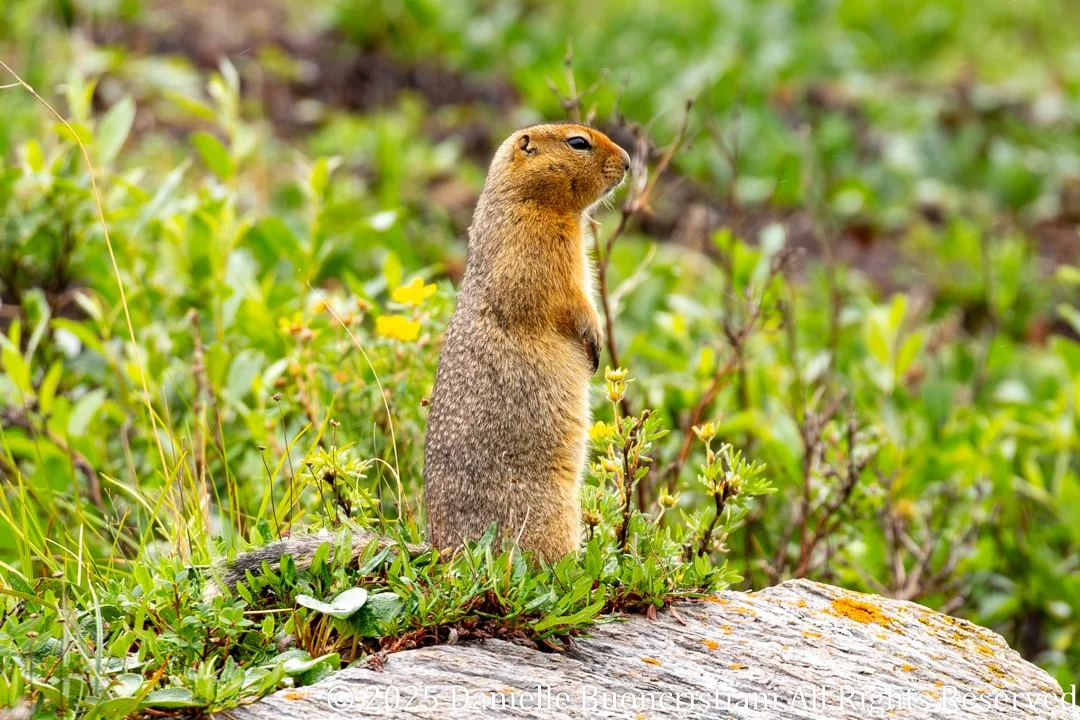
An Arctic ground squirrel pauses briefly before darting back into the grasses — small, fast, and essential to the ecosystem.
Field Note: Arctic Ground Squirrel
Arctic ground squirrels are a key prey species and form the foundation of many carnivore food chains in Alaska.
They are an important food source for foxes, wolves, bears, birds of prey, and other predators.
Despite their small size, their presence supports a wide range of wildlife across tundra and alpine ecosystems.
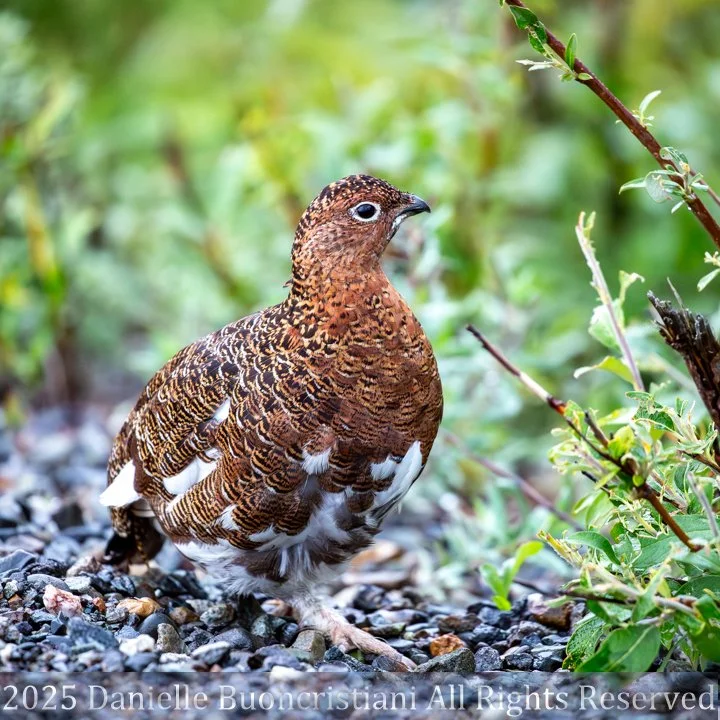
A ptarmigan blends almost perfectly into the landscape — Alaska’s state bird, built for weather, patience, and disappearing when needed.
Field Note: Ptarmigan
Alaska’s state bird and a year-round resident — ptarmigan do not migrate.
They adapt to extreme seasonal change by molting, shifting from mottled browns and grays in summer to pure white in winter for camouflage.
Rather than fleeing, ptarmigan often rely on stillness and blending into the landscape, remaining motionless even when closely observed.
A light rain began to fall as we drove. It was now past 11:00 p.m. Twilight had settled into that long, lingering Alaskan in-between time — not quite day, not quite night.
Ahead of us, a car slowed briefly, pulled over, then continued on after a minute or so.
Curious, we decided to pull over.
Just beyond the side of the road, a female moose and her calf stood in amongst the trees.
Stepping out of the van but staying within it’s profile, we were careful not to disrupt their natural behavior. Moose — especially mothers with young — are known to be unpredictable, and we were mindful of both their space and our own safety.
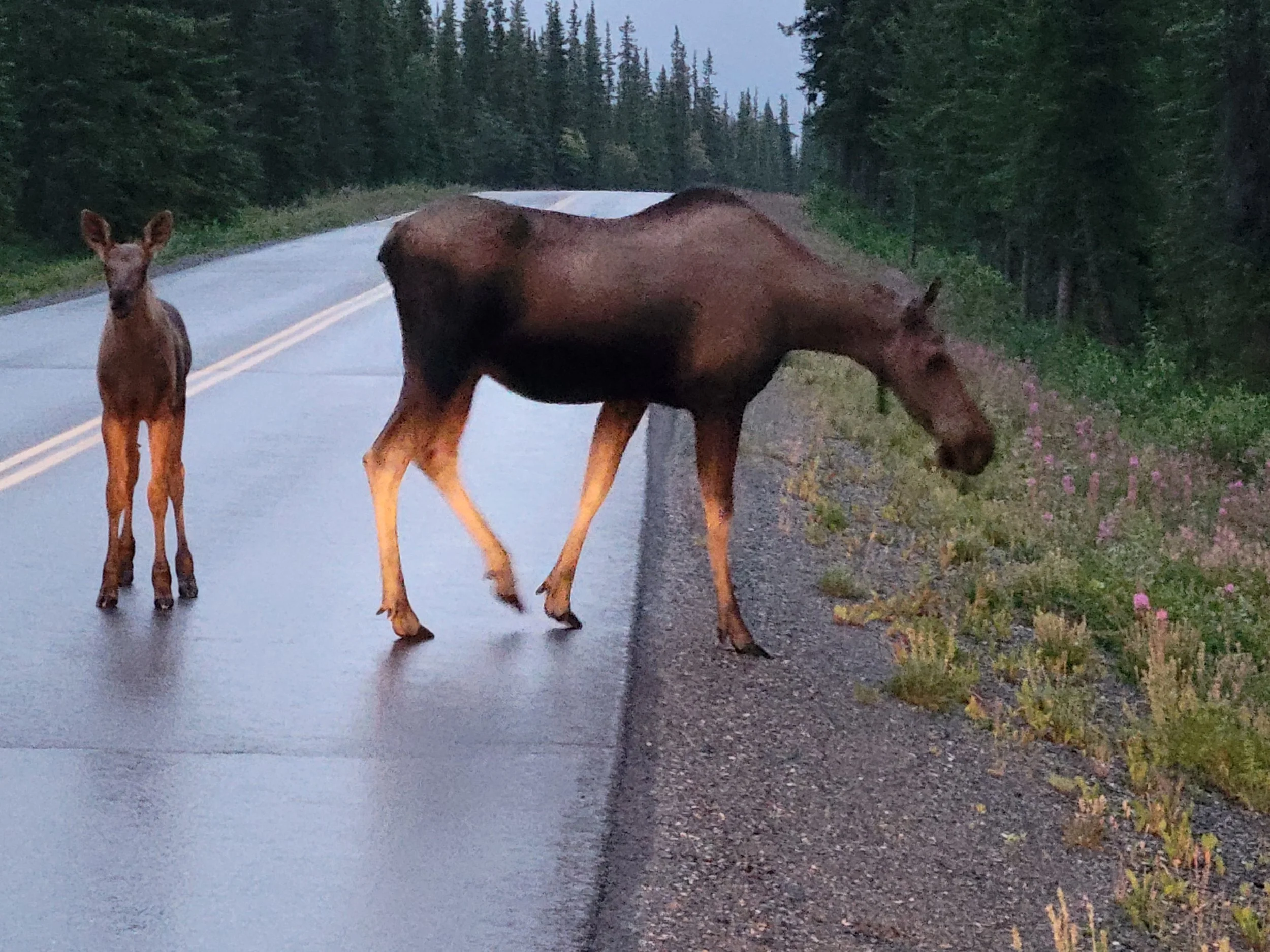
A mother moose and her calf crossing the road at twilight — the moment we realized something special was unfolding.
Then, without hesitation, the moose began walking toward us — calm, unbothered, her calf close at her side.
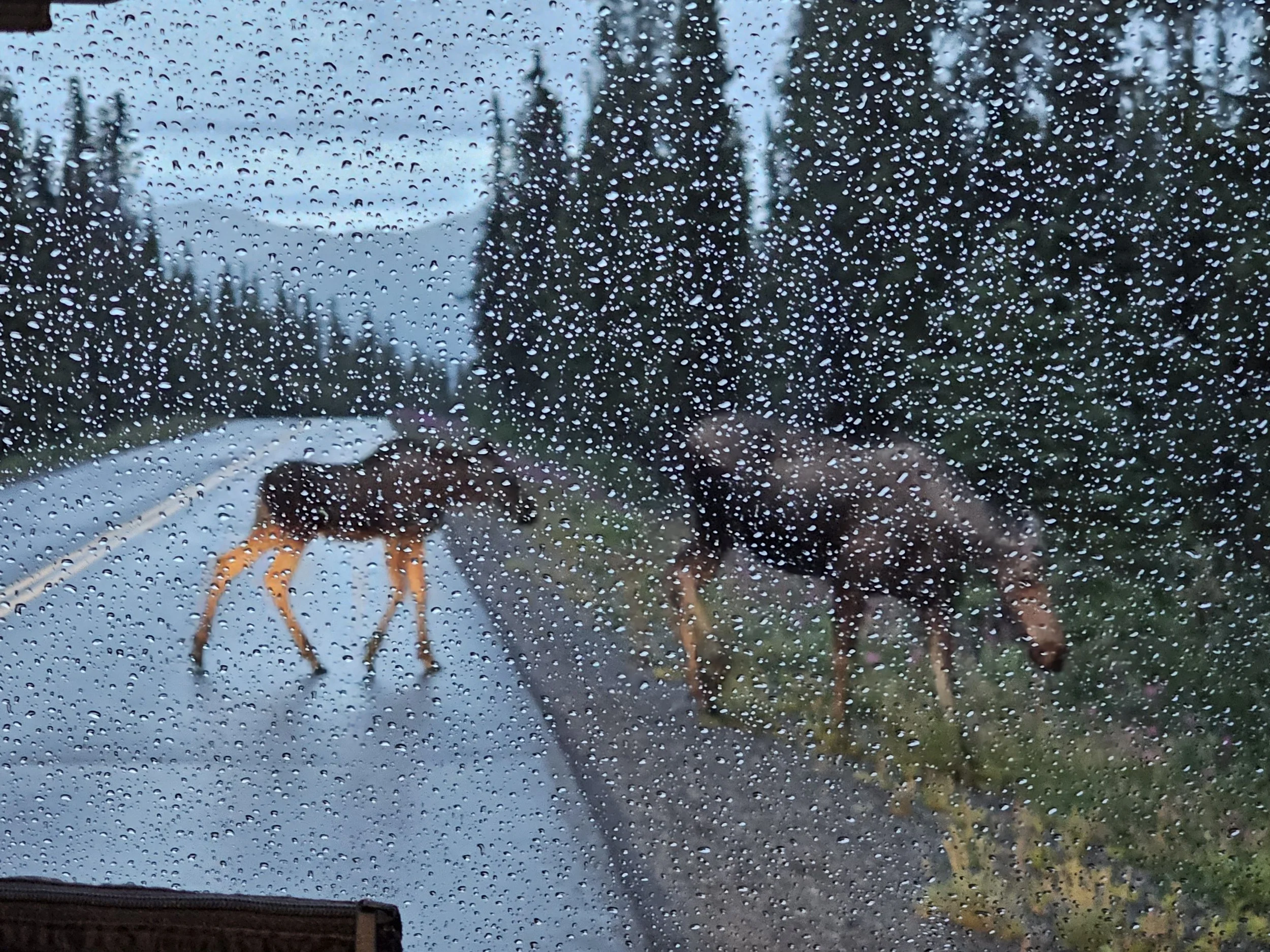
As light rain began to fall, they moved closer — photographed from inside the van as twilight deepened.
As the light softened and rain began to fall, we calmly and quickly stepped back into the van as they crossed the road. From inside the van, through the open door, we photographed quietly as the pair passed just a few feet away. The calf stayed close, mirroring her mother’s movements as they began grazing beside the van.
It unfolded so naturally. Sometimes in Alaska, you don’t go looking for wildlife. It finds you.
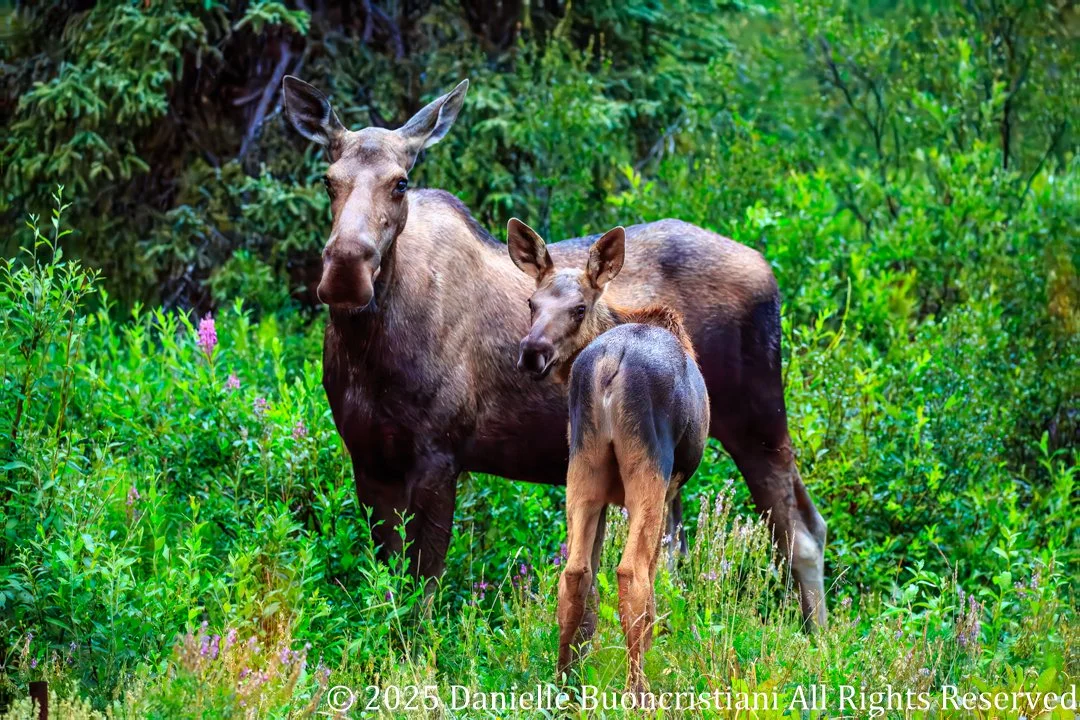
The mother and calf paused in the fireweed, calm and unbothered — a final gift before the night fully settled in.
Field Note: Summer Light in Alaska
• Near Denali in midsummer, sunset can occur close to midnight
• Twilight lingers rather than giving way to full darkness
• Wildlife activity often continues late into the evening
Morning, Before the Flight
Sleep came late that night and dawn came early.
Before our flight into Camp Denali, we headed out once more, hoping for another chance to observe wildlife in better light. This time, the landscape rewarded patience.
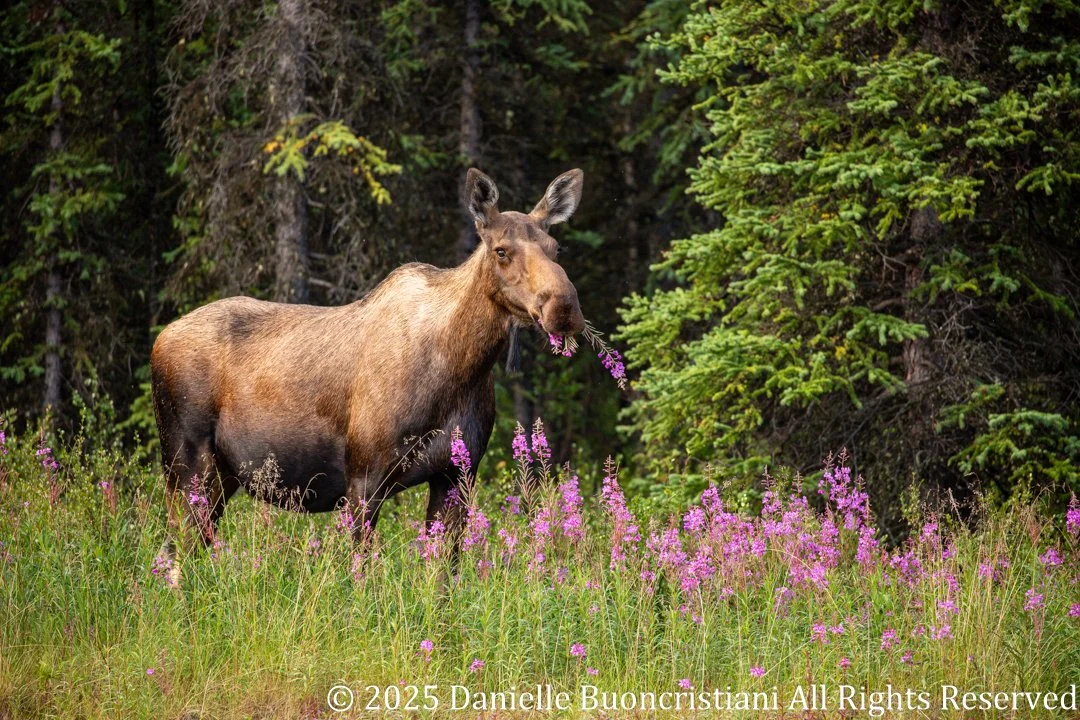
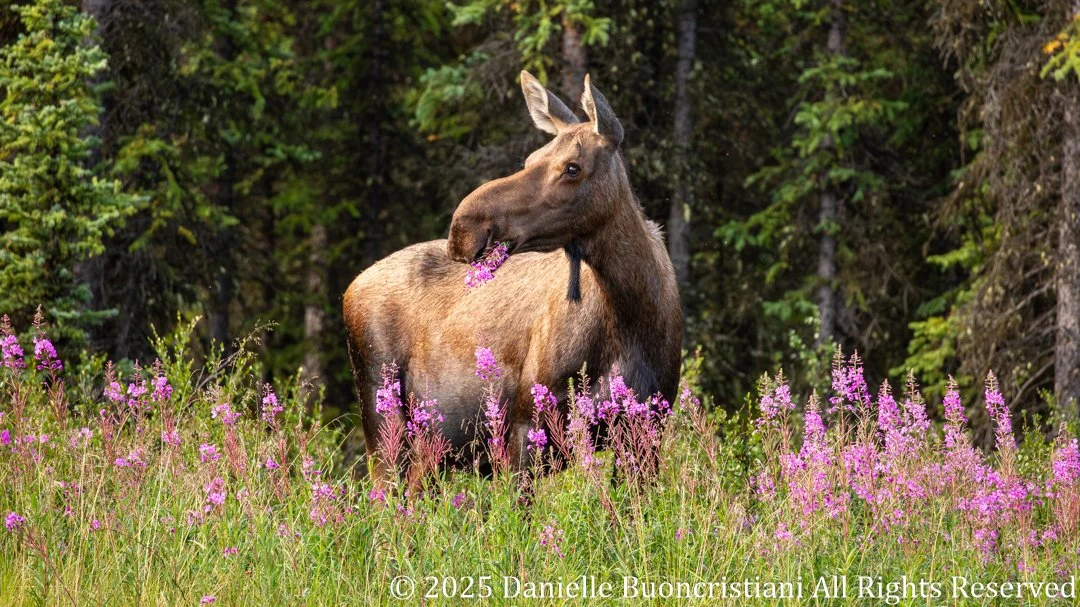
Moose feeding calmly among fireweed near Denali’s edge.
We came upon a female moose grazing among bright pink fireweed, her size and presence even more striking in the soft morning light. When additional cars and buses stopped nearby, she retreated briefly into the brush. We patiently and silently waited.
With the departure of the other vehicles and the road quieted, she returned.
Watching her move back into the open — calm, deliberate, completely unbothered — felt like another small lesson in how wildlife here responds not to crowds, but to stillness.
Preparing to Fly In
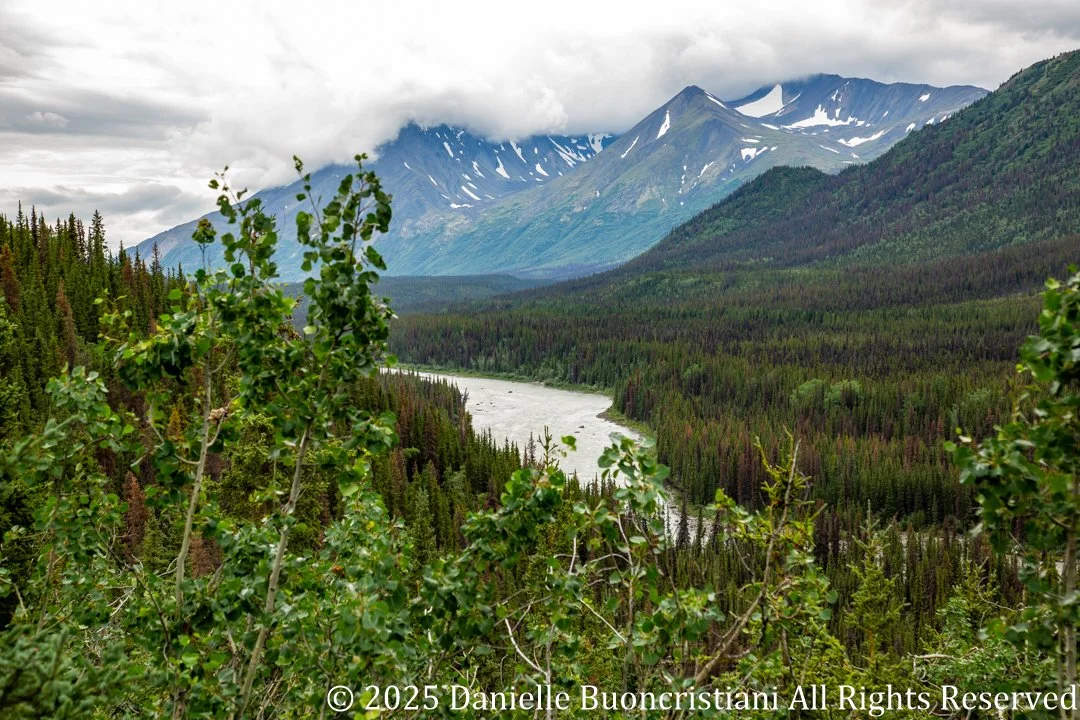
The view from the deck as we prepared to fly into Camp Denali — mountains wrapped in cloud, the river threading quietly below.
After breakfast, we gathered at the Air Denali lodge where our bags were weighed and sorted — a practical reminder that flying deeper into Denali comes with limits. From the deck, we watched the clouds move across the mountains and waited, knowing that the weather would decide when — and how — we’d go.
The mountains surrounding us felt close now.
The flight itself was… memorable.
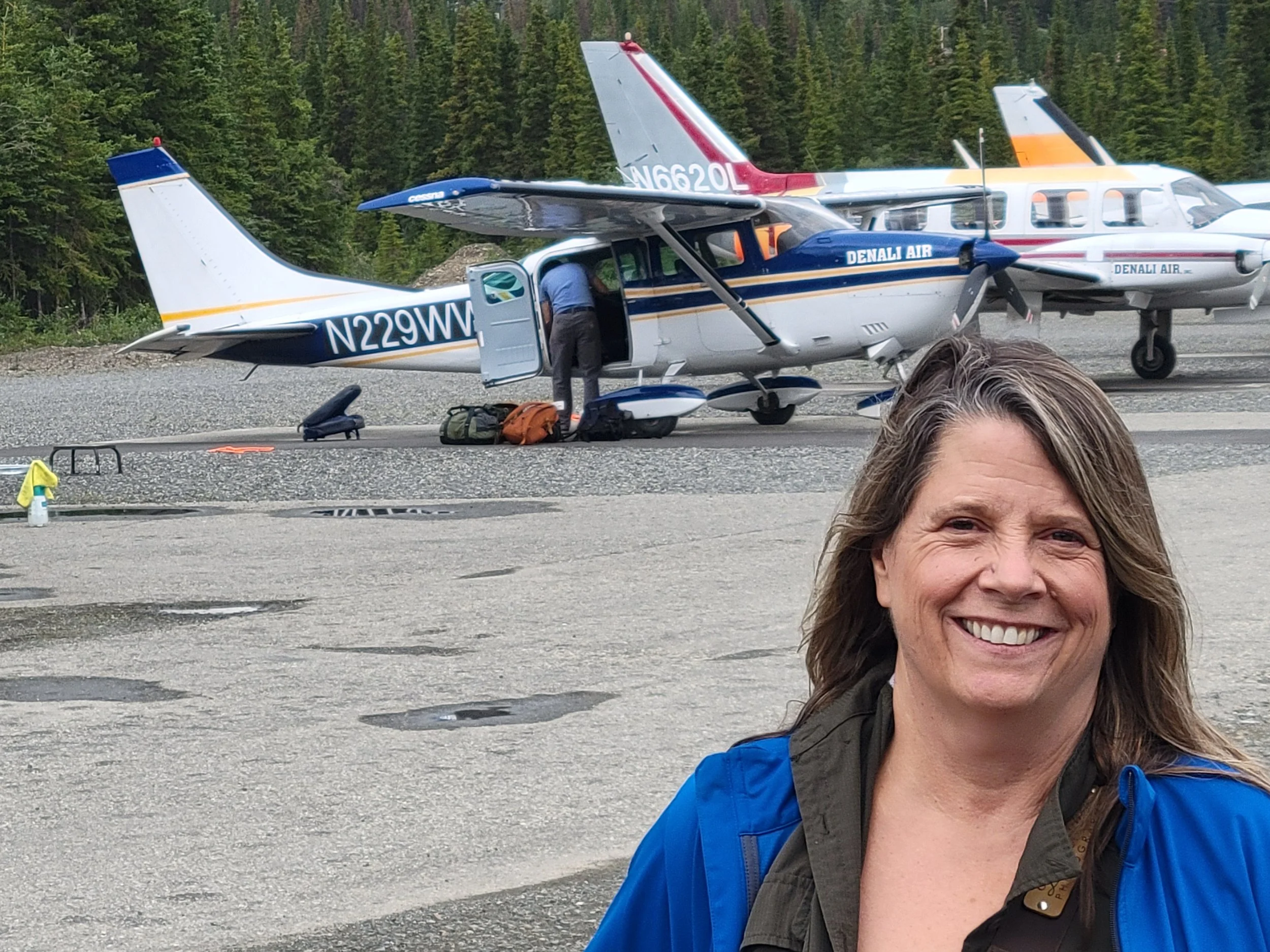
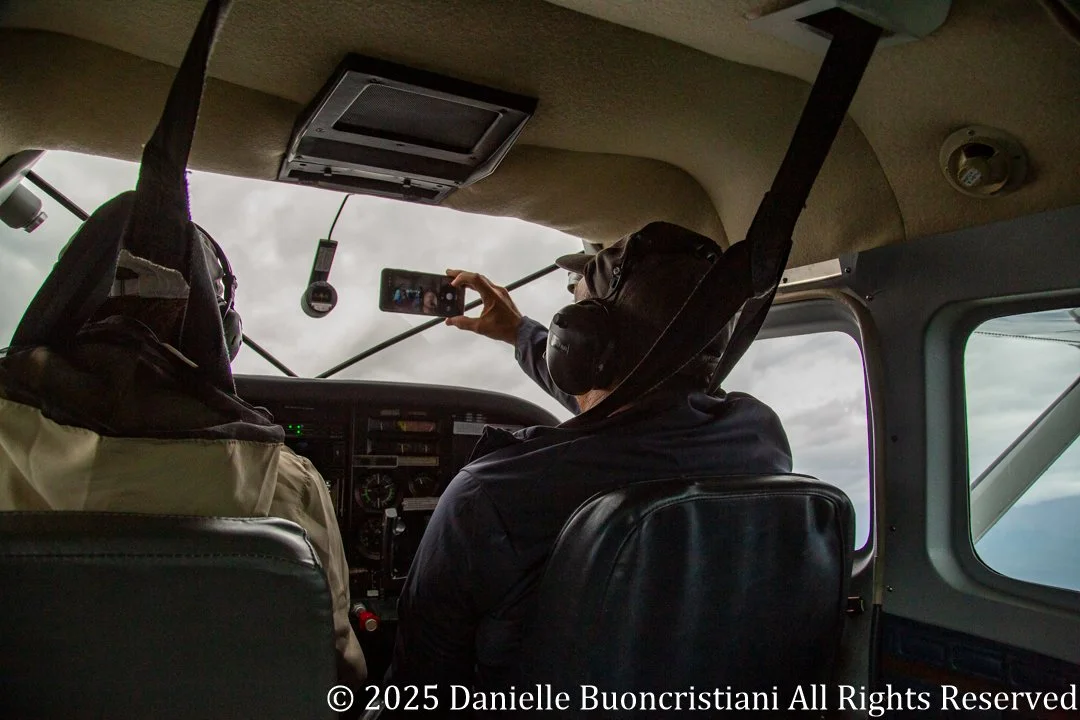
Just before takeoff — small plane, limited visibility, and a lot of trust in the pilot.
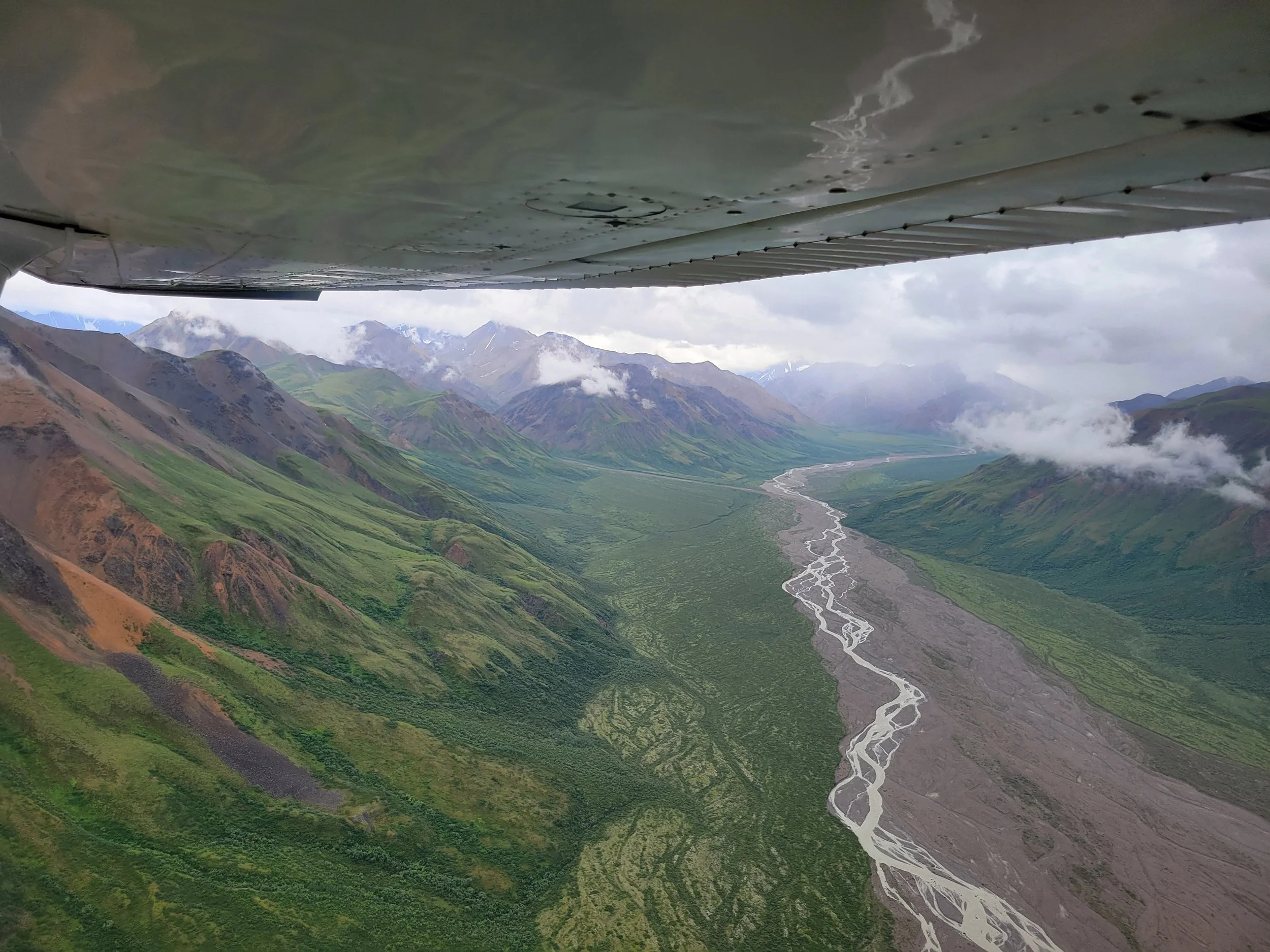
The plane was small and the weather was shifting quickly. Low clouds and rain limited visibility, and we were told that the usual flightseeing wouldn’t be possible. The priority was simply getting to camp while it was still safe to do so.
The pilot attempted multiple routes through the mountains, turning back each time the clouds closed in. For a moment, it wasn’t clear if we would make it in.
On the third try, a narrow opening appeared.
And we flew through.
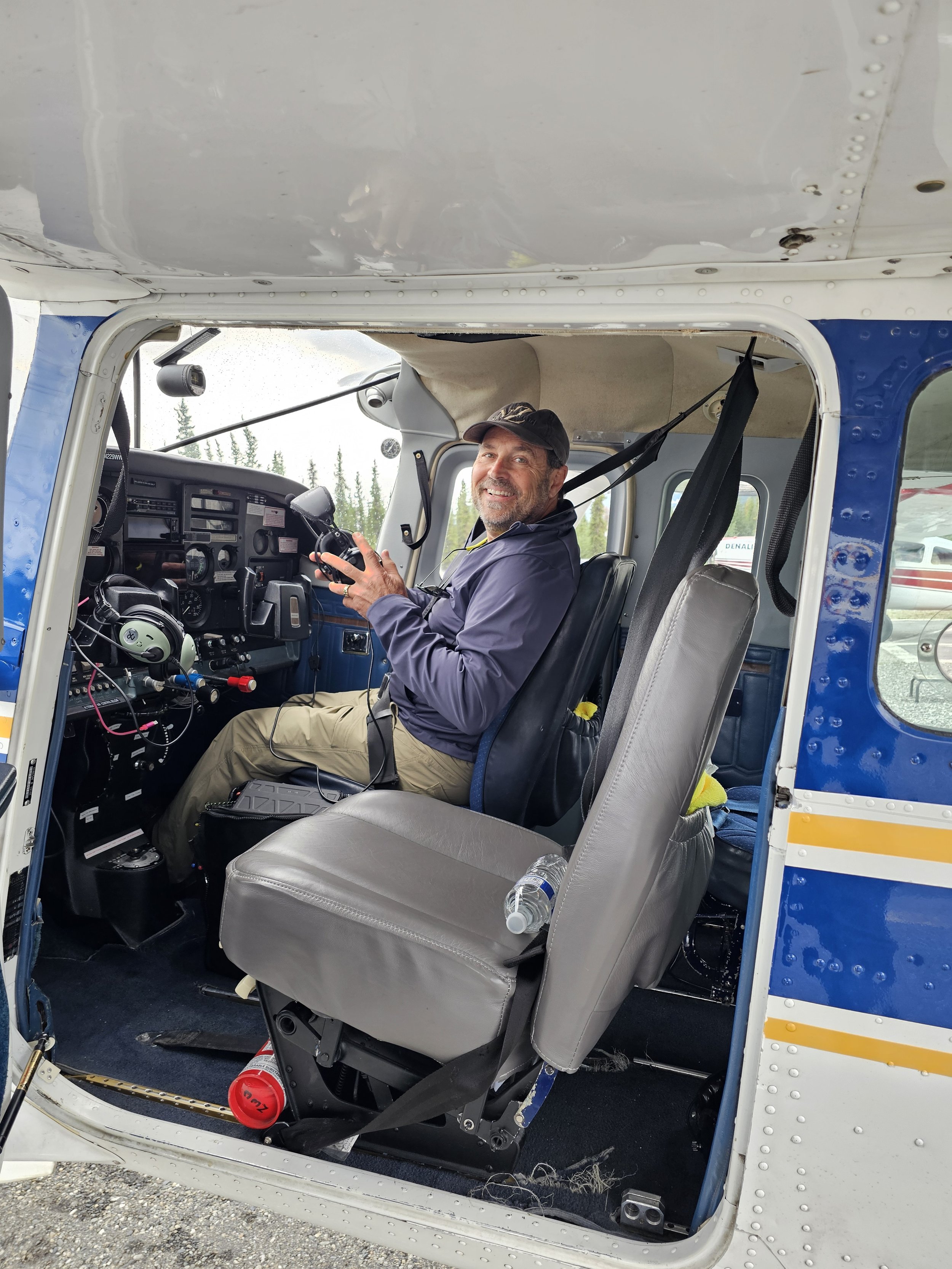
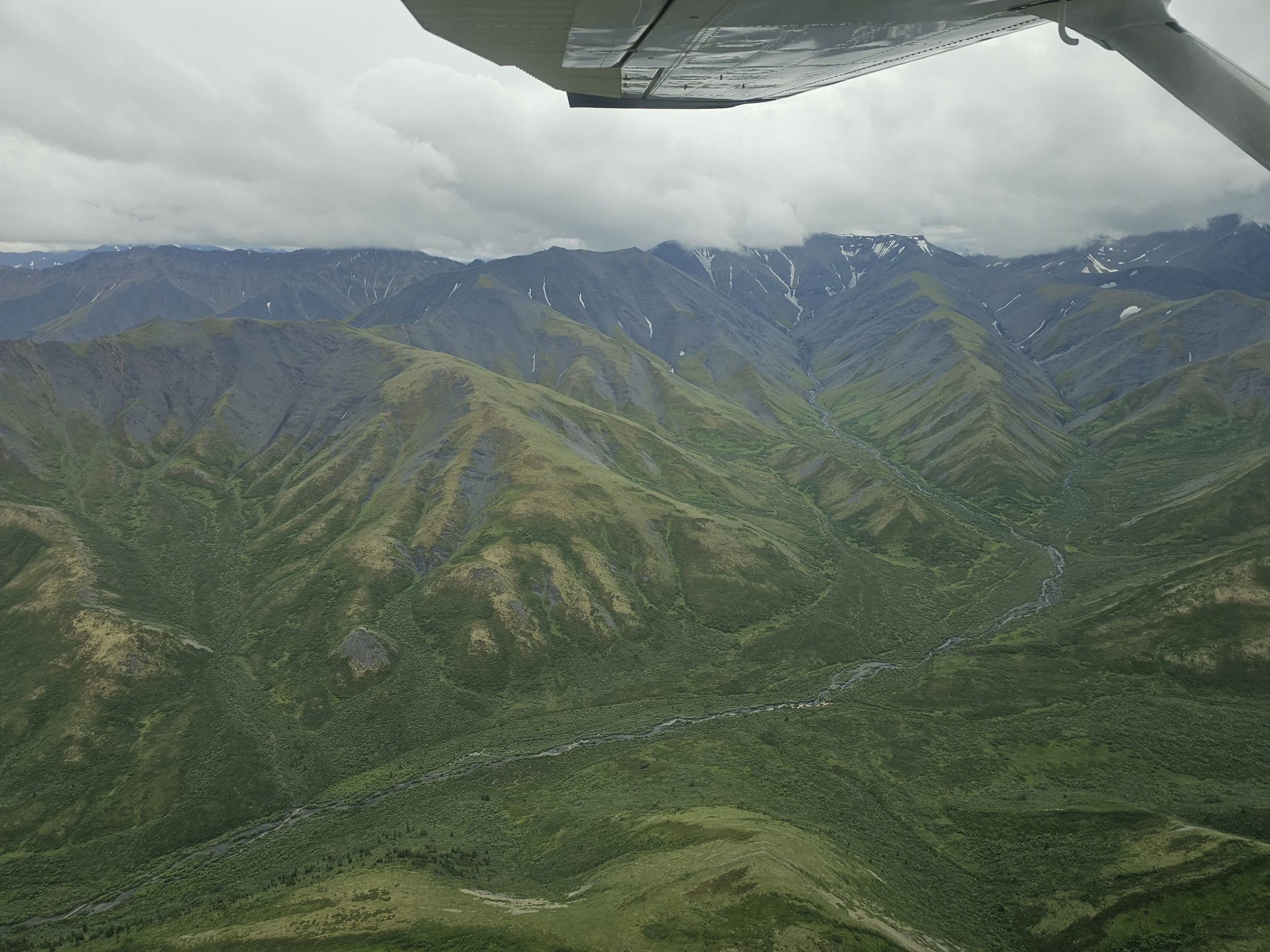
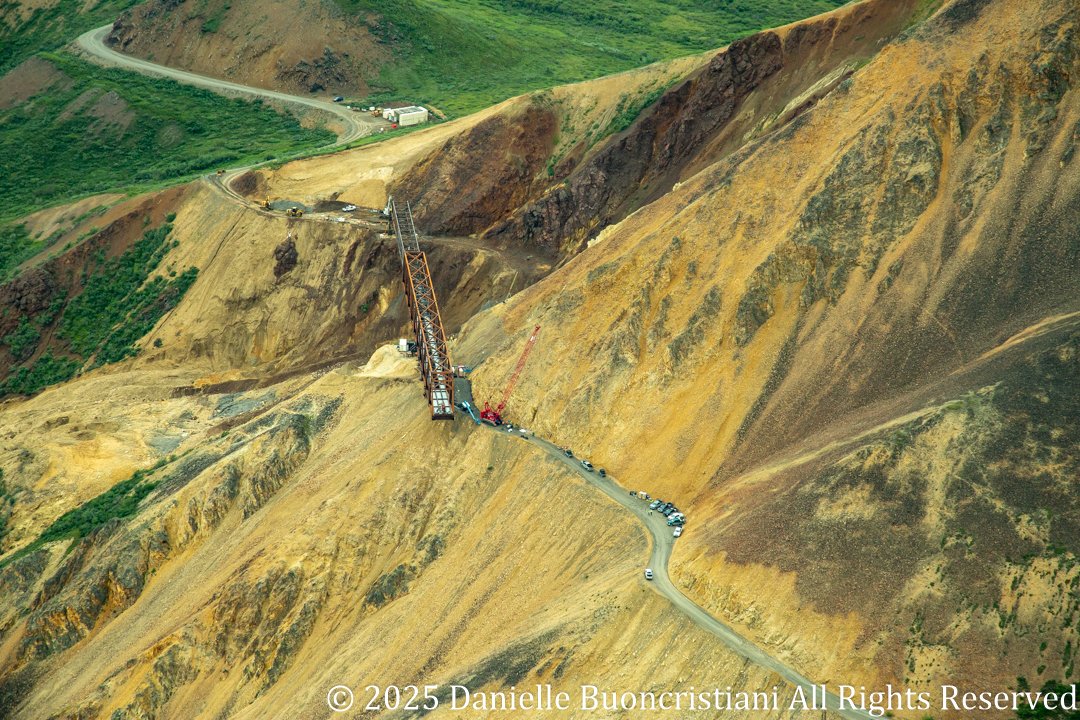
Pretty Rocks Landslide — where Denali’s park road currently ends.
When we finally landed near Camp Denali, the collective sigh of relief was unmistakable. The weather continued to worsen, and the pilot ended up staying overnight — cloud cover made flying back out impossible.
Field Note: Pretty Rocks Landslide
The Pretty Rocks Landslide is an active slope failure inside Denali National Park that has closed the park road beyond Mile 43.
The unstable terrain makes vehicle travel unsafe, requiring visitors and supplies to be transported by air into the park’s interior.
A major bridge project is currently underway to bypass the landslide, with construction expected to take several years.
First Night at Camp Denali
By evening, we were settled into our cabin at Camp Denali — wood walls, a glowing stove, solar-powered lights, running water, and an outhouse just steps outside the door. Simple. Thoughtful. Comfortable.
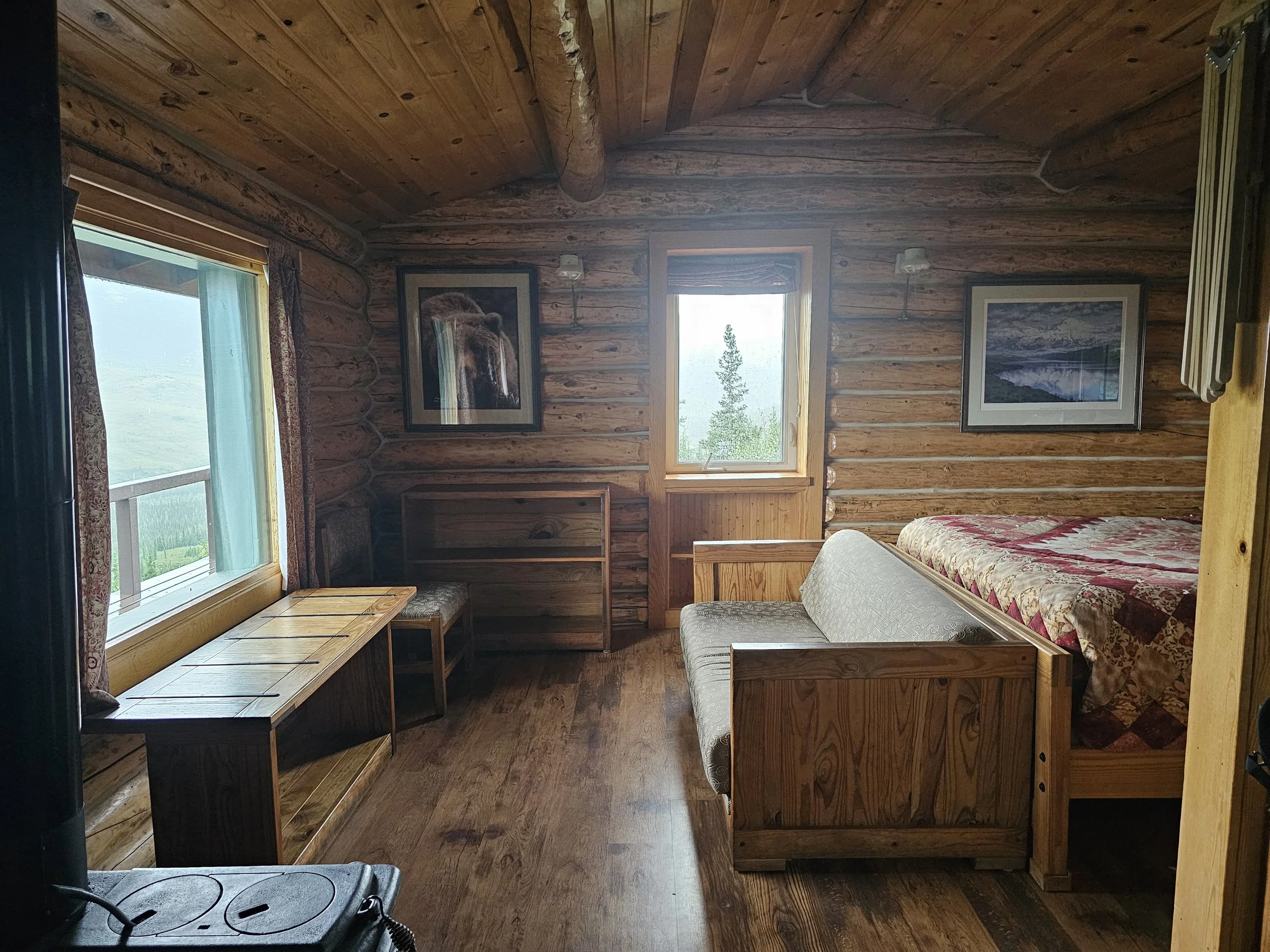
Inside Camp Denali — the cabin that would be home for the days ahead.
Rain fell steadily outside.
The staff welcomed us like family, and dinner was warm and grounding after a long day of travel. Exhaustion caught up with us quickly.
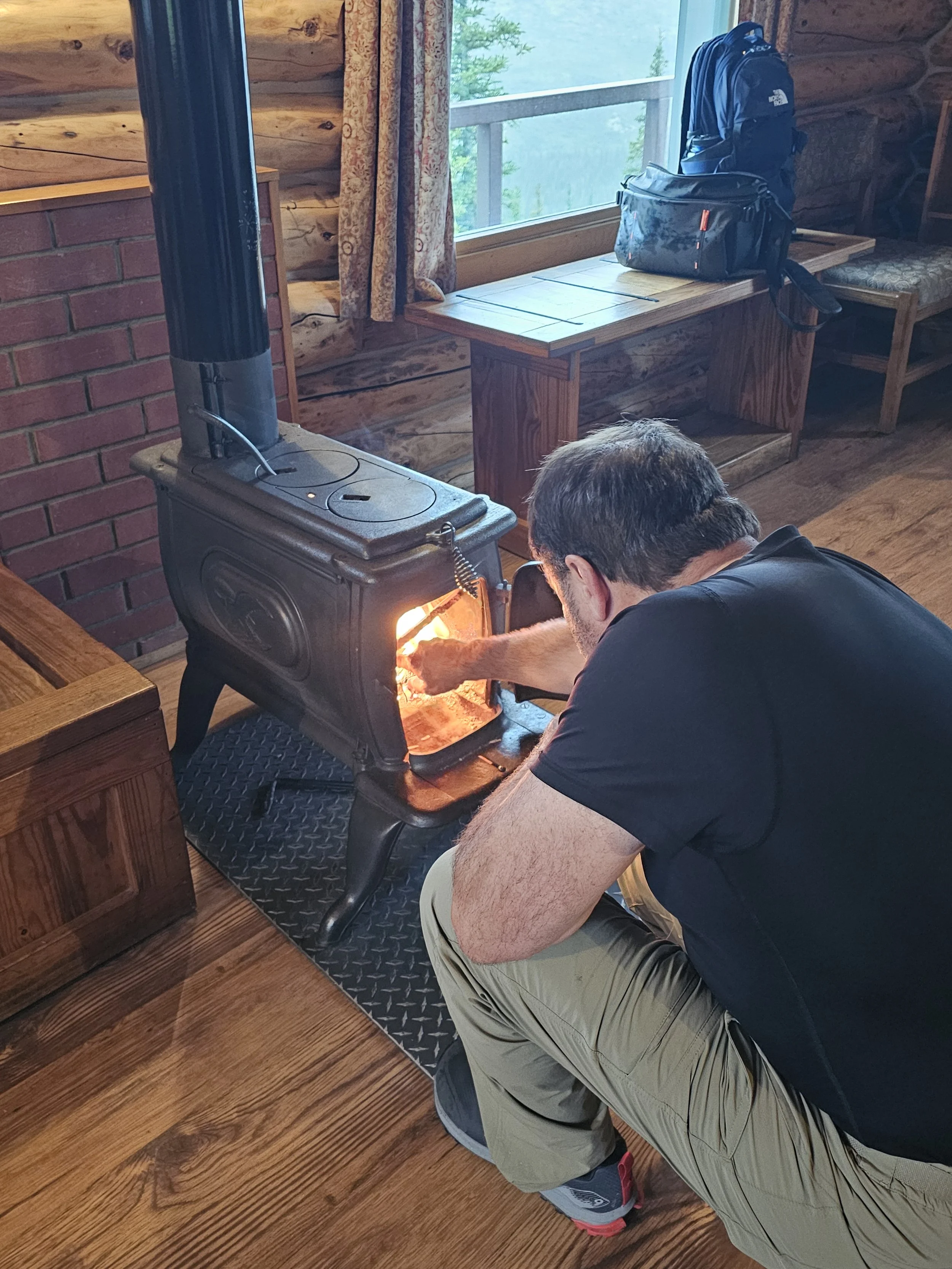
Stoking the wood stove — warmth and quiet before the night fully settled in.
Dave carried most of my gear — my back had decided to rebel at exactly the wrong time — and I was deeply grateful for his steady calm as we eased into this new rhythm.
As the fire crackled and the rain continued, it felt clear that this place would ask something different of us.
Not speed.
Not certainty.
But presence.
Looking Ahead
By morning, we would begin learning what Denali was willing to show us — and what it wasn’t.
Next week: our first full day inside Camp Denali, where weather, wildlife, and scale begin to reshape how everything feels.