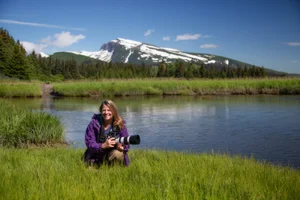
Week 13 — Wildlife on Denali’s Terms
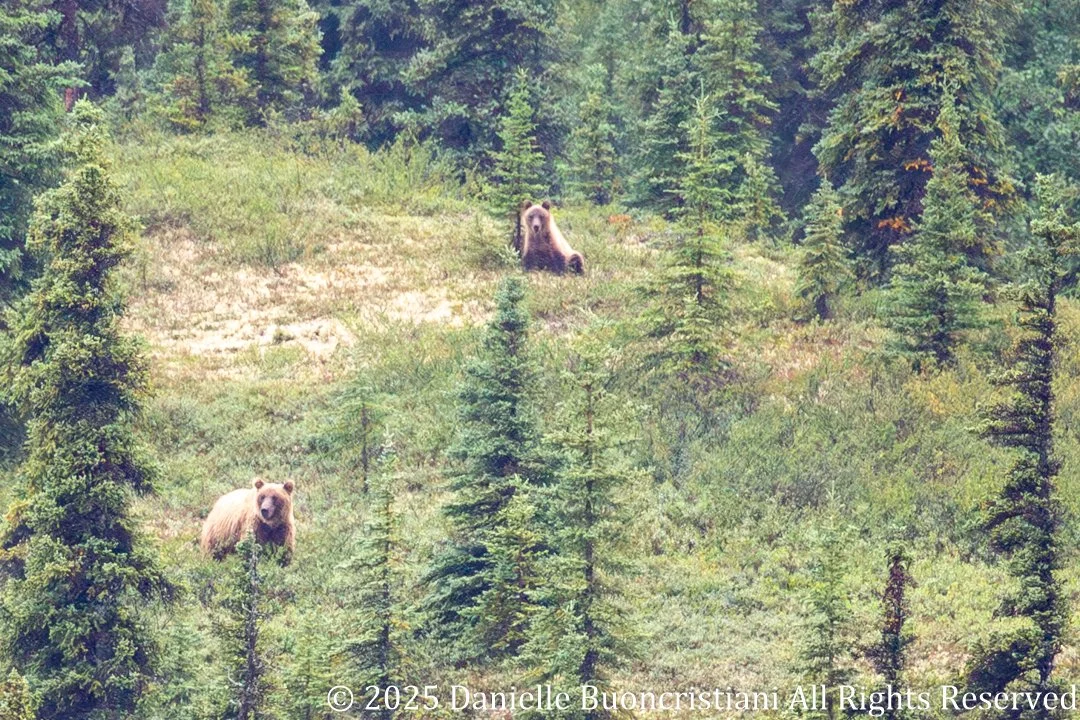
A grizzly mother and cub, observed from a respectful distance on our first full day inside Denali.
Our first full day inside Denali began with rain.
Cooler temperatures and steady drizzle settled in early — the kind of conditions that shape not only how wildlife moves, but how you learn to watch. We spent much of the day driving the deserted park road, stopping often, scanning the tundra and hillsides through rain-speckled windows.
Not long into the morning, we spotted our first bears of the trip: a mama grizzly with her older cub, far off in the distance. They foraged quietly on the hillside, occasionally lifting their heads before disappearing again into the folds of the landscape.
This was one of the first important lessons reinforced at Denali — these bears are very different from the coastal brown bears I photographed the year before. After time with coastal brown bears feeding on clams and protein-rich grasses, encountering Denali’s grizzlies from a distance made it clear how differently these bears live — shaped by interior terrain, limited food density, and the need to range widely. Here, we do not get close. Distance is not a limitation; it’s a requirement. Wildlife encounters happen entirely on the animals’ terms, and respect for space is essential.
Even with long lenses, the bears remained small in the frame.
And that was exactly how it should be.
Field Note: Grizzly Bears in Denali
Grizzly bears in Denali do not have access to salmon runs or coastal food sources.
Their diet relies heavily on vegetation such as roots, grasses, berries, and occasional small mammals.
Because plant-based foods are lower in calories than salmon, Denali grizzlies must range widely to meet their nutritional needs.
These bears are typically observed from much greater distances than coastal brown bears, and close encounters are neither expected nor safe.
In Denali, maintaining significant distance from bears is a standard safety practice and a critical part of keeping wildlife wild.
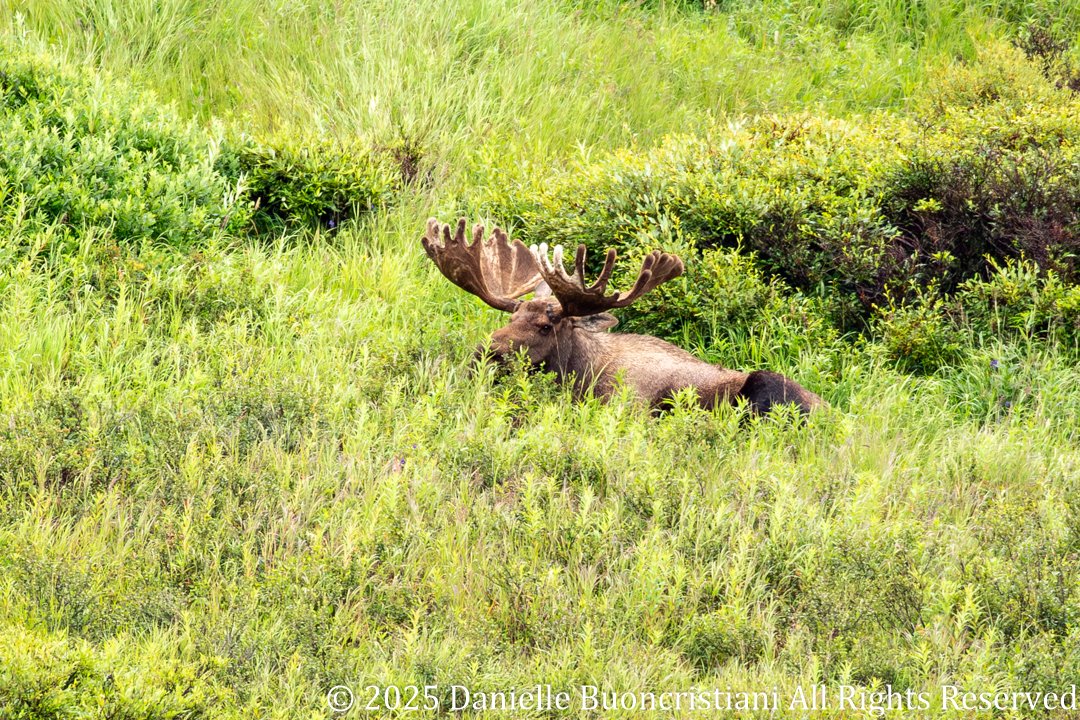
A bull moose resting quietly in the tundra — antlers wide, unmoved by the steady rain.
As the day continued, we spotted a bull moose resting in the tundra. He barely moved, antlers wide and heavy, settled comfortably into the wet grasses as if the rain didn’t matter at all. Along the way, we also caught brief glimpses of other wildlife and birds — moments that appeared quickly and disappeared just as fast.
By midday, we were soaked.
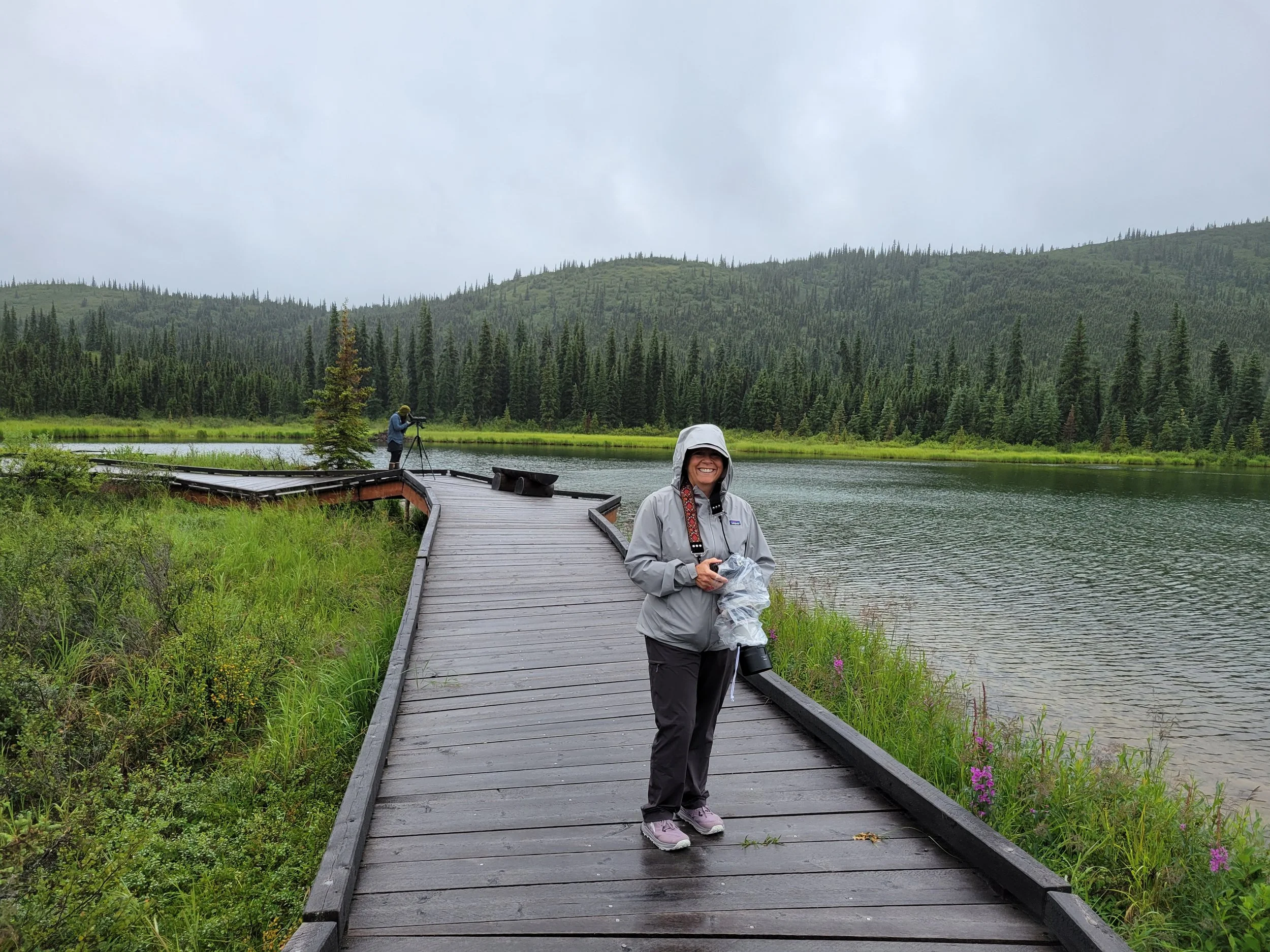
Photographing in steady rain near Camp Denali — layers on, camera protected, and patience required.
When we finally stopped for lunch, the rain intensified. Instead of getting out, we stayed in the van. Hot drinks appeared — an unexpected and very welcome comfort after a cold, wet morning. For a few minutes, we weren’t watching the road or scanning the hillsides. We were simply warming our hands and eating lunch.
Then came the knock.
Knock. Knock. Knock.
Our naturalist, who was still outside, rapped on the side of the van — urgent, but calm. I looked up to see a red fox trotting down the road toward us, an Arctic ground squirrel hanging from its mouth.
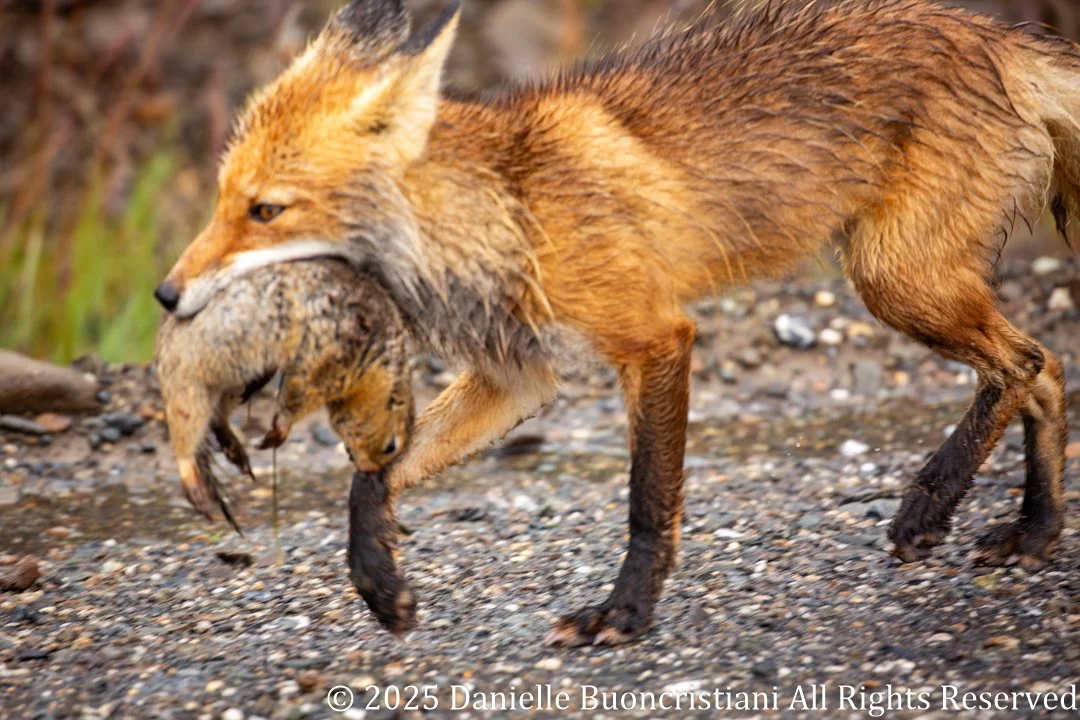
A red fox carrying an Arctic ground squirrel along the road — photographed quickly, imperfectly, and remembered clearly.
Everything happened at once.
Cups were set down. Cameras were grabbed. I lifted mine, framed the shot — and realized I had turned it off.
I fumbled, turned it back on, and managed to capture a single image as the fox passed by. It wasn’t technically perfect. The settings weren’t ideal. But it told the story: mud along the fox’s legs, prey held firmly, moving with purpose through rain and gravel as if we weren’t there at all.
A moment later, the fox continued down the road, trotting steadily into the mist.
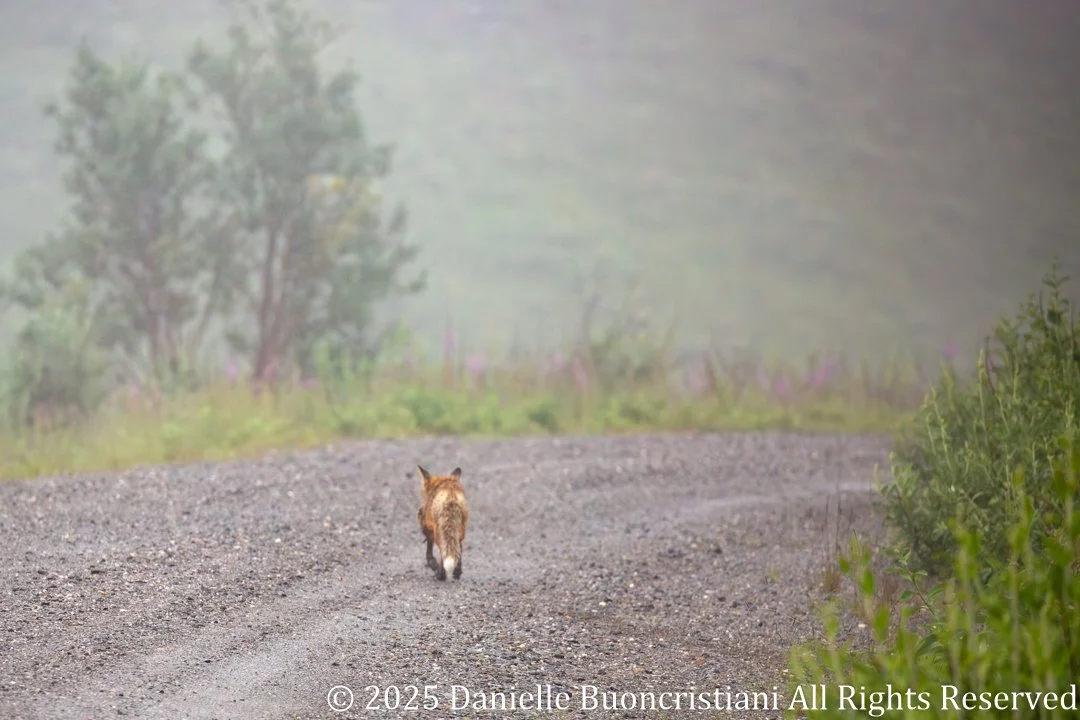
The fox moving back down the road and into the mist — a brief encounter, already fading.
I photographed that too.
That second image — the fox disappearing — feels just as important. The quiet after the surprise. The way wildlife moves on without hesitation or ceremony.
Field Note: Red Fox
Red foxes are opportunistic hunters, and Arctic ground squirrels are a common prey species in Denali.
They often remain active during daylight hours, especially in cooler or wet conditions.
Mud along a fox’s legs is a sign of active foraging in wet tundra and roadside environments.
Foxes move comfortably through rain and rough conditions, continuing to hunt when many animals — and people — slow down.
After the fox encounter, the day continued to unfold.
We came upon a caribou moving along the road, close enough for a few quick frames before slipping back into the tundra grasses — alert, curious, and constantly on the move.
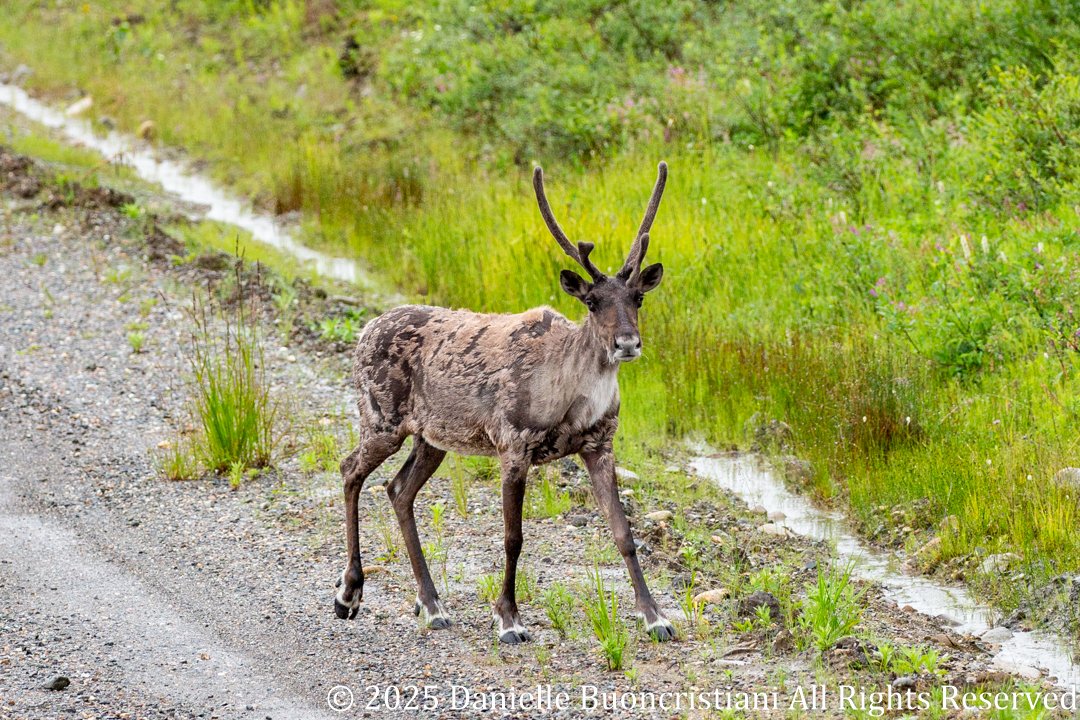
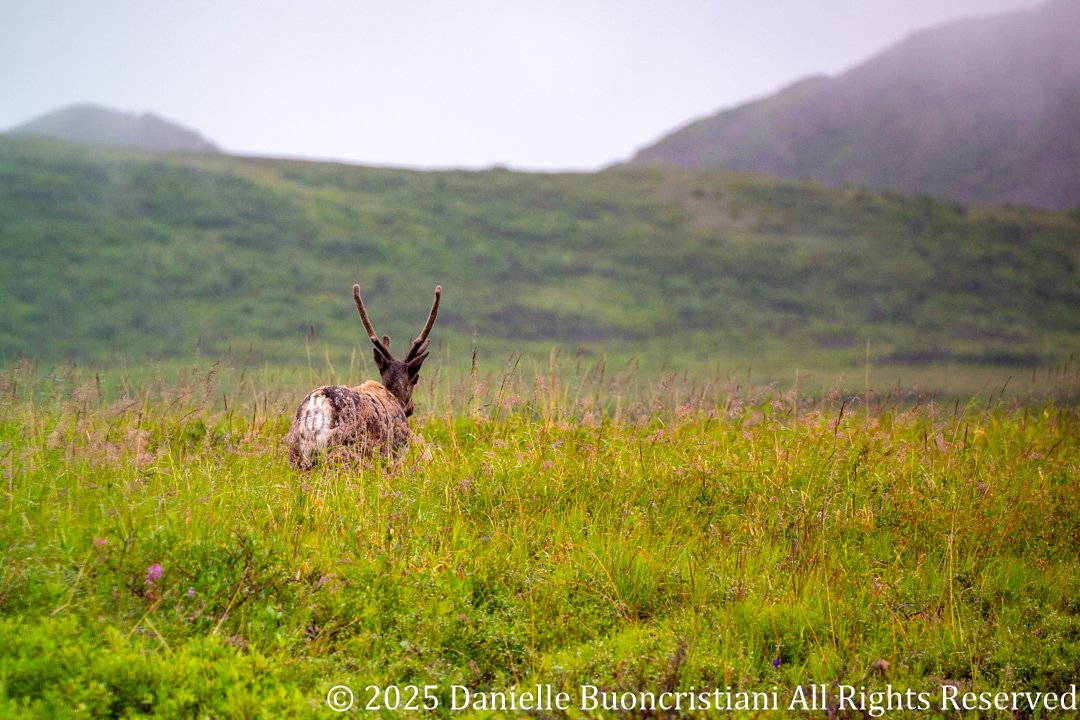
A caribou pauses along the road, then moves back into the tundra grasses.
Field Note: Caribou
Caribou and reindeer are the same species, but the term “caribou” is used for wild populations and “reindeer” for domesticated or semi-domesticated animals.
In Denali, caribou remain fully wild and wide-ranging.
They are difficult to photograph because they rarely stay still and tend to move quickly across open terrain.
Later in the afternoon, the rain softened slightly and the light changed. I shifted my focus and adjusted my camera settings to photograph smaller details — grasses, textures, and the way soft light filtered through moisture on the tundra. It felt good to slow down and notice the quieter parts of the landscape.
That shift, however, came with a cost.
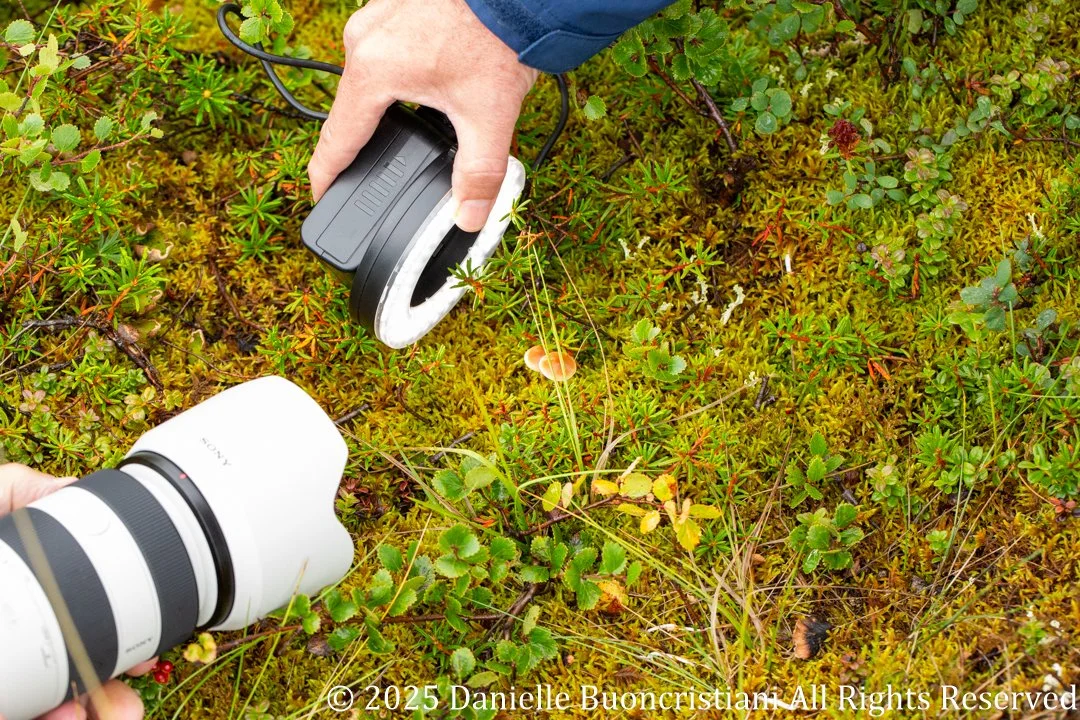
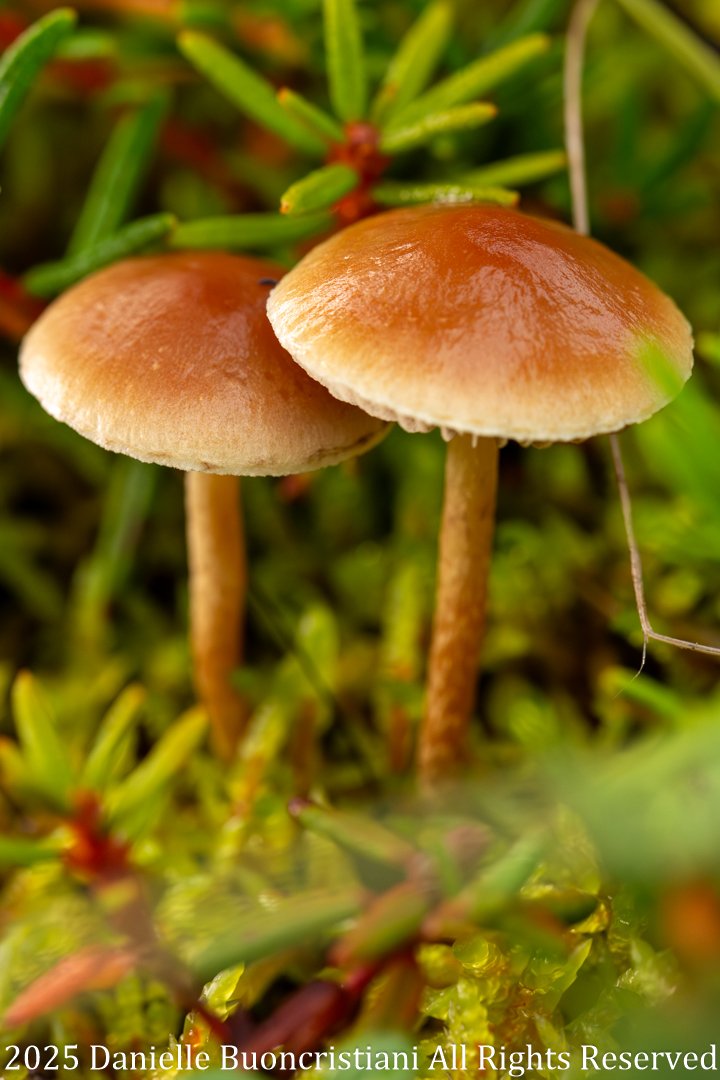
After the fox disappeared, we slowed down — shifting from long lenses to macro work and adjusting settings for low light and wet conditions.
When we got back in the van, I forgot to reset my camera to my wildlife settings.
Not long after, we encountered a porcupine crossing the road. I lifted my camera quickly, but later, reviewing the images, it was clear my shutter speed had been too slow. The photographs weren’t as crisp as I would have liked.
It was another lesson Denali offered without apology: wildlife doesn’t wait for you to be ready.
Field Note: Working in Changing Conditions
Wildlife photography often requires rapid shifts in settings and equipment.
Switching from macro work to wildlife can lead to missed focus or motion blur if settings aren’t reset.
Weather, light, and movement change quickly in Denali, making preparation — and adaptation — essential.
Every mistake becomes part of the learning process.
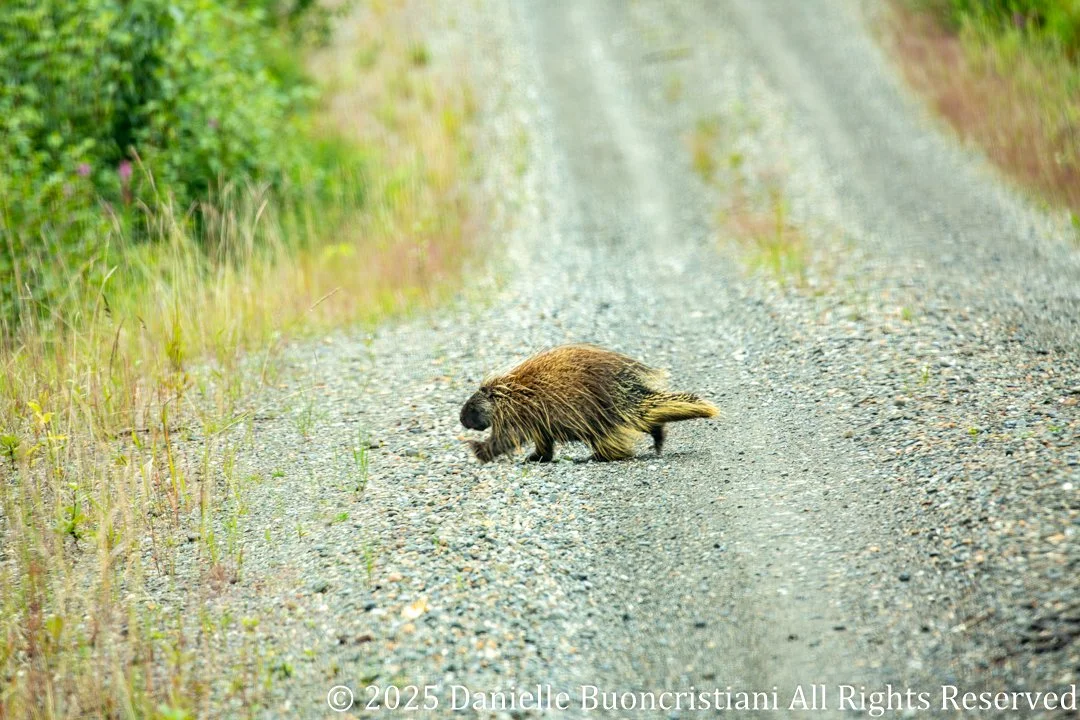
A porcupine crossing the road — photographed just after switching from macro work, a reminder to reset settings when wildlife appears without warning.
At the end of the day, we were tired but very grateful.
Despite the rain, we had seen a mama grizzly and her cub, a resting bull moose, ptarmigan, a caribou, a porcupine — and a fox carrying its lunch right past our window.
The fox photograph — imperfect and unplanned — is one of my favorites from the entire trip. It isn’t technically perfect, but it’s honest. It captures what Denali kept teaching us that day: wildlife here does not perform, does not linger, and does not adjust for us.
You experience it — fully — on Denali’s terms.
And yes, it’s one that will live in the book.