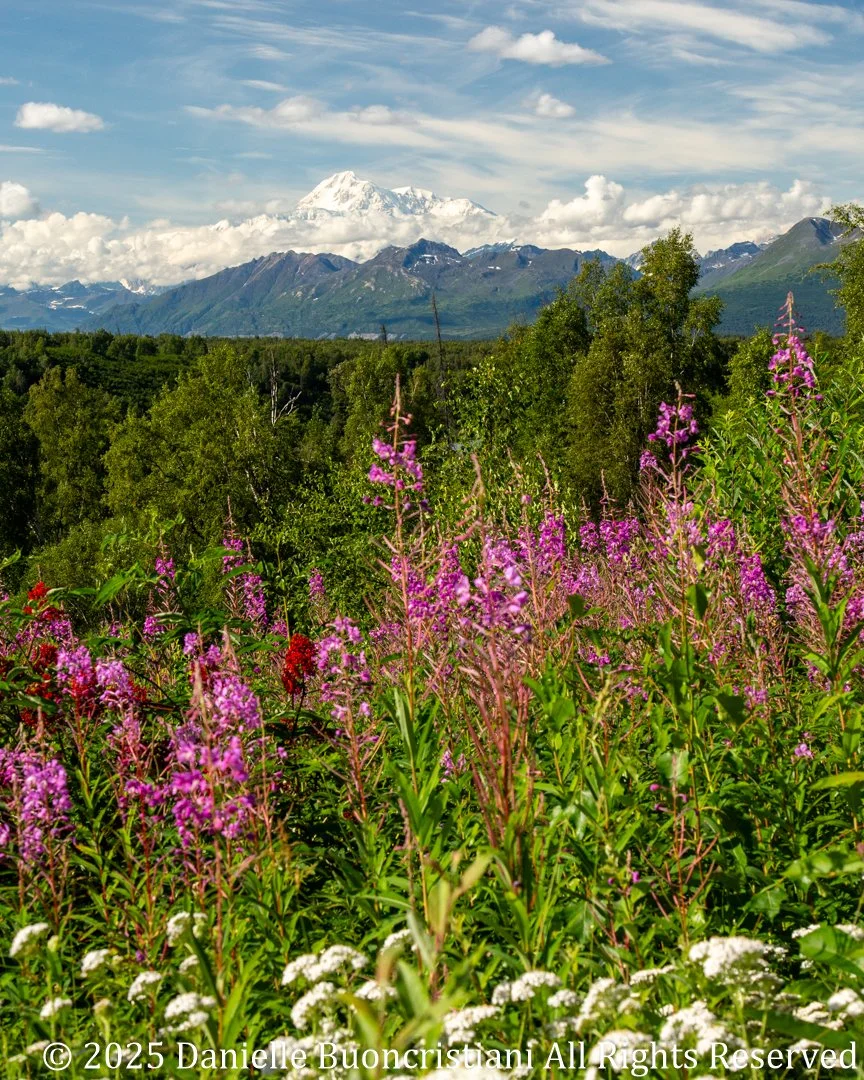
First glimpse of Denali through the clouds, framed by vibrant pink fireweed along the drive toward Denali National Park.
Dave and I flew into Alaska knowing this trip would be different from my solo experience the year before. This time, we were beginning a journey that would take us first into the interior — to Denali — before shifting south to Seward and the glaciers of Kenai Fjords. Two very different parts of the state. Two very different ways of learning Alaska.
Before We Left
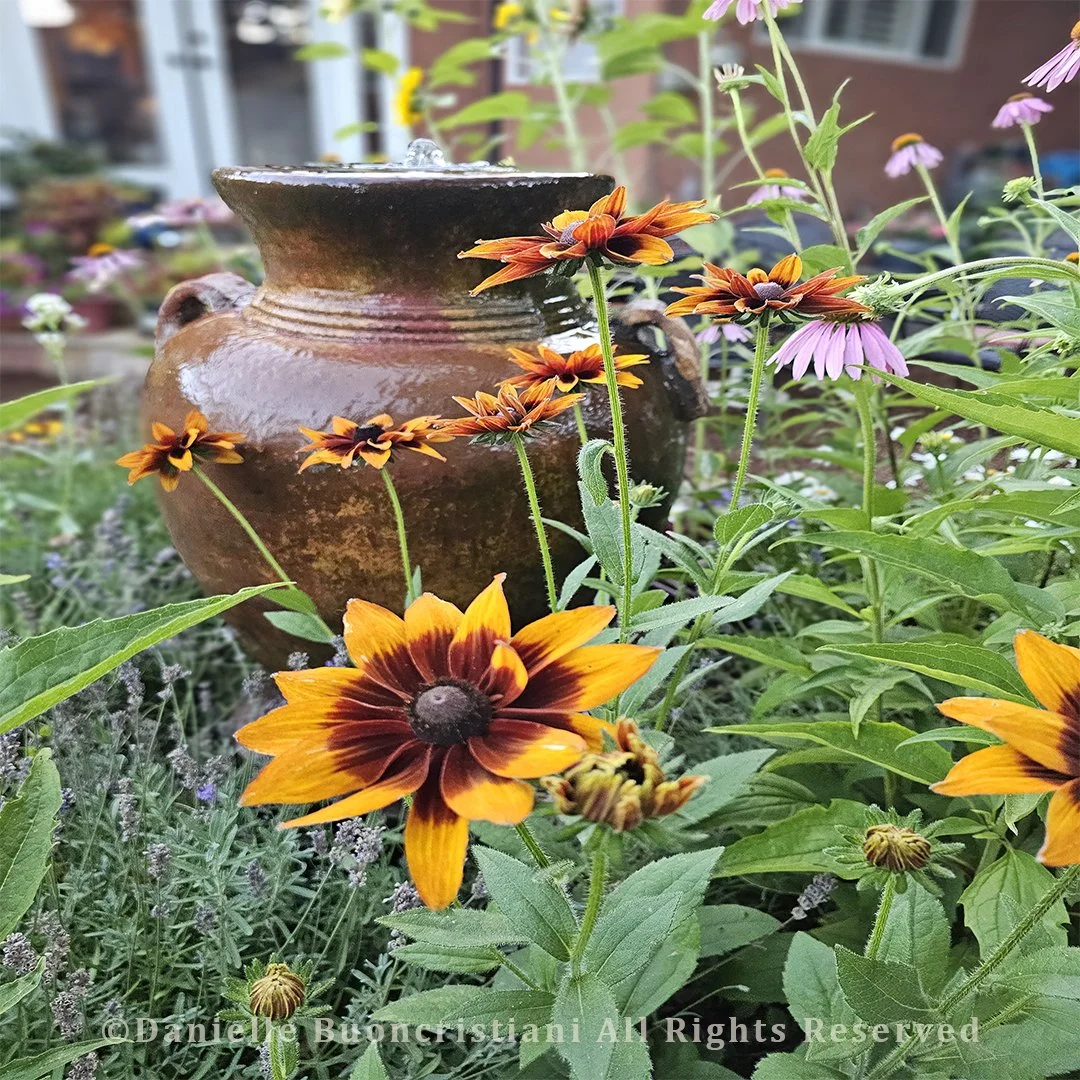
The garden fountain at home — a place shaped slowly, over many seasons.
A few days before we left, I sat in our garden at home — a space Dave and I have shaped together over decades. The flowers were blooming, the fountain was running, and everything felt settled and complete. It struck me how full our life already is, and how exploration doesn’t replace that fullness — it expands it.
That balance matters. Creating a home. But occasionally stepping away from it to see the world with fresh eyes.
That mindset felt especially important as we arrived in Alaska, where learning often begins not with landmarks, but with watching how daily life unfolds.
Salmon, Fishing, and Daily Life
After unloading our gear at the Airbnb in Anchorage, we headed out to explore the nearby area on foot. We walked to Ship Creek, where we watched spawning salmon move upstream against the current in large numbers.
Some were tagged. Others swam in tight, looping patterns. Along the banks, fishermen stood spaced along the creek, rods moving in steady rhythm as they worked the current. Because spawning salmon are no longer feeding, this method increases the likelihood that the fish are hooked in the mouth and can be legally harvested.
We learned that it was a salmon derby day, which explained the crowds. It was also a reminder that fishing here isn’t a novelty or a photo opportunity — it’s part of everyday life. Food, tradition, recreation, and livelihood all converge in places like this. Fishing in Alaska isn’t separate from the landscape; it’s woven into it.
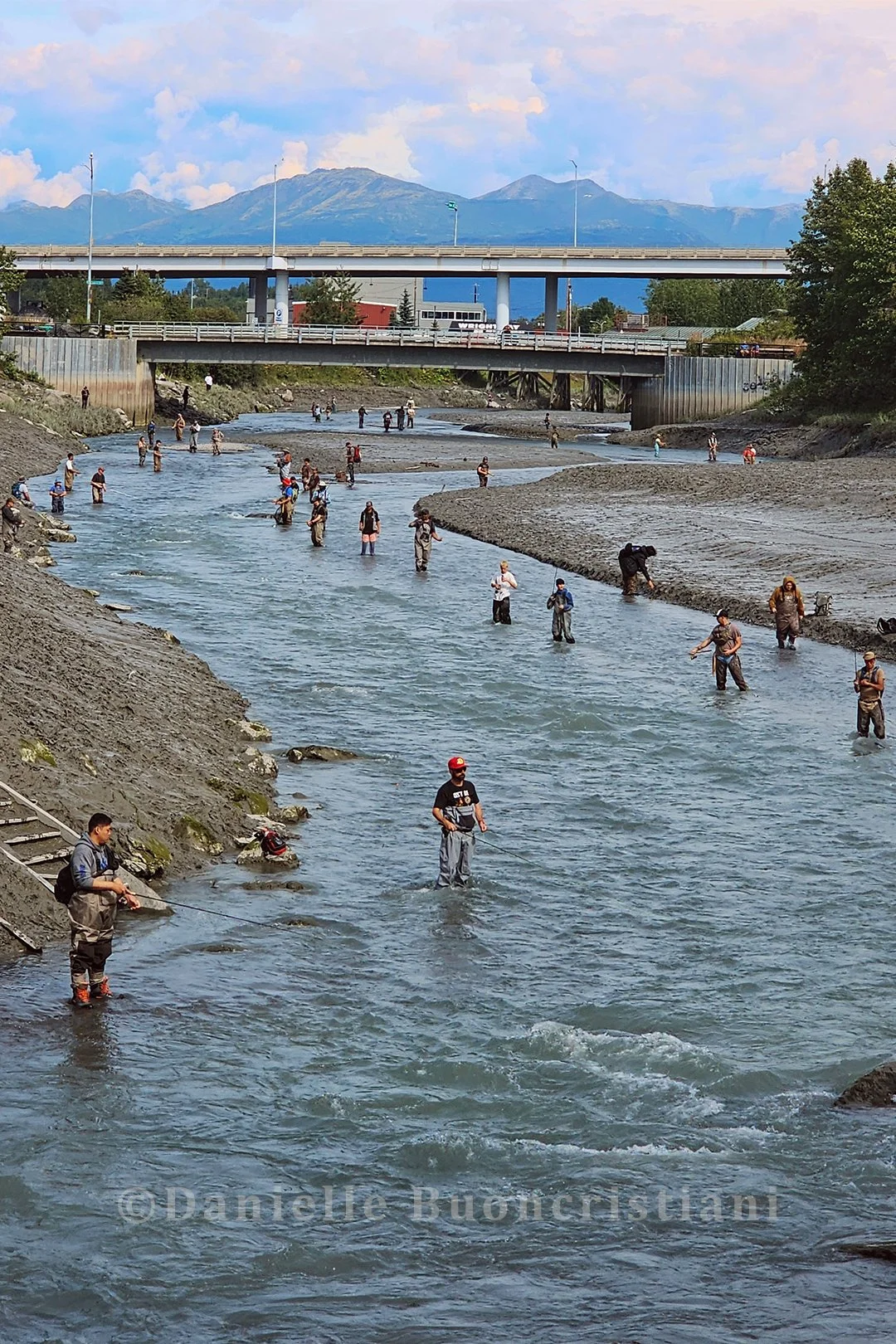
Salmon derby day at Ship Creek in Anchorage, where fishing is woven into everyday life.
There were areas where fishing wasn’t allowed, and in those protected sections the salmon gathered in dense clusters. Seeing the contrast — where people could fish and where fish could simply exist — was quietly educational. It revealed how carefully managed these systems are, and how much awareness is required to balance use with preservation.
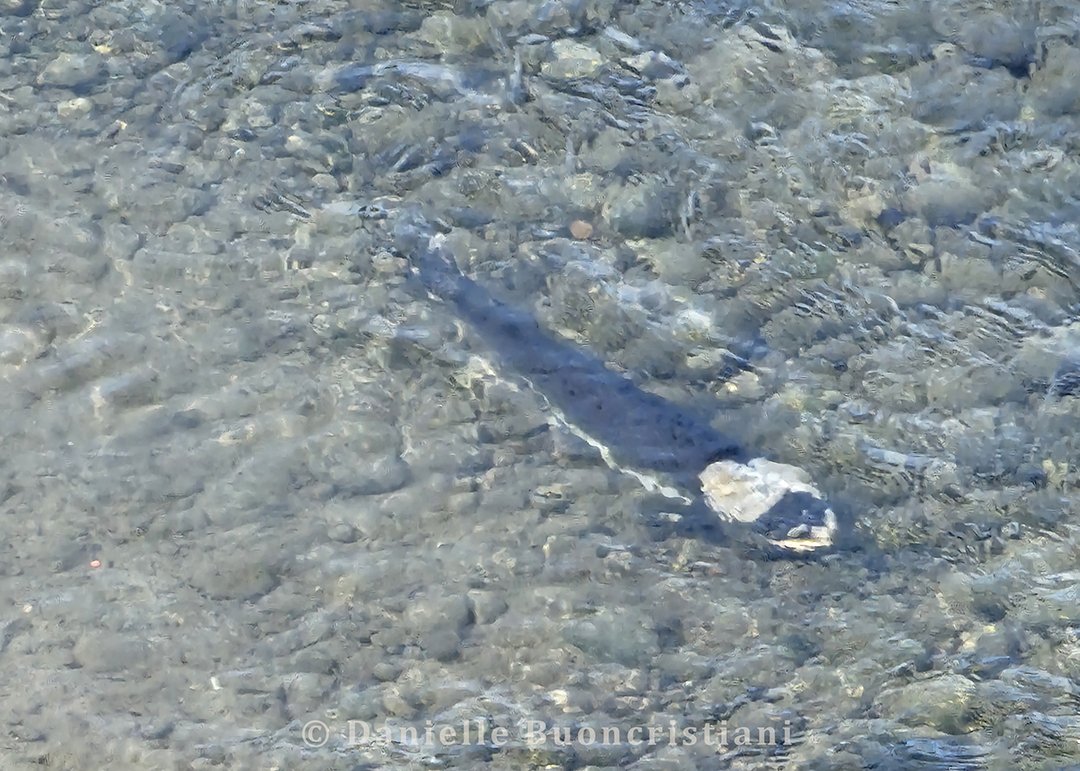
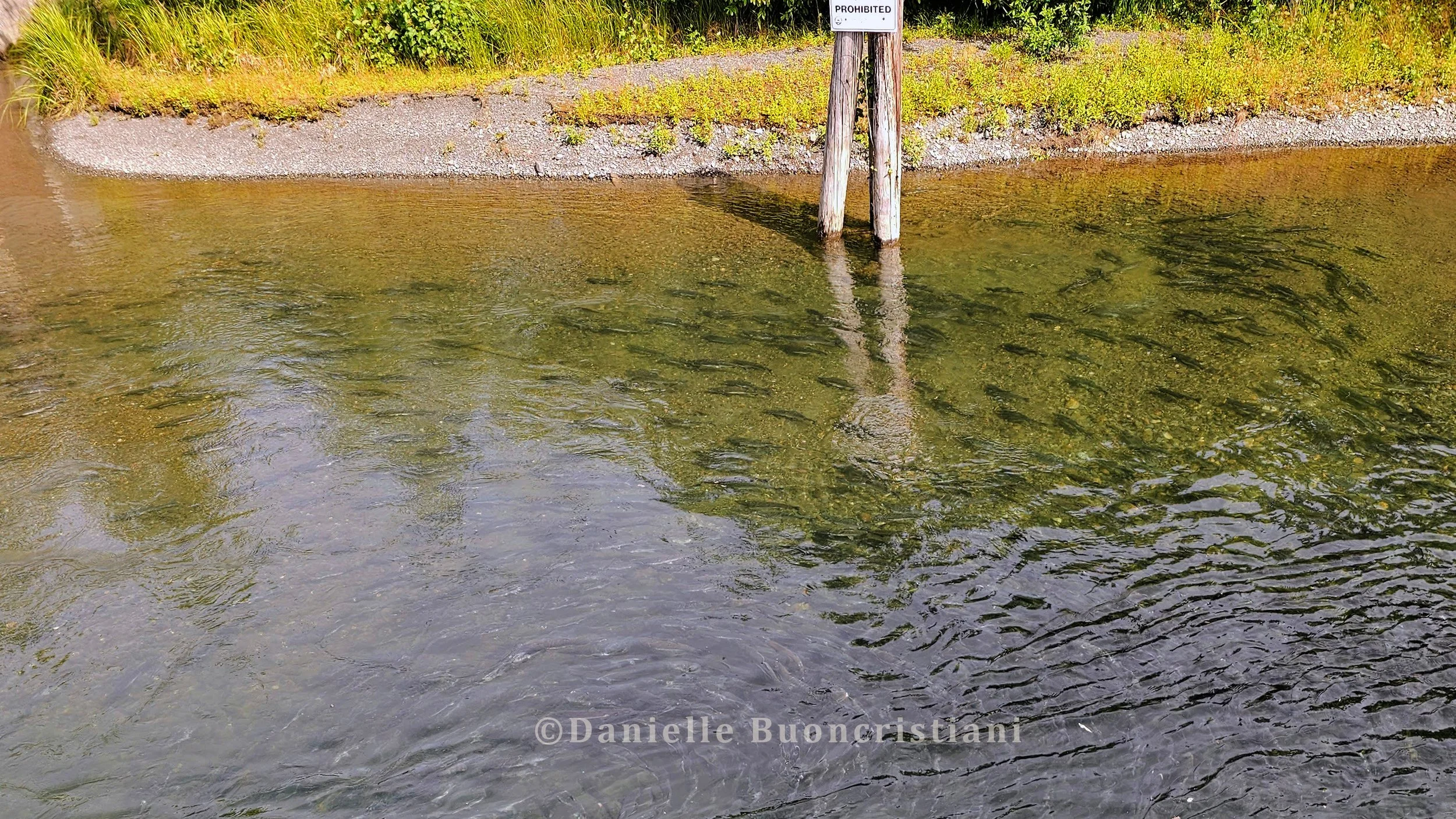
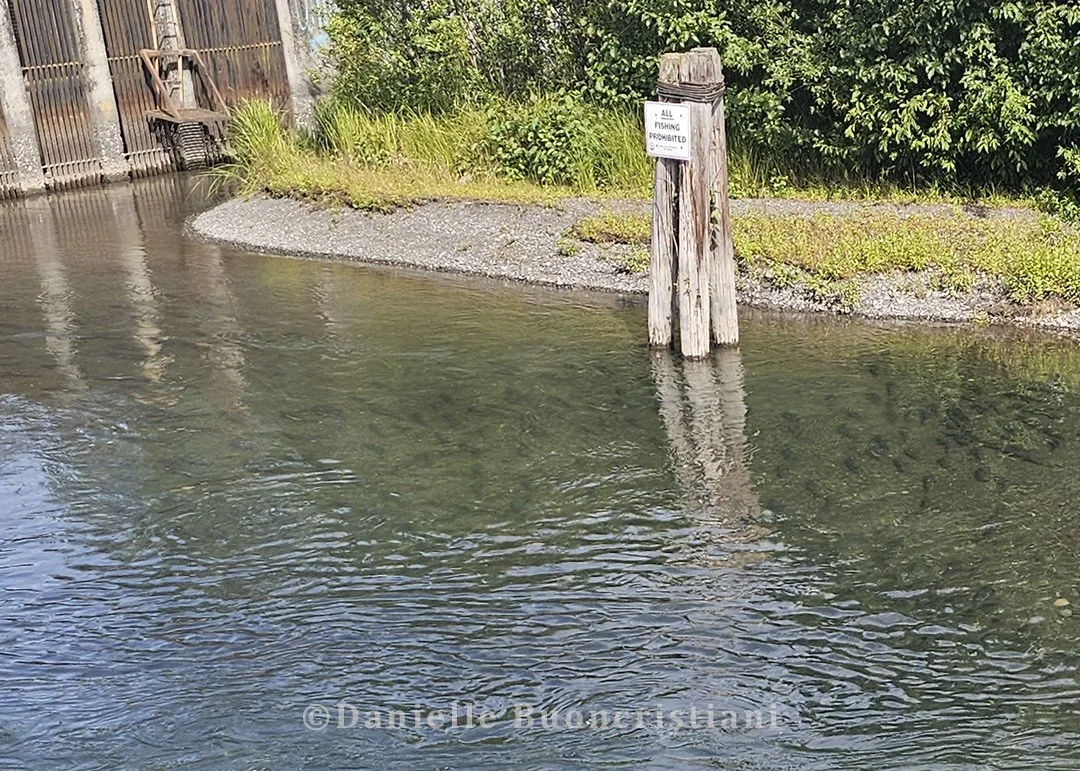
Watching the salmon move in layered circles made the scale of the run impossible to ignore.
Heading Toward Denali
The next morning, we loaded into the van and began the drive toward Denali.
As we left Anchorage behind and moved inland, our focus shifted. We weren’t just traveling north — we were actively searching the landscape for photographic opportunities, paying closer attention to what the land itself was revealing.
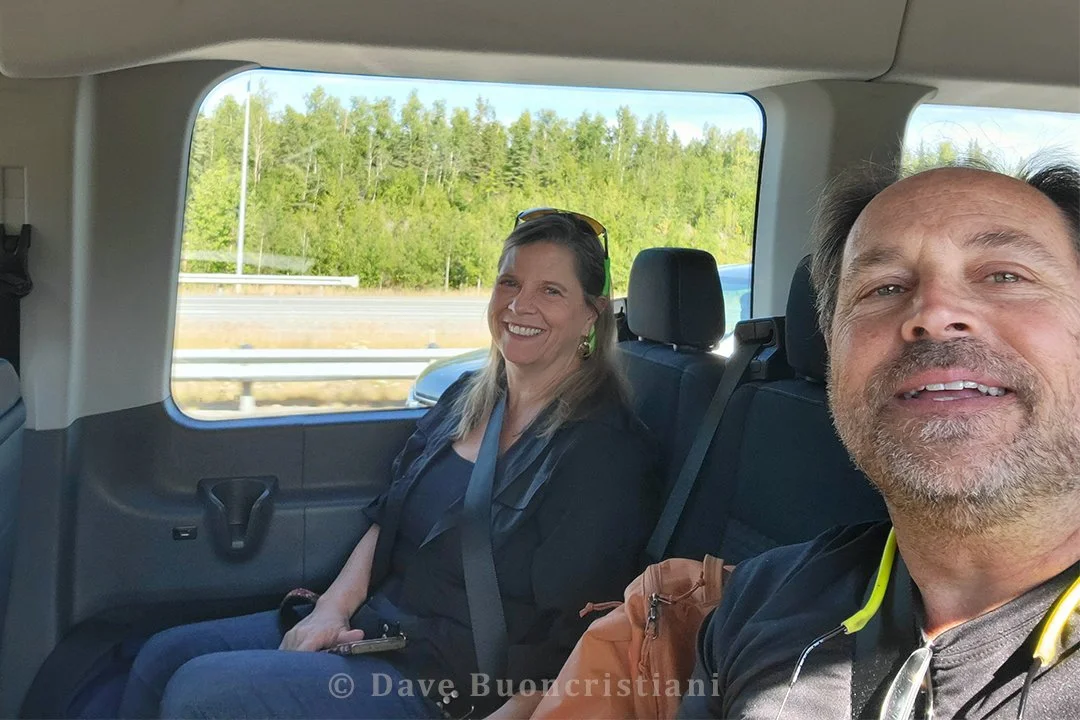
Inside the van as we began the drive north toward Denali.
Large swathes of standing dead spruce lined parts of the drive — trees still upright, but brown and lifeless. These forests weren’t simply aging; they told a story of change. Spruce beetles, a species native to Alaska and long present in milder southern regions of the state, burrow beneath the bark of spruce trees and disrupt the flow of nutrients, often killing them. In recent decades, warming temperatures and milder winters have allowed beetle populations to grow and spread more widely, devastating larger areas of spruce forest than in the past.
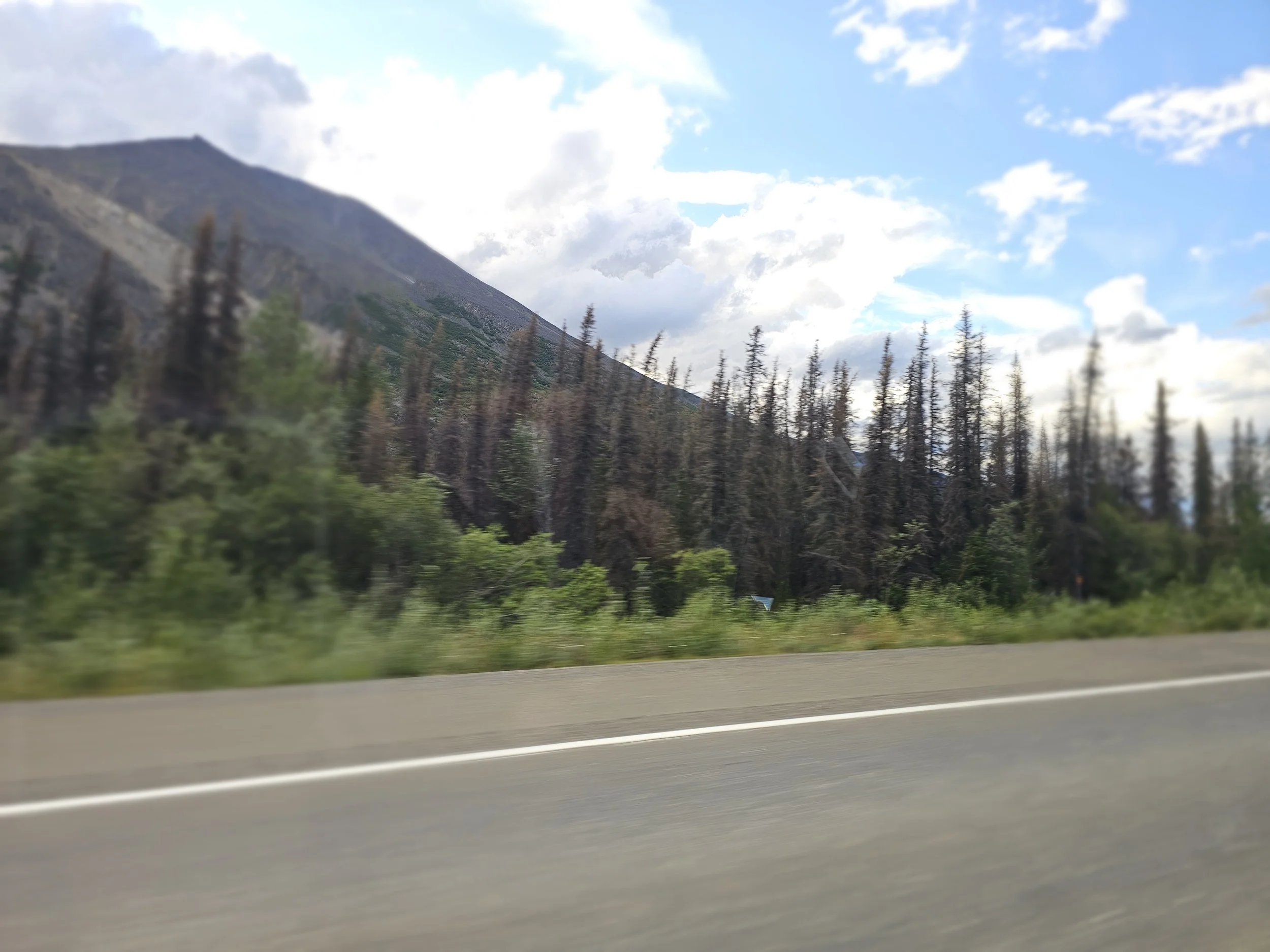
Standing brown, lifeless spruce trees visible along the drive north toward Denali, observed from the moving van.
Nearby, in open stretches of land, bursts of vivid pink fireweed (Chamerion angustifolium) stood out against the muted tones of the interior. Often called a pioneer species, fireweed is one of the first plants to return after disturbance — especially after fire — which is how it earned its name. It blooms from the bottom of the stalk upward and is widely used in Alaska as a seasonal marker: when the blossoms reach the top, summer is nearing its end. Those bright fields of fireweed became a visual anchor for me, and they would go on to play a significant role in the photographs I made throughout Alaska in 2025.
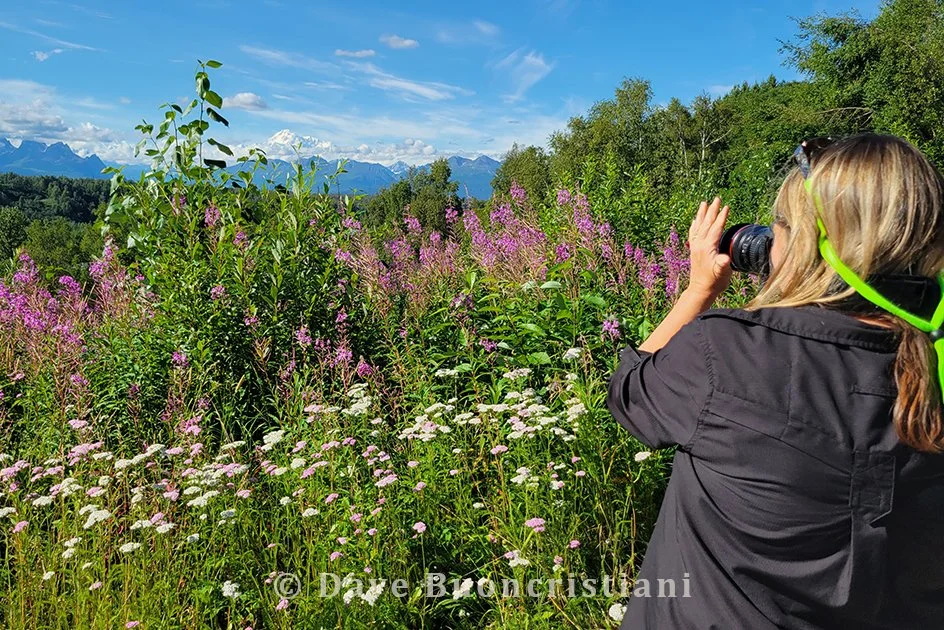
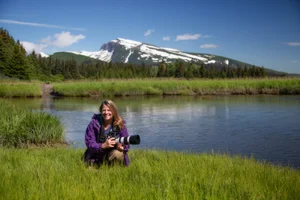
Photographing fireweed along the drive north toward Denali.
The van Wayde rented was large and comfortable, with wide windows that allowed us to observe and photograph as we traveled. That mattered here. In Denali, much of the understanding — and much of the photography — happens at a distance, and the ability to watch without constantly stopping made it easier to notice patterns in the land.
Stops along the way stretched what would normally be a four-hour drive into something slower and more intentional. This wasn’t wasted time — it was part of the education. Interior Alaska isn’t about immediacy. It’s about distance, patience, and scale.
Denali on Its Own Terms
As we traveled farther inland, we caught brief glimpses of the mountain through breaks in the clouds — never fully revealed, just hints of its presence. Denali is known for this. Because of the weather systems that frequently surround it, only about 30 percent of visitors ever see the mountain clearly, while the majority leave having never seen it at all.
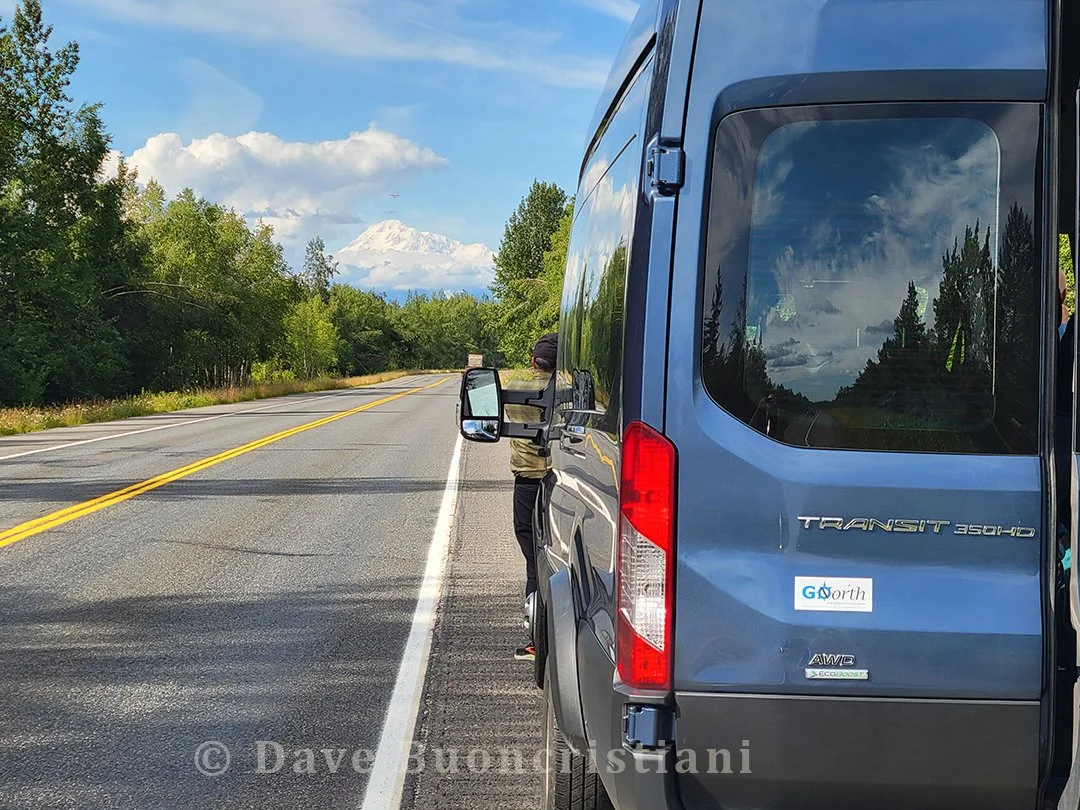
A brief glimpse of Denali from the road — a reminder that even a partial view here is a privilege.
Catching even a small glimpse felt like good fortune, and it reinforced an early lesson: this place doesn’t offer itself on demand. Weather, visibility, and timing shape the experience as much as location does. In Denali, even a partial view feels like a privilege.
This part of Alaska requires a different mindset. Wildlife is often farther away. The land itself becomes the subject. Learning happens gradually, through observation rather than expectation.
Alaska is not one experience — it is many worlds stitched together.
Denali is one of those worlds, and we were just beginning to understand how it would ask us to slow down and pay attention.
Looking Ahead
As we continued north, it was clear that the days ahead would ask for patience — not just with weather or distance, but with how we began to see. Denali wasn’t something to arrive at and immediately understand.
It was something to enter slowly.
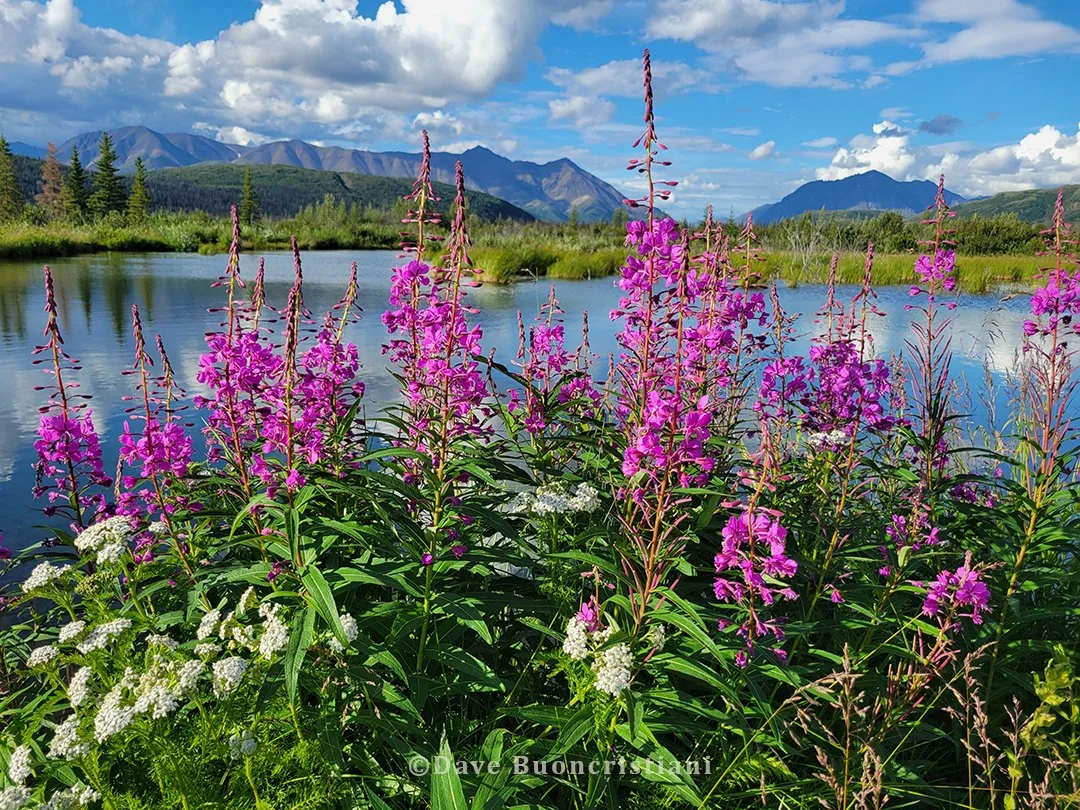
Fireweed along the water as we continued north.
Next week: As the light softens, we enter Denali’s edge — where our first wildlife encounters begin in the evening, and the lessons continue again at dawn.