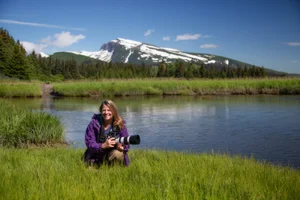
Camp Denali: A Different Kind of Wilderness Lodge
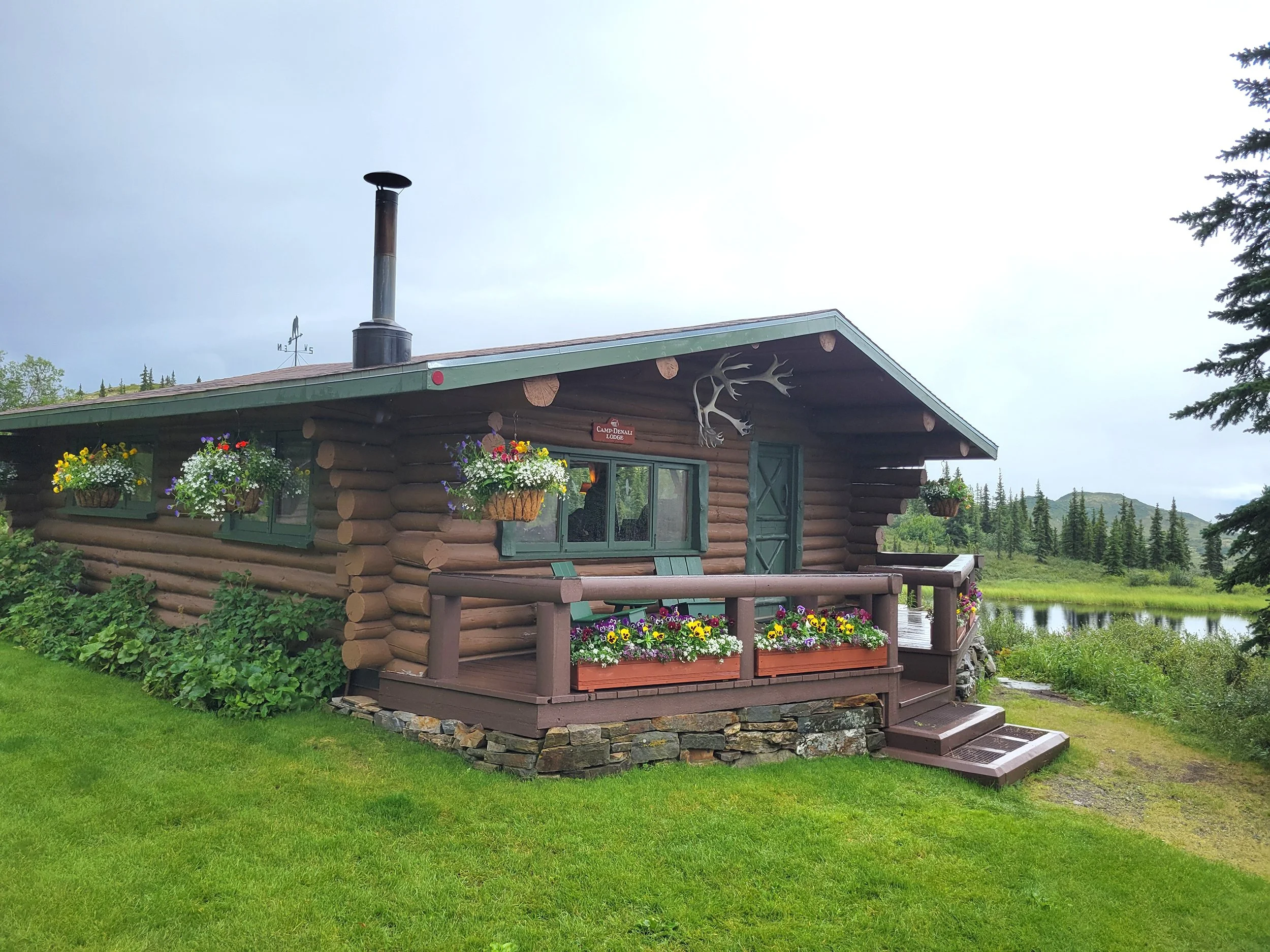
Even in the rain, Camp Denali felt warm, welcoming, and carefully connected to the surrounding wilderness.
Camp Denali was far more than simply a place to stay while visiting Denali National Park. It shaped the entire experience of being there.
Because of the Pretty Rocks landslide, visitors traveling beyond Mile 43 now enter a much quieter and more remote part of the park. During our visit, the road closure meant no additional vehicles could reach Camp Denali, so guests, supplies, fuel, and nearly everything needed to operate the lodge arrived by air. The handful of Camp Denali vehicles already inside the park before the closure were among the very few still able to travel that section of the road. Everything about Camp Denali felt intentional, thoughtful, and deeply connected to life inside the park.
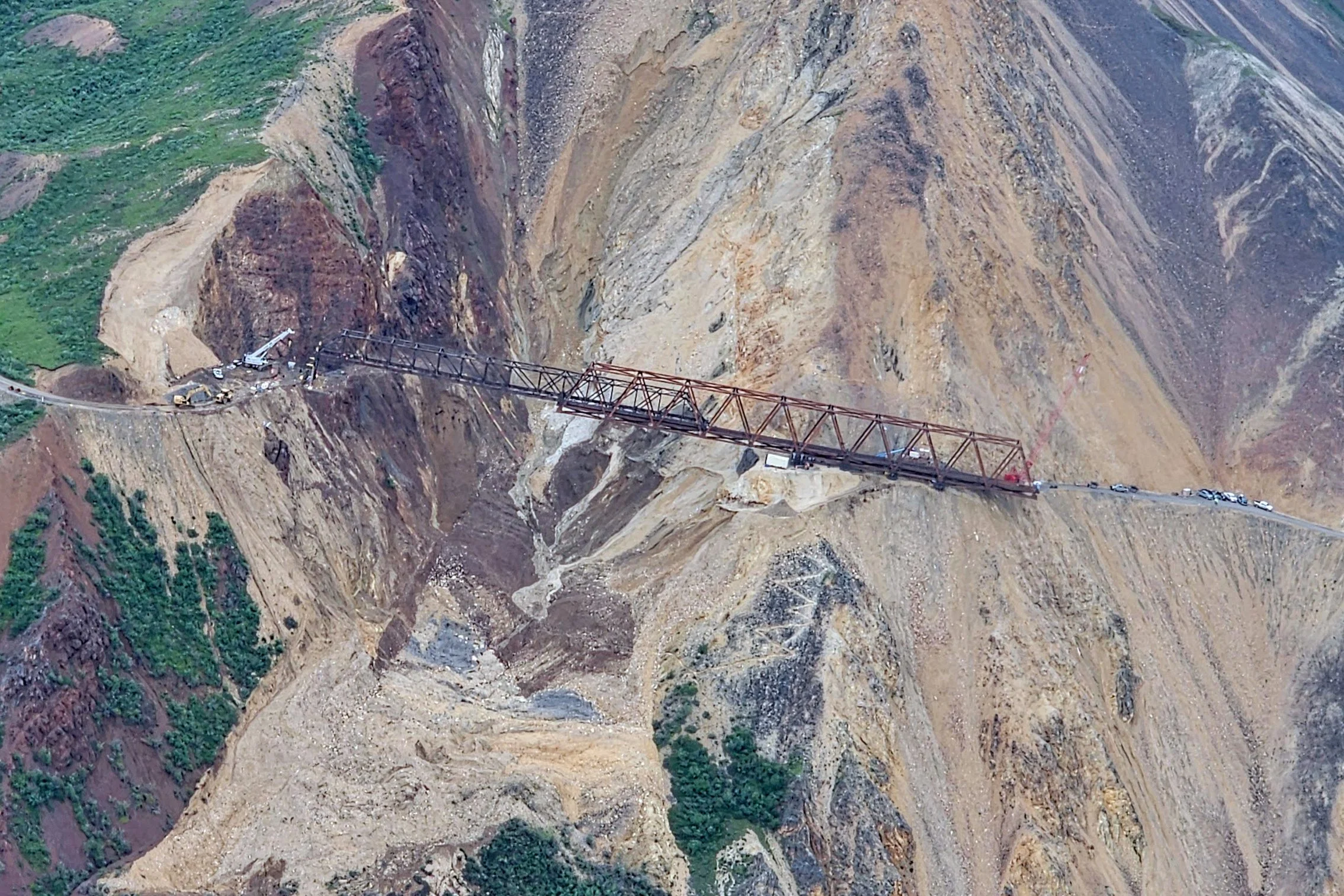
Flying over the Pretty Rocks landslide offered a rare look at the massive bridge project now reshaping access into Denali’s interior.
Each day, a different naturalist guided us through the park in search of wildlife, and each brought their own area of expertise — ornithology, botany, biology, glaciology, and more. Learning became part of the experience itself. We stopped often to walk through the tundra, feeling the soft ground beneath our feet, tasting wild blueberries along the trails, and learning more about the plants, wildlife, and ecosystems surrounding us. Conversations flowed naturally throughout the day, and every excursion into the park felt like part wildlife experience, part field class.
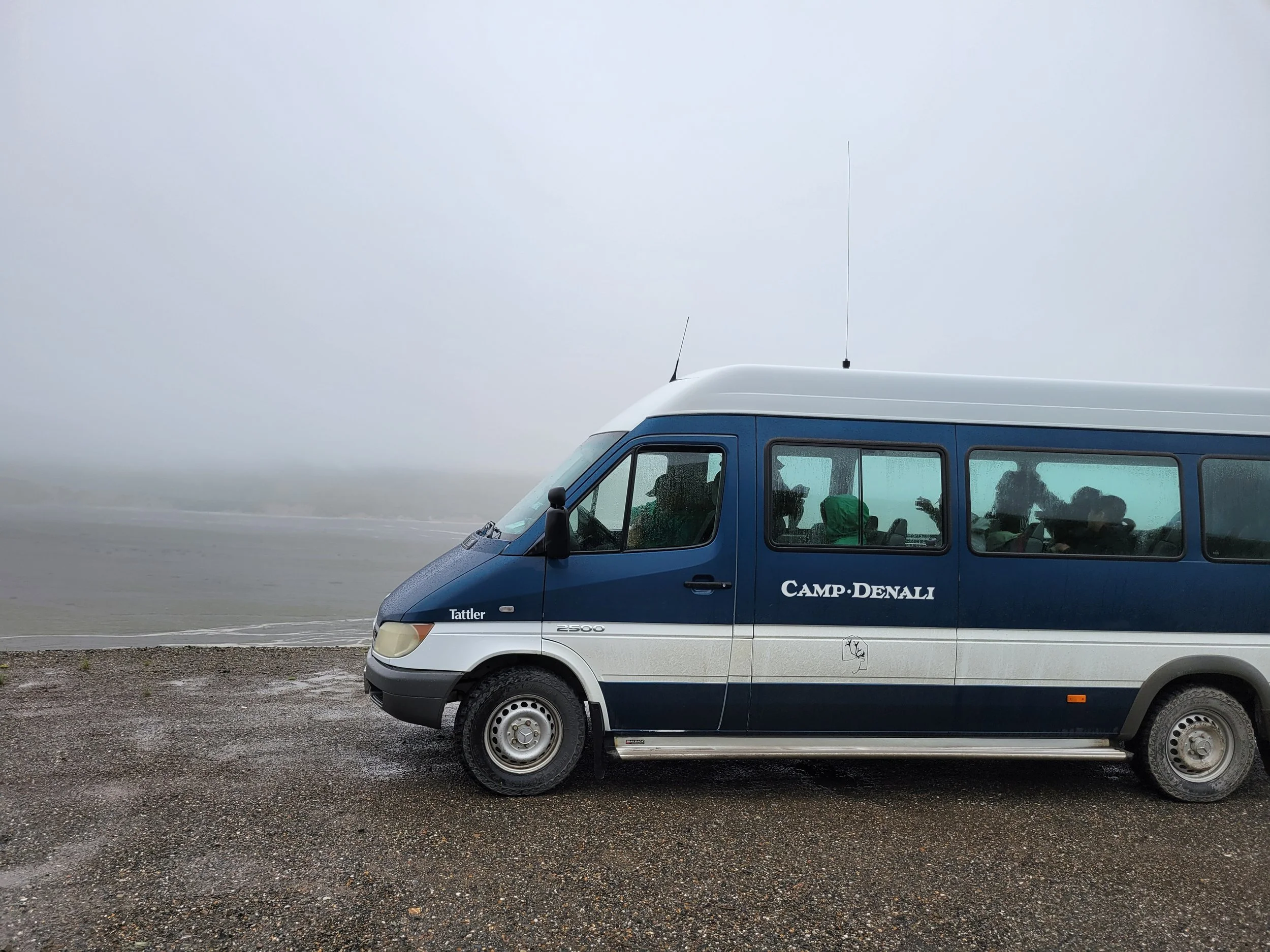
Camp Denali’s naturalists spent each day driving deep into the park, teaching as we traveled through shifting weather and changing landscapes.
Even the weather became part of the experience. Rain came and went throughout much of our stay, and photography often meant stepping out into the drizzle with cameras wrapped in plastic while guides scanned the tundra for wildlife. No one seemed bothered by getting wet. The changing weather simply became part of the rhythm of being there.
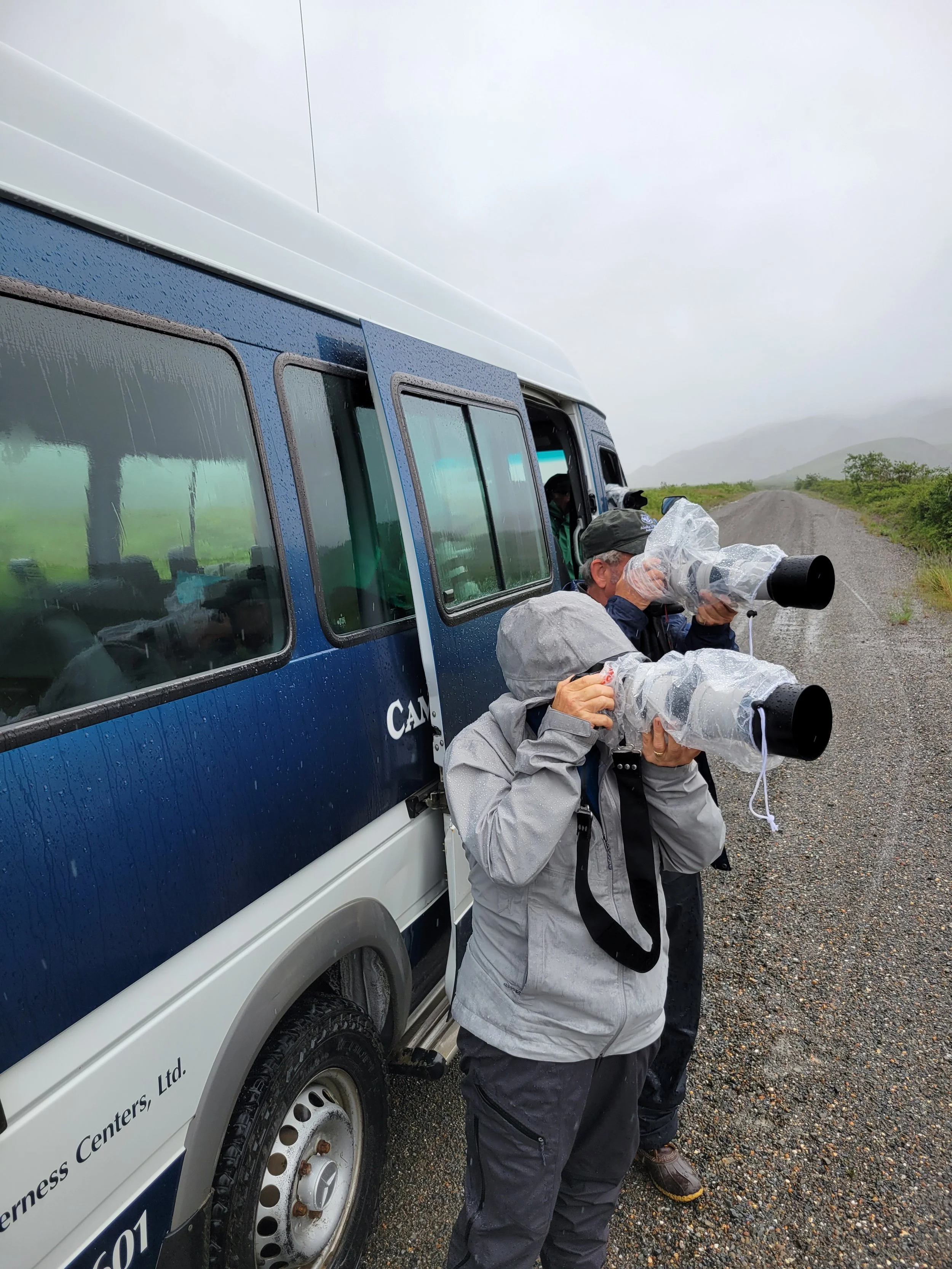
Rain rarely stopped photography. Cameras stayed wrapped in plastic while everyone leaned into the weather together.
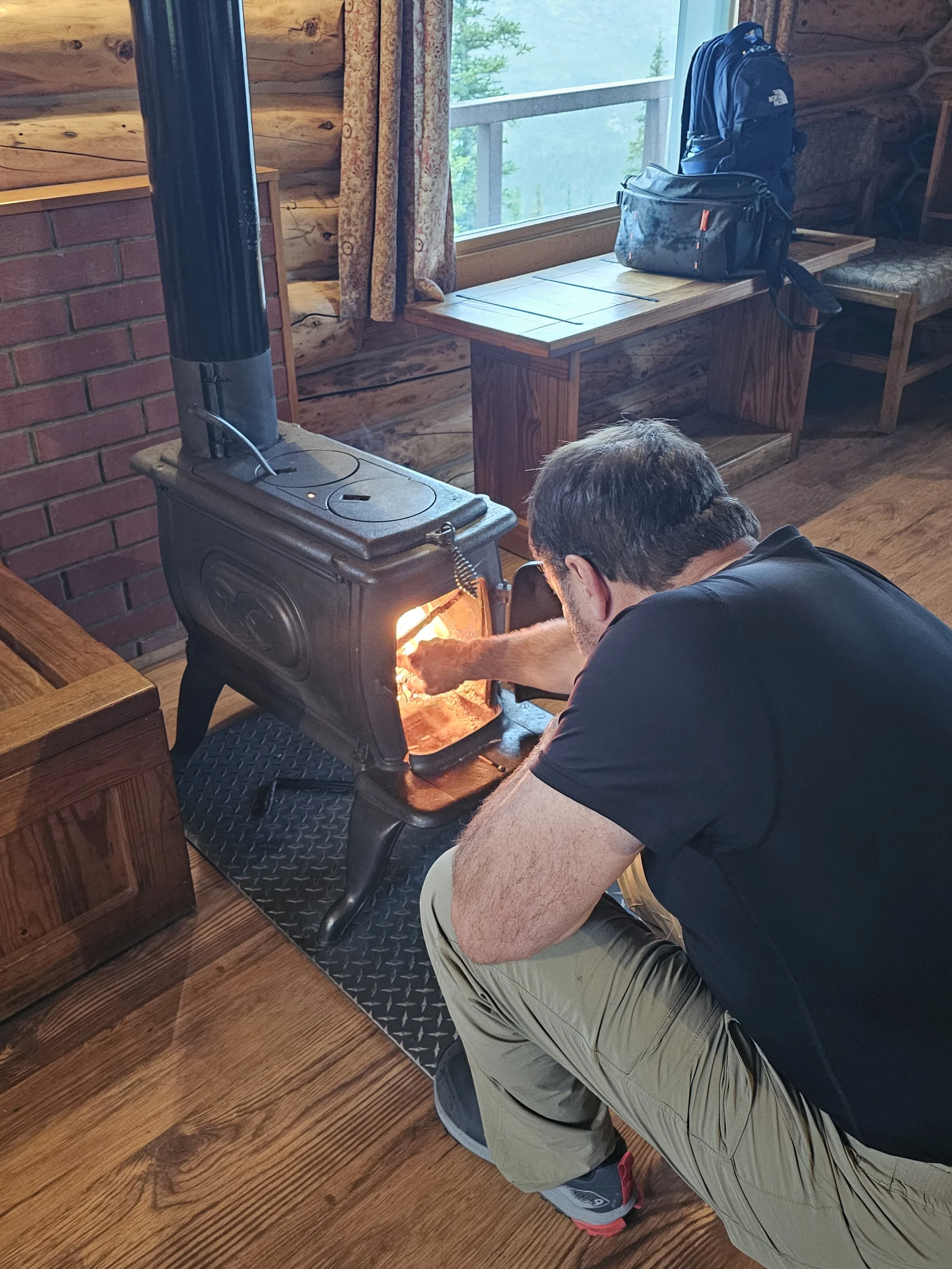
Wood stoves kept the cabins warm during long rainy stretches and cool Denali evenings.
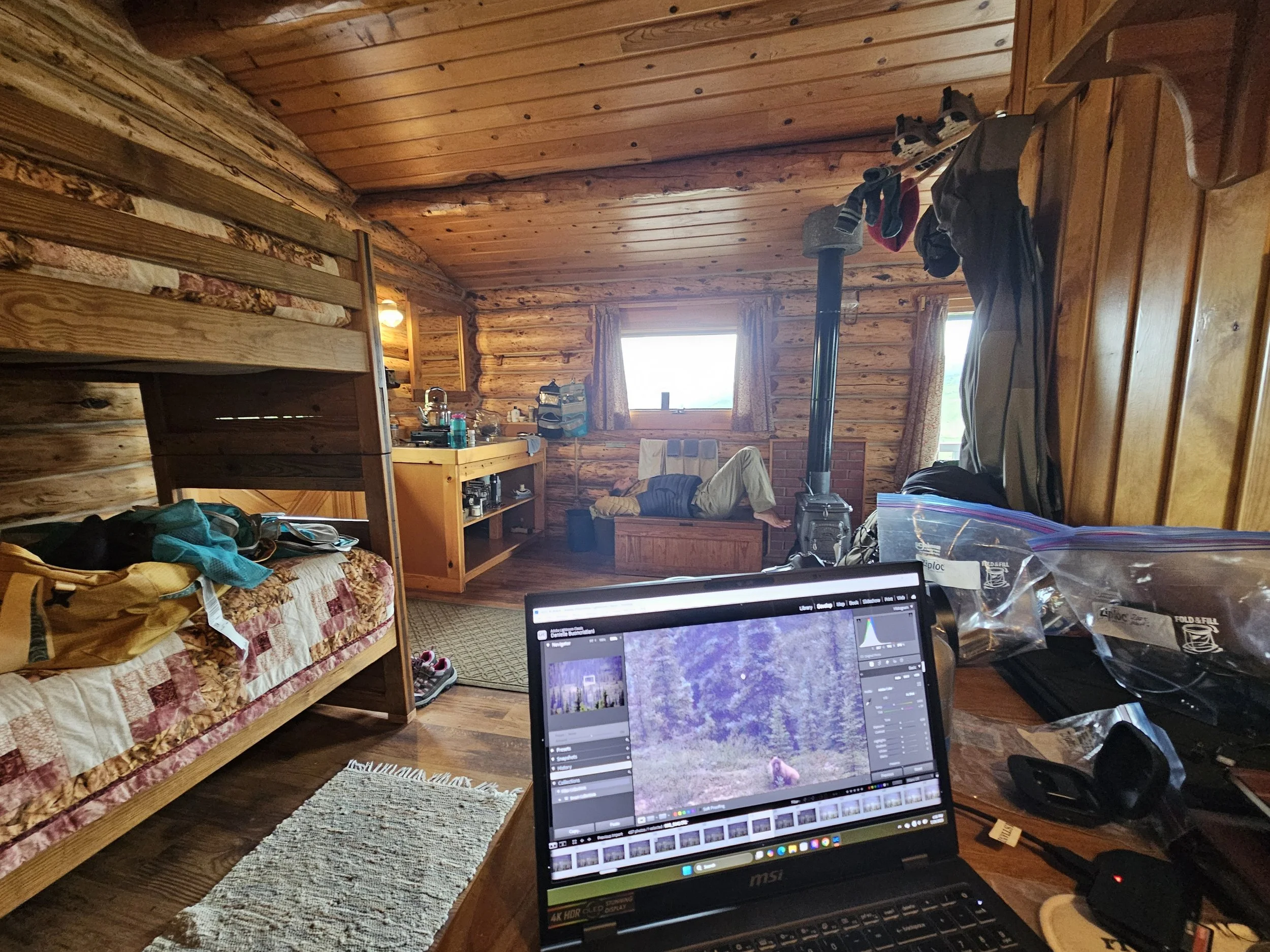
Even after full days in the field, the photography experience often continued back at camp.
Back at camp, guests gathered together for breakfast and dinner each day, often sitting with different people throughout the week as conversations drifted from wildlife sightings to weather and photography. Meals and fresh baking were prepared right at the lodge, and the smell of cookies or bread often drifted through the main building after long rainy days in the field. Bookshelves lined with field guides filled the lodge walls. Microscopes, educational displays, flowers on the tables, and wood stoves glowing against the rain outside — every detail felt thoughtful without ever feeling formal or overdone.
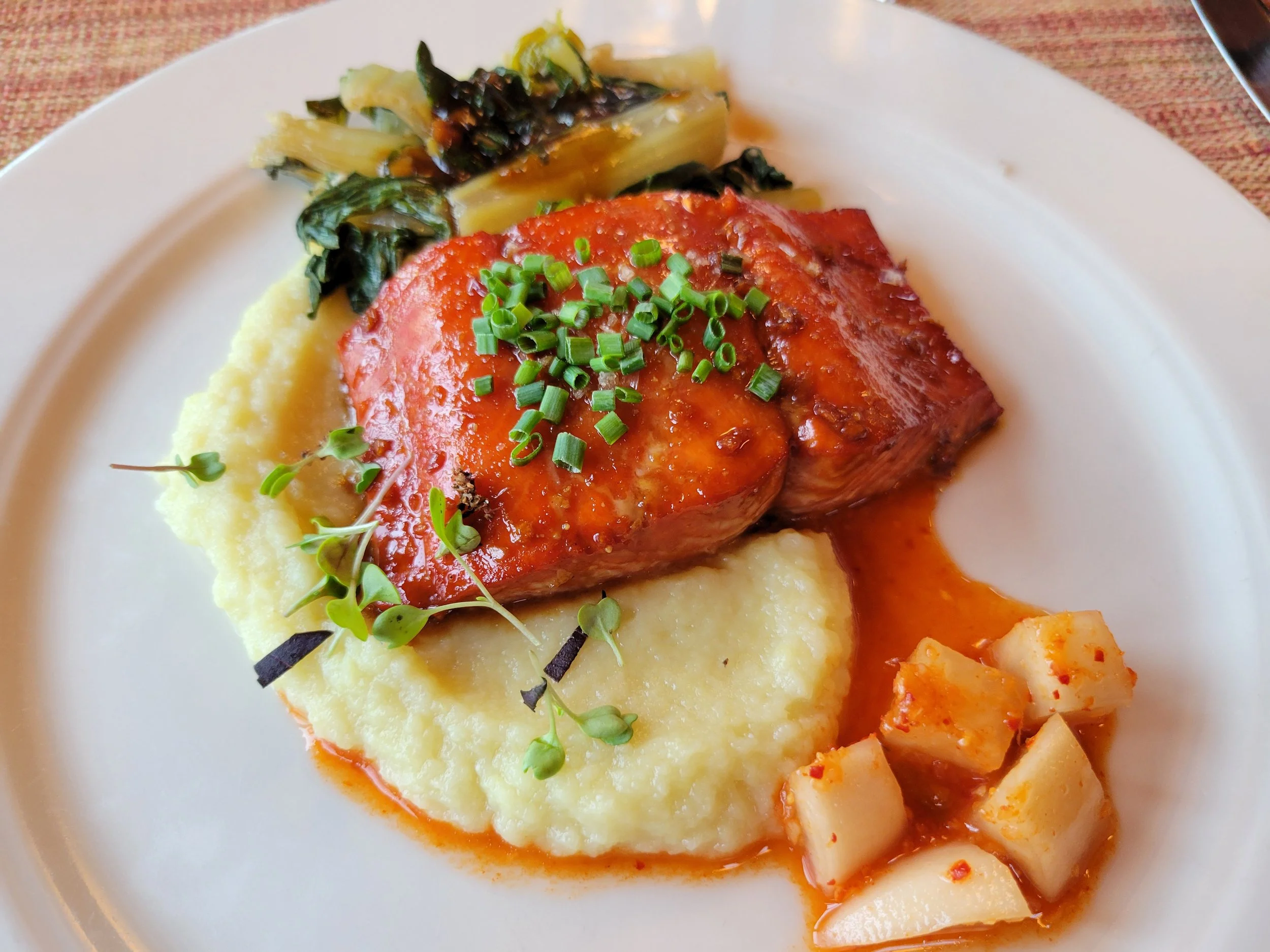
Meals at Camp Denali were prepared right at the lodge, with fresh ingredients, homemade baking, and thoughtful meals waiting after long days in the field.
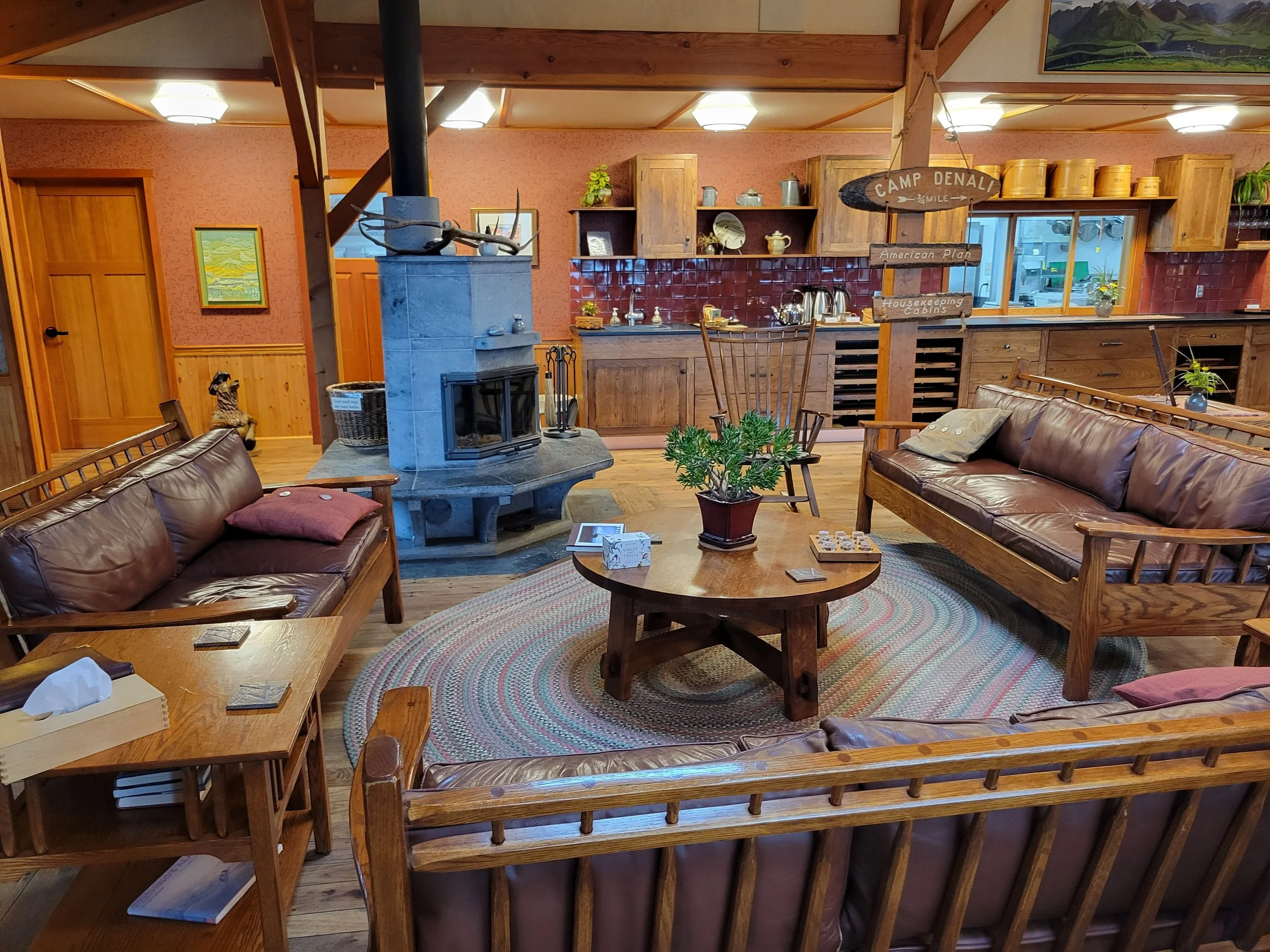
The lodge felt welcoming without ever feeling formal — a place designed as much for conversation and learning as for resting between excursions.
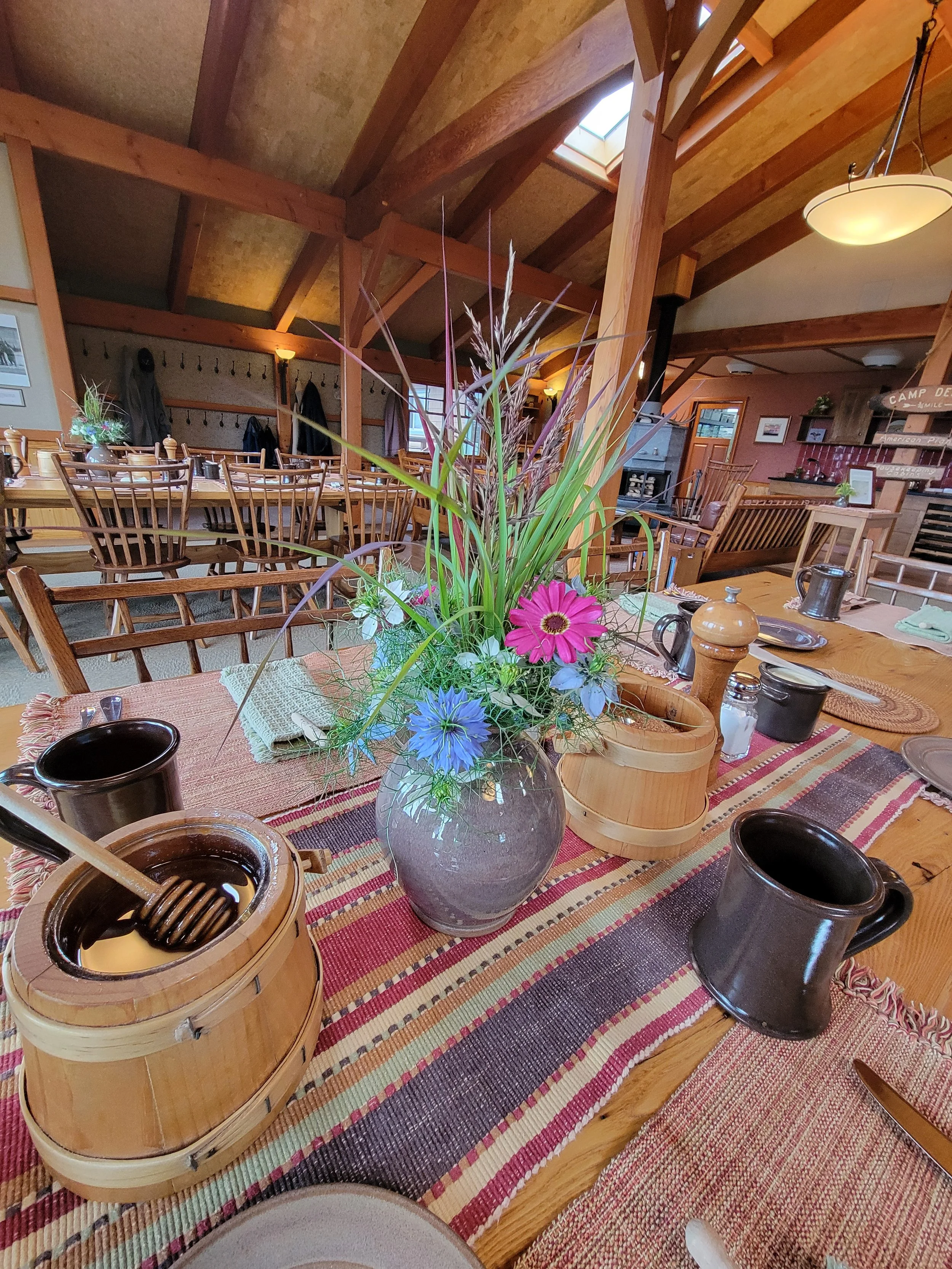
Fresh flowers, shared meals, and quiet conversations helped make the remote camp feel surprisingly personal.
What stayed with me most was how welcoming everyone felt. The manager and one of the owners often sat with guests during meals, talking with people, sharing stories, and getting to know everyone. In such a remote place, those small interactions made the camp feel surprisingly personal and connected. The experience felt less like checking into a lodge and more like briefly becoming part of a small wilderness community.
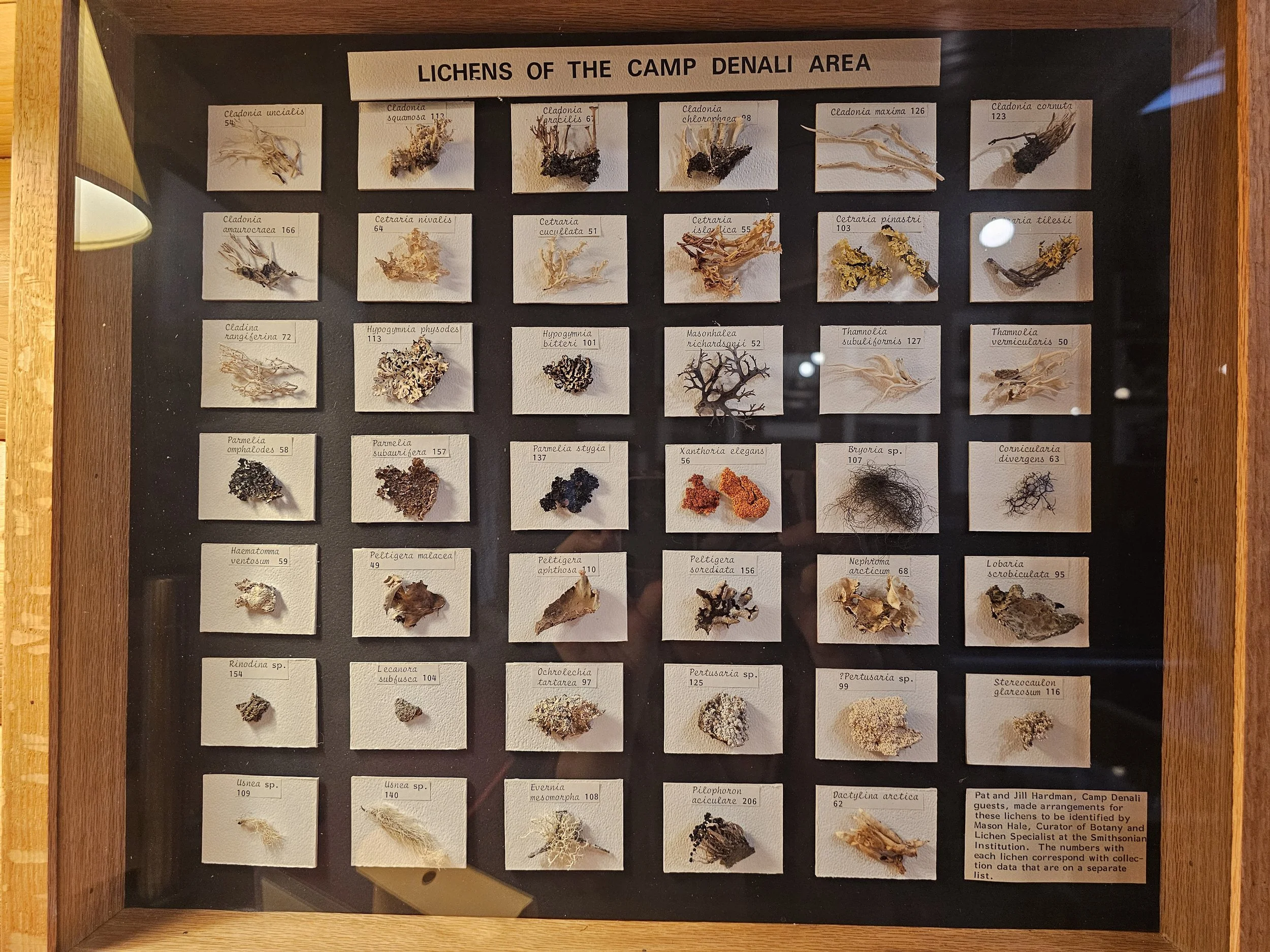
Everywhere you looked, there were small reminders that Camp Denali was built around curiosity, learning, and careful observation of the natural world.
Field Notes: Camp Denali
Camp Denali is located deep within Denali National Park beyond the current road closure at Pretty Rocks.
Before the Pretty Rocks landslide closure, guests could reach Camp Denali either by flying into the park’s interior or by traveling the Denali Park Road by bus — a journey that often took much of the day.
During the current road closure, supplies, fuel, food, and building materials all must be transported into camp by air.
Camp Denali was founded in 1952 and has long emphasized natural history education and environmental stewardship.
Daily excursions are led by naturalists with expertise in fields including botany, ornithology, biology, and glaciology.
Camp Denali is located roughly 90 miles from the nearest power grid and incorporates renewable energy systems including photovoltaics and passive-solar hot water.
Lichens are an important part of Arctic and alpine ecosystems and are a major winter food source for caribou in Denali.
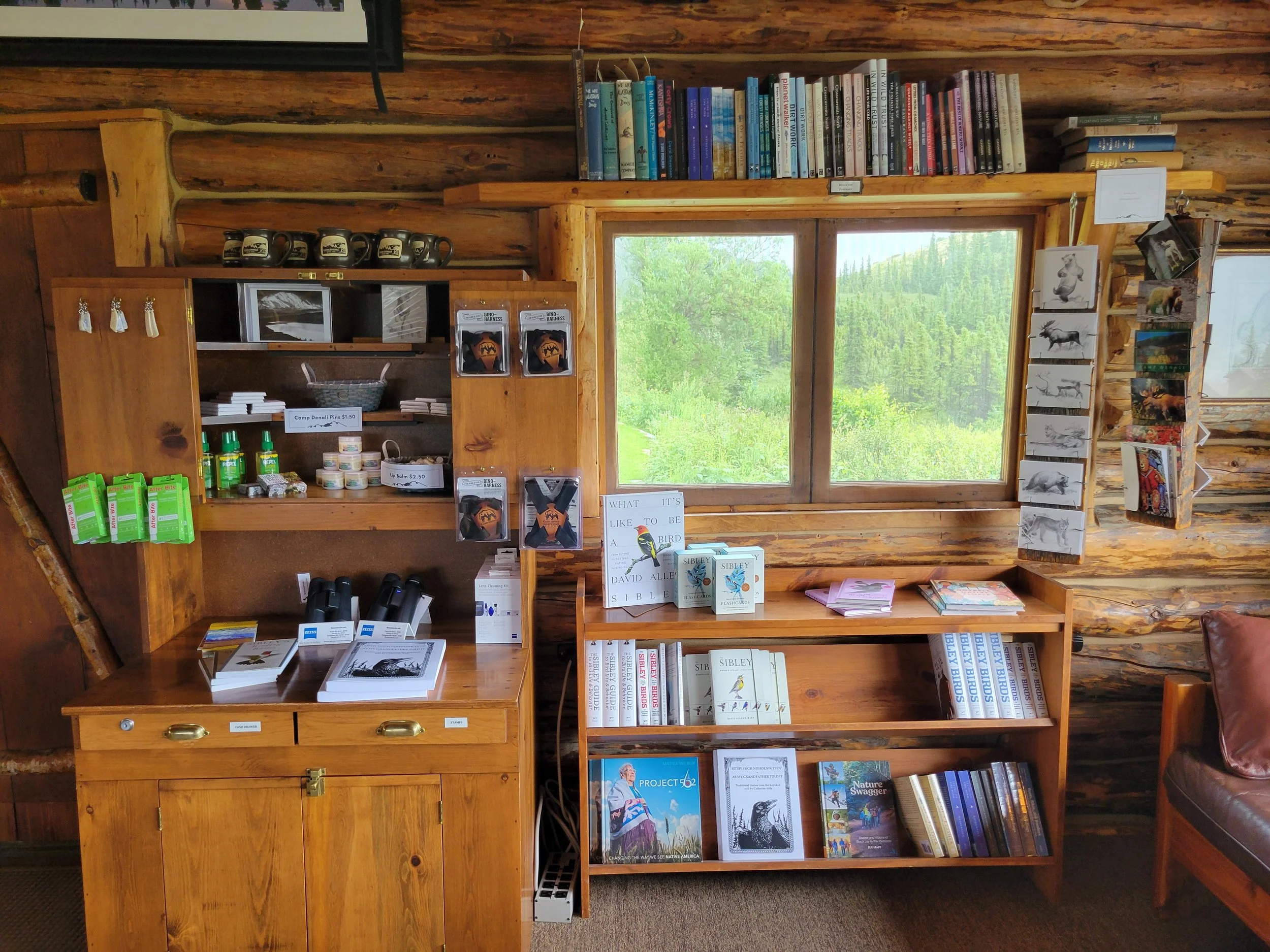
Field guides, natural history books, microscopes, and educational displays reflected Camp Denali’s long connection to science and natural history.
What lingered long after we left was the way every part of the experience felt connected to the landscape around us. The experience blended wilderness, education, community, and comfort in a way that felt thoughtful from beginning to end. Long after the wildlife sightings and mountain views, what I remember most is how connected everything felt — the people, the landscape, and the quiet rhythm of life deep inside Denali.
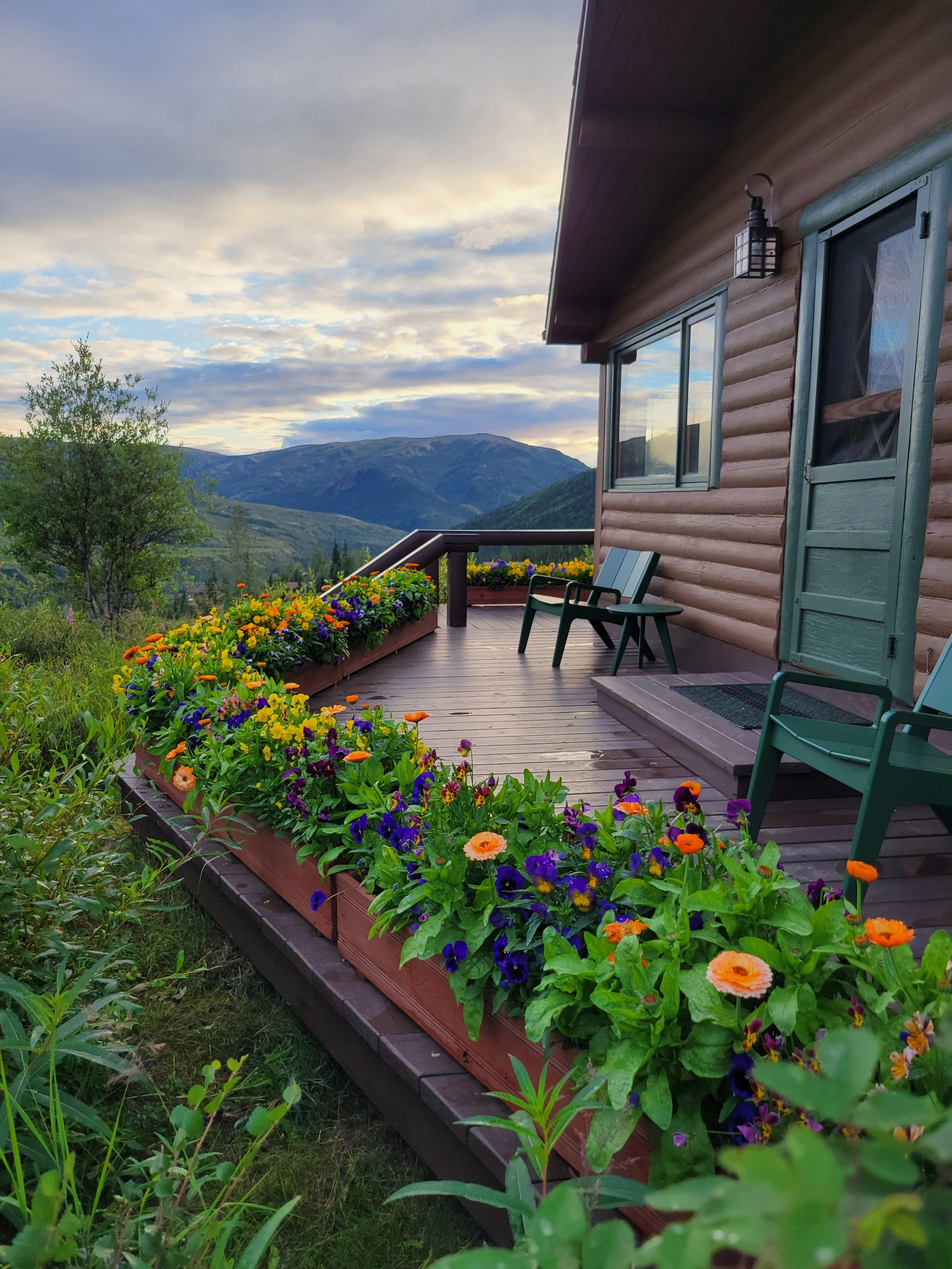
Even after days of rain, moments of soft evening light would occasionally break through the clouds, reminding us how quickly conditions could change in Denali.